



Bordeaux 2025 en primeur: Saint-Julien retains ‘distinctive appellation character despite the challenges of the growing season’
db’s Bordeaux correspondent, Colin Hay, continues his review the Left Bank’s en primeur offerings with Saint-Julien, the smallest and invariably the most homogeneous of the Médoc appellations.
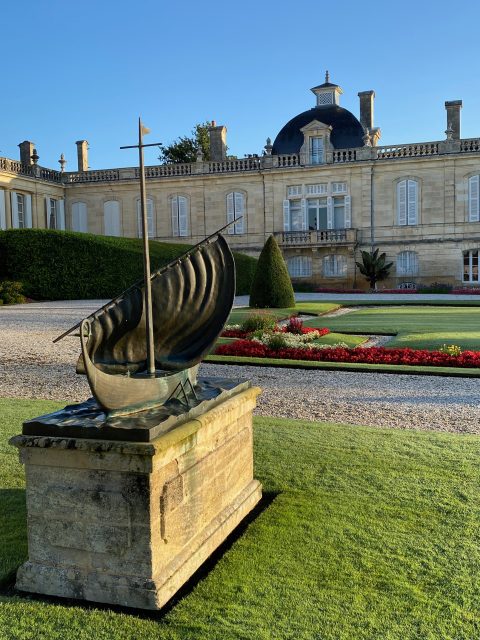
Having started our tour of the Médoc in Margaux, there is really only one way to go – north. But it always takes longer than you think to get to the next significant stop on our route, Saint-Julien.
Indeed, the good 20 minutes or so that it takes to get from the northernmost classed growth of Margaux, Marquis d’Alesme, to the southernmost classed growth of Saint-Julien, Beychevelle, is surely responsible for more late arrivals at en primeur tastings than anything else (except, perhaps, lunch at Pichon Baron!).
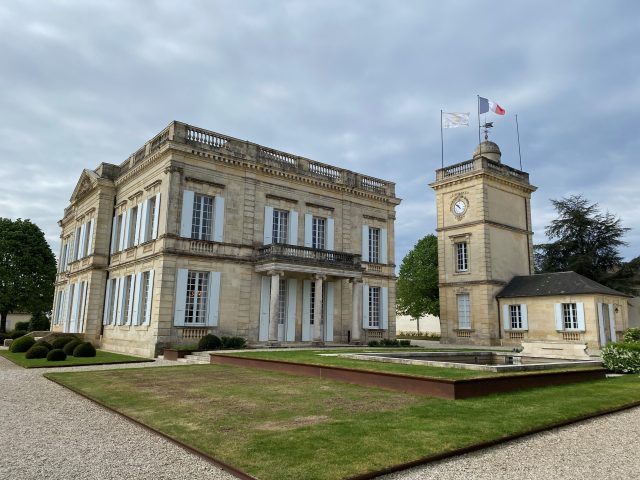
But passing Lanessan on the left and crossing over the Pont de l’Archevêque, Château Beychevelle, the Versailles of the Médoc, comes into view as the D2 rises on arrival in our second destination.
The wines here feel immediately rather different in their personality to their southern cousins. They are richer, typically broader-shouldered, a little more powerful, nuttier and often just a smidgeon riper and more opulent. That impression is reinforced once again in 2025. For this is one of those terroir-amplifier vintages in which the character and personality of each cru seems accentuated.
That said, and despite the distance we have travelled, we still remain here in the southern half of the Médoc and the meteorological conditions of the vintage were just a little more extreme in both Margaux and Saint-Julien than they were further north.
This is clear from Table 1 which shows that, if anything, average yields were even lower in Saint-Julien than they were in Margaux. Indeed, among the leading appellations of the Left and Right Banks, only Pomerol suffered more from the extreme heat and dryness of the summer, with Saint-Julien’s average yield being nearly 30% below the (already quite low) 10-year average.
| 2020 | 2021 | 2022 | 2023 | 2024 | 2025 |
10-year average |
% Change | |
| Margaux | 36.3 | 38.6 | 31.3 | 37.7 | 33.1 | 28.8 | 39.2 | -26.5 |
| St-Julien | 34.3 | 35.2 | 34.3 | 50.3 | 32.5 | 26.4 | 36.3 | -27.3 |
| Pauillac | 37.4 | 35.1 | 34.8 | 47.1 | 29.5 | 30.2 | 40.2 | -24.9 |
| St-Estèphe | 41.2 | 40.7 | 31.5 | 51.6 | 33.6 | 36.8 | 44.4 | -17.1 |
| Pessac-Léognan | 34.6 | 30.7 | 35.7 | 38.1 | 39.0 | 31.0 | 35.6 | -12.9 |
| St-Emilion (GC) | 36.7 | 27.5 | 41.2 | 40.5 | 36.4 | 34.7 | 37.9 | -8.4 |
| Pomerol | 39.8 | 28.9 | 32.3 | 45.2 | 28.4 | 25.9 | 36.6 | -29.2 |
Table 1: Average vineyard yield by appellation (hl/ha)
Source: calculated from Duanes data compiled by the CIVB Service Economie et Etudes
Partner Content



Compounding the suffering, and as Table 2 reveals, the yields for the leading estates were typically lower still (with the Léovilles between them averaging only a little over 20 hl/ha). The result is a little less Cabernet and a little more Merlot in the final blends, at least relative to 2023 and 2024.
| Wine | % Cabernet Sauvignon | % Merlot |
Yields (hl/ha) 2025 |
||||
| 2023 | 2024 | 2025 | 2023 | 2024 | 2025 | ||
| Beychevelle | 61 | 55 | 52 | 35 | 42 | 43 | 32 |
| Ducru-Beaucaillou | 85 | 86 | 79 | 15 | 14 | 21 | 22 |
| Gruaud Larose | 83 | 81 | 77 | 15 | 17 | 21 | 26 |
| Léoville Barton | 87 | 92 | 86 | 10 | 6 | 12 | 22 |
| Léoville Las Cases | 86 | 84 | 82 | 4 | 5 | 6 | 23 |
| Léoville Poyferré | 62 | 64 | 61 | 32 | 27 | 26 | 20 |
| Saint-Pierre | 80 | 85 | 78 | 17 | 12 | 15 | 20 |
| Average | 78 | 78 | 74 | 18 | 18 | 21 | 23.6 |
Table 2: Percentage of Merlot and Cabernet Sauvignon in the grands vins and final yield (hl/ha)
But the wines themselves are excellent – at all likely price points. Saint-Julien is, of course, the smallest and probably the most homogeneous in the quality of its terroir of the Médoc appellations, with a significant proportion of the 910 hectares or so under vine today hugging the Gironde. That undoubtedly helped these wines to retain their distinctive appellation character despite the challenges of the growing season and the low yields confirmed above.
The wine of the appellation is, once again, for me the ethereal Léoville Las Cases, closely followed by the latest in a series of breath-taking wines from Gruaud Larose.
Ducru-Beaucaillou, Léoville Barton, Léoville Poyferré and a very impressive Saint-Pierre snap closely at their heels.
Those looking for value would do well to seek out the excellent Branaire Ducru or Lagrange and we have three of the top second wines of the vintage in Sarget de Gruaud Larose, La Croix Ducru-Beaucaillou and Le Petit Lion.
Highlights in 2025
Best of the appellation:
- Château Léoville Las Cases 97-99
Greatest successes:
- Château Gruaud Larose 96-98
- Château Ducru-Beaucaillou 95-97
- Château Léoville Barton 95-97
- Château Léoville Poyferré 95-97
- Château Saint-Pierre 95-97
- Clos du Marquis 94-96
- Château Talbot 94-96
Value picks:
- Château Branaire-Ducru 93-95
- Château Lagrange 93-95
- Sarget de Gruaud Larose 92-94+
- Château Gloria 92-94
- La Croix Ducru-Beaucaillou 92-94
- Le Petit Lion 92-94
Tasting Notes
Please click here for the 2025 tasting notes, which can be searched by château and by appellation.
For full appellation-by-appellation reviews as they are published, click: Margaux, Saint-Julien, Pauillac, Saint-Estèphe, Haut-Médoc & Left Bank satellite appellations (Listrac-Médoc, Médoc, & Moulis-en-Médoc), Pomerol, Saint-Émilion, ‘satellite’ Right Bank appellations (Fronsac, Lalande & Castillon), Pessac-Léognan & Graves red, Pessac-Léognan & Graves white, Medoc & Bordeaux including Vin de France (white) and Sauternes & Barsac.
Related news
Bordeaux 2025: some additional tasting notes
Bordeaux 2025 en primeur: star picks from the Right Bank 'satellites'
Bordeaux 2025 en primeur: Sauternes & Barsac ‘very rich, very powerful’


