



Cono Sur shows off terroir-led range
Cono Sur’s recent London masterclass was headlined by its cool-climate icon wine Ocio, but also showed off terroir expertise across the range.
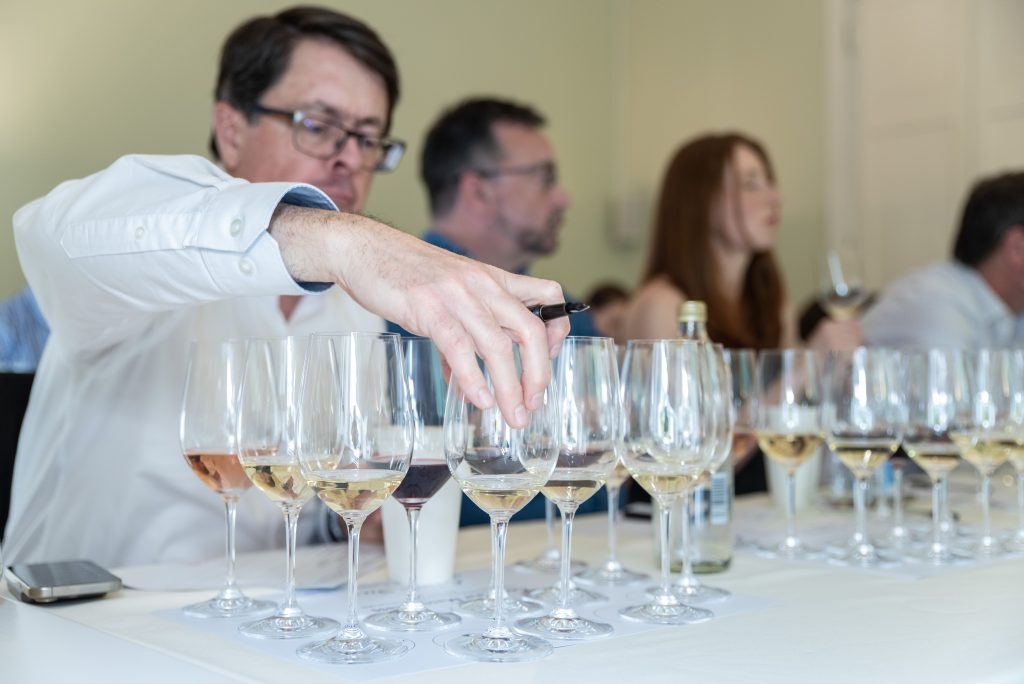
Perhaps the most commonly touted fact when discussing Chile’s winemaking scene is that it is a land of extremes. The narrow strip (as countries go, at least), caught between the Andes and the Pacific, encompasses a wide range of biomes, climates and – essential for winemakers – terroirs.
Introducing his wines to a London masterclass, winemaking director Matías Ríos paid tribute to Chile’s wealth of winemaking landscapes, one of the essential tools that he draws on in making Cono Sur’s range.
“In the north, we have the Atacama Desert, which is the driest desert in the world,” he explained. “In the east, we have the huge Andes mountains, a good place to ski. Then, in the south, we have the glaciers of Antarctica; and in the west we have the Pacific Ocean.”
These extremes are emblematic of Chile’s diversity. Although winemakers may not be working in the Atacama Desert or atop glaciers, the climate-spanning latitudes mean that winemakers can select sites that receive more intense sunlight in the north, or those that are less exposed to the south.
On its east-west axis, even though it is a narrow strip, Chile also sees diversity. Between the cooling influence of the Humboldt Current and the fresh air descending the Andes, the abundance of valleys offers wide variations in exposure to cooling influences. Specific vineyards, even those close to each other, can have significantly hotter or cooler microclimates.
Yet Chile’s extremes are not just climatic or geomorphic. The country has carved out a very useful niche as one which accommodates all price levels and drinking styles. Remarkably – with Cono Sur being a prime example – it is often the same winemakers producing enjoyable, everyday wines as those creating the icon wines that first burst onto the scene around 30 years ago.
Patrick Schmitt MW, who introduced the masterclass, alluded to that compelling range of price points in his opening comments. Although, undeniably, more people drink wines bought in supermarkets than in fine wine merchants, being able to do both is what marks Cono Sur out. “Commercially, it’s incredibly significant,” he commented. “But you need to hone the top end to get the bottom end right.”
Cool-climate specialists
Within Chile’s diverse geography, a very large range of wine styles are possible, and Cono Sur has not limited itself in what it produces. Yet there is a common thread that runs from its most accessible wines through to its world-beating Pinot Noir, Ocio. Cono Sur has leaned into Chile’s cool climate.
“When we have the influence of the Pacific Ocean, we have a lower temperature, but in combination with really powerful sunlight,” Ríos summarised. “That combination is the difference between Chile and other cooler climates. I don’t say that it’s better or worse – I say that it’s different.”

One objective benefit comes from Chile’s protective geography. Although many cooler regions contend with pests and disease threats, Chile’s natural barriers have made it a winegrower’s dream. Ríos explained: “We are a really isolated country and a really healthy country.”
There is also a stylistic tell which, although not inherently advantageous, certainly lends the wines a distinct character. The wines show ripe and concentrated fruit aromas, typical of intense UV radiation, held in check by a bright, fresh acidity that reflects Chile’s cooling influences.
It is not all natural influence, however. The cool climate directly affects how Ríos and his team go about their work. You can find evidence in the production techniques – a gentle touch such as protective winemaking, manual harvest or foot-treading. His philosophy across the range is that, having achieved great character in the vineyard, respect must follow in the winery.
Likewise, Cono Sur’s choice of grape varieties demonstrates a cool-climate approach. Alongside the usual suspects, it has particularly emphasised Chile’s lighter, more aromatic varieties. The likes of Viognier and Riesling join ubiquitous Chardonnay in the white wine range, while Pinot Noir is given top billing as Cono Sur’s flagship variety.
Honest and accessible
Cono Sur’s commercial relevance cannot be overstated. Its Bicicleta wines retail in the UK for under £10, while its premium 20 Barrels line still gives you change from £20. As Schmitt commented: “We’re dealing with an area of the market where the majority of people shop.”
Thus, Ríos made sure to showcase Cono Sur’s white wine production before the headline finale of Pinot Noirs. Though not as sought-after as Ocio, they proved the ethos that underpins Cono Sur.
The tasting session began with two Sauvignon Blancs: Bicicleta and 20 Barrels. According to Ríos, the house style is “a more gastronomic Sauvignon Blanc”, with both styles made using cool fermentations, stainless steel and no malolactic conversion. The difference, primarily, is in the sourcing. 20 Barrels’ single sloping site in coastal Casablanca Valley brings complexity thanks to its mixed harvest of green, medium and overripe berries.
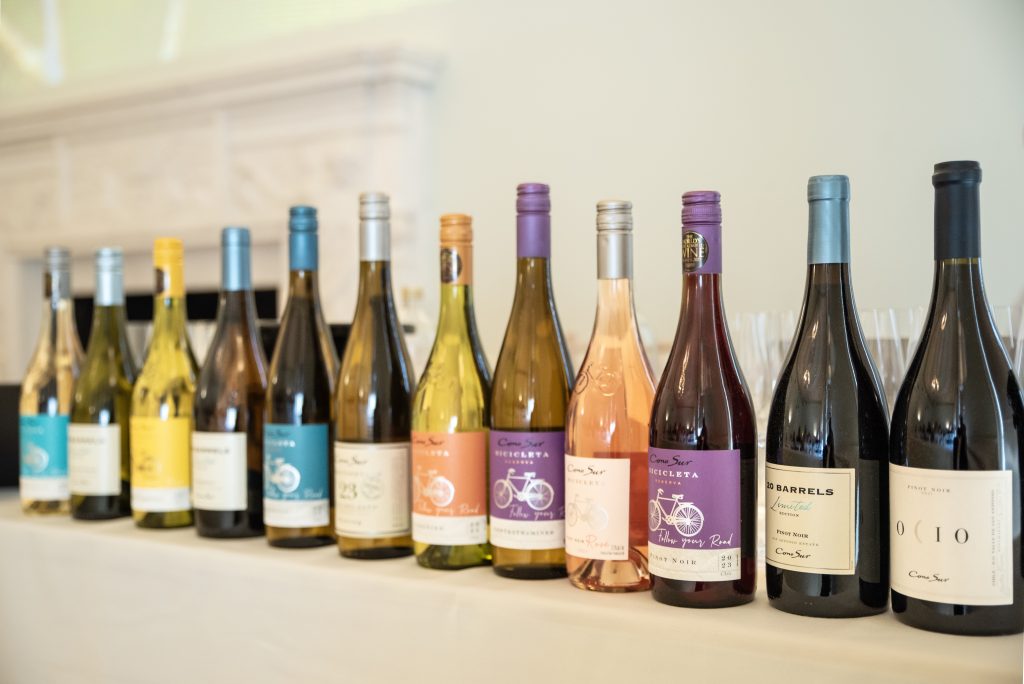
Ríos then continued to Chardonnay. Bicicleta Chardonnay is made in a simple, protective style for utmost freshness. Yet 20 Barrels Chardonnay shows a subtly different approach. Sourced from the same slope as its sister Sauvignon Blanc, it has layers of oak-derived complexity and notes of coastal spray. For Ríos, they are a complementary pair: “The two faces of Chilean Chardonnay – one for every day and one for the weekend.”
Next came Riesling, a grape whose floral qualities provide a perfect canvas for Ríos’ cool-climate winemaking. “Riesling has to have real honesty of the variety,” he commented. Hence 70% of the blend in Bicicleta Riesling comes from Bío-Bío – a southern region with inherently cooler days to preserve its notable acidity.
For the Single Vineyard Riesling, meanwhile, it makes up 100% of the blend. The grape’s potential has been a surprise even for the winemaker: he used to think Chardonnay had the most ageing potential of white varieties; now he thinks it is Riesling.
Gewürztraminer came next; the Bicicleta expression again comes predominantly from cooler sites in Bío-Bío. Even there, however, there was a risk that it would gain too much richness and spice, obscuring the delicate floral notes and losing the acidity.
As his final white, Ríos presented a Cono Sur speciality: Viognier. Bicicleta is a huge ambassador for the grape, with 2.5 million litres produced annually. A more premium expression, meanwhile, is in the works. In many ways, he sees Viognier as a counterpoint to Chilean Pinot Noir, needing to be treated like a red wine in waiting for the perfect moment of maturity. “If Pinot Noir is the white of red varieties,” he said, “then Viognier is the red of white varieties.”
Flagship Pinot
Understandably, the tasting concluded with Pinot Noir. Ocio, described as Chile’s first icon Pinot Noir, has been the flagship cuvée since its first release in 2003. It routinely receives high scores from critics as well as top medals from tasting competitions.
Of course, this being Cono Sur, it is not the only Pinot Noir in the range. Ríos first showcased Bicicleta Pinot Noir and Bicicleta Pinot Noir Rosé – two wines that employ light-touch winemaking for a consumer-friendly result. That, according to the winemaker, is vital to his remit: “We need to have a Pinot Noir for every moment. If you want a Pinot Noir for breakfast, I can make that.”
He then kicked the tasting up a gear with 20 Barrels Pinot Noir, a wine that employs his expertise to strike a balance between ripeness of fruit and juiciness on the palate. It is the hand-crafted care – open top fermenters and manual punch-downs, for instance – that achieves the desired result and a noticeable increase in complexity. “It’s not the big brother of Bicicleta,” Ríos remarked. “It’s Bicicleta’s father.”
Yet Pinot Noir’s full potential emerges only in Ocio. “This is not a poolside wine,” he declared. “Pinot Noir is concentrated, it is complex and long.” It is a feeling echoed by Schmitt. When he tasted the wine blind in The Global Pinot Noir Masters 2026, he awarded it a Master medal, declaring it “a powerful, generous style”.
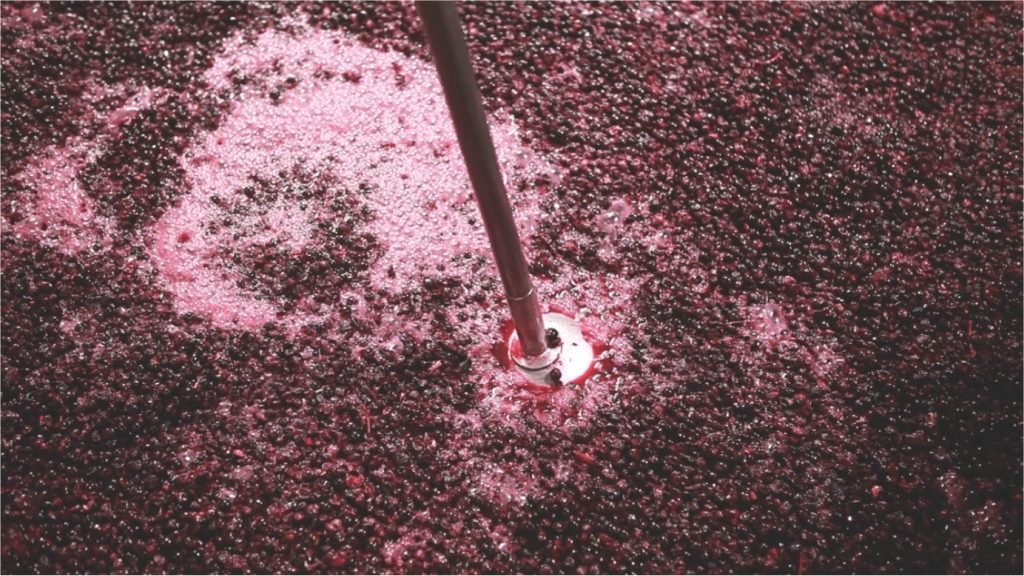
Continual learning
Moreover, the potential is not yet fully realised. Ocio’s story is of continual learning, adaptation and evolution.
After two decades, Ocio still bears the hallmarks of its origin. For its Pinot Noir project, Cono Sur called in Burgundian winemaking consultant Martin Prieur to assist. The French influence is still evident: a cold maceration for flavour and colour, and French oak as the wine matures.
It is not a tribute act, though. Realising that the original Chimbarongo site was not quite what was needed, Cono Sur planted vines in coastal San Antonio to secure the wine’s future. The 2021 vintage was the first to be sourced entirely from that site.
In that sense, Ocio is emblematic of the Cono Sur approach overall. Although the price points may vary, all the wines illustrate a responsiveness to Chilean terroir. Taken as a whole, the range demonstrates how Chile can create wines that are both high-quality and distinctive.
“We’re not trying to make the best copy of Burgundy in Chile,” Ríos contended. “I think we have a great ambassador for Chilean Pinot Noir in the world, and its name is Ocio.”
Related news
US restaurants pushing wine markups to six times cost
Fine wine market stabilised during H1 as US buyers 're-engaged'


