



Making the most of sake’s ‘blank slate’ potential
In her work at Akashi-Tai, Miho Komatsu regularly faces misconceptions and confusion about sake. But, rather than simplifying the category, she sees its future success being built on education and embracing its “entirely distinctive” profile.
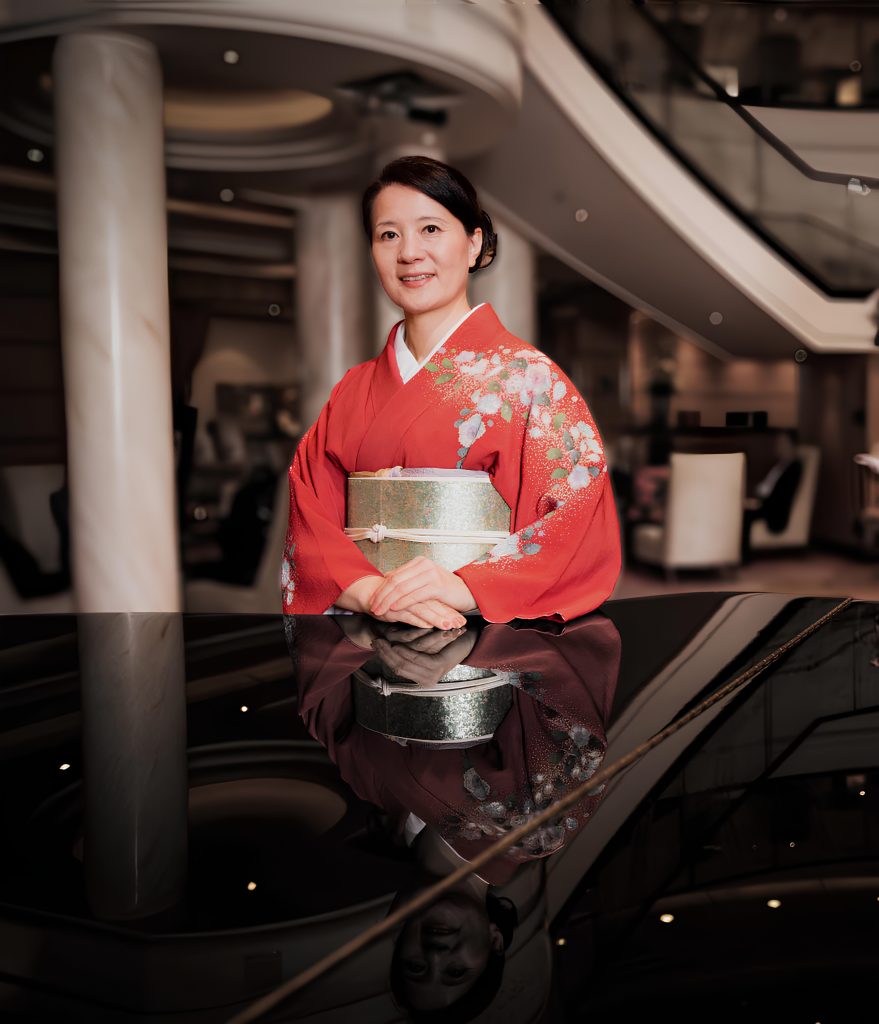
If there’s a misconception about Japanese sake (sake), Miho Komatsu will have heard it.
‘It’s a high-proof spirit, isn’t it?’
‘If it’s a rice wine, surely that means there’s fruit in it.’
‘I’ve heard of it – that’s the one you have to serve really cold or really hot.’
In her role as global head of advocacy at Akashi-Tai, Komatsu has battled against all the above misconceptions, and plenty more besides.
In markets like the UK, it can be hard to communicate sake, which remains one of the least understood alcohol categories among the general public. Even for Akashi-Tai, the market’s industry leader, it is an important challenge.
Yet it is not a wholly negative picture. That potential confusion is a double-edged sword.
“On one hand, lack of understanding can create hesitation, she explains. “Many consumers are unfamiliar with how sake is made and may find technical language intimidating. Misconceptions can also make the category feel less accessible.
“However, it also creates a valuable opportunity. Because sake is still relatively unknown in many markets, there is a ‘blank slate’ effect, which allows us to shape understanding in a modern, relevant way.”
Her role is therefore not only to promote sake, but also to teach trade professionals and the UK trade about it (unsurprisingly, she is a WSET-certified sake educator and holds APP (Approved Program Provider) status.
In light of that, she has attained a rare knowledge – she not only knows the category inside-out, but also understands the work necessary to increase its recognition beyond Japan.
Leaning into the difference
Her starting point is often to embrace sake’s difference, sitting outside the tripartite market structure of beer, wine and spirits.
“Sake’s USP lies in its unique combination of craft, versatility, and accessibility,” she comments, “allowing it to sit comfortably across wine and spirits occasions while offering something entirely distinctive.”
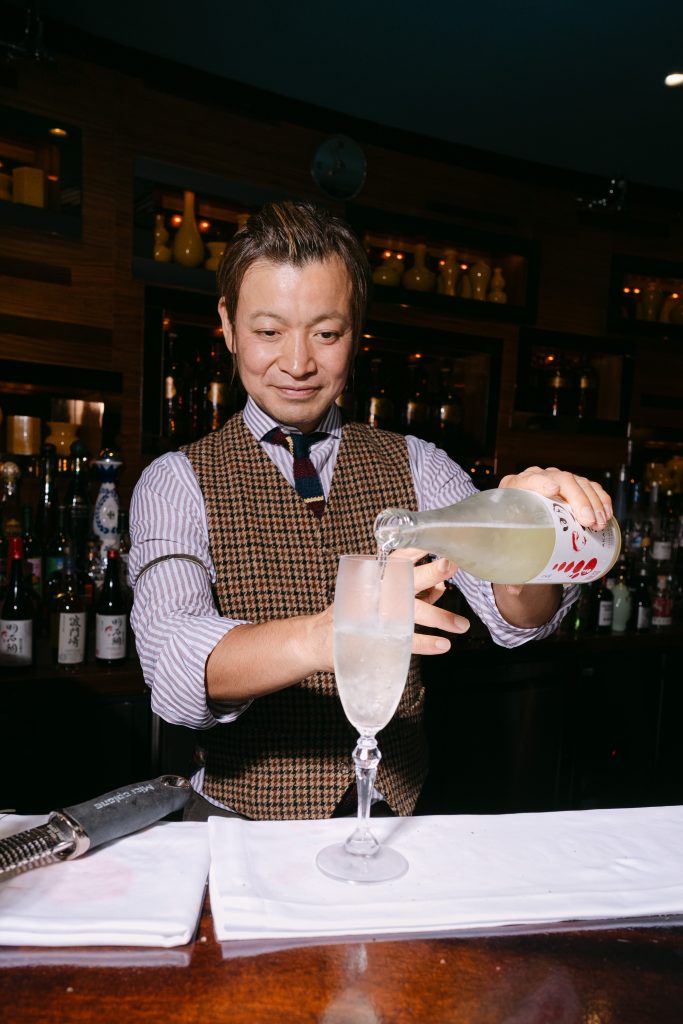
Its distinctive nature means that the usual rules do not apply for sake. For instance, the edicts of wine pairing are irrelevant, as wine’s structure is based on acid and tannin while sake is umami-driven (thanks to its richness in glutamates).
“Unlike wine,” Komatsu explains, “sake is low in acidity, contains no tannins, and is higher in amino acids, allowing it to ‘hug’ food and soften intense flavours. This makes it exceptionally versatile across a wide range of cuisines and occasions – from oysters and carpaccio to BBQ grill, cheese and fish & chips.”
She highlights how sake also benefits from current dietary trends. As it is made from just rice, water, yeast, and rice koji, it contains no preservatives or added sulfates or flavouring. The simple ingredient list makes it gluten-free and vegan, aligning it with lifestyles that sometimes struggle to find suitable alcoholic products.
In fact, sake is not just suited to different settings compared to other products, but is innately versatile. It can be served on its own at different temperatures or can be used in a cocktail, with or without food and at any number of serving temperatures.
“Whether it is enjoyed with food, on its own, the thread is always the same – craftsmanship, purity, and versatility,” Komatsu comments
“In gastronomy, sake acts as an umami enhancer that supports and elevates dishes. When enjoyed alone, it becomes a showcase of nuance, texture, and style variation. In cocktails, it offers a low-ABV, flavour-enhancing base that brings subtle complexity.”
Winning over the industry
There are, clearly, a number of positions sake can take outside its home market. Yet Komatsu’s challenge is to find the pathways that will give it a powerful platform.
The journey is, of course, already underway. In the UK, the sake market is projected to exceed £222 million by 2028 and Akashi-Tai, as the market leader, has seen growth of around 26% year-on-year. As mainstream outlets such as Majestic, Waitrose and Amazon stock more sake, its visibility is increasing.
She summarises: “The UK is currently one of the most exciting growth markets for sake, driven by premiumisation, curiosity in Japanese culture, and expanding accessibility.”
How, then, can she shift the dial and promote sake even further? Education is key to her strategy, but that is not just empty posturing: Akashi-Tai has embedded it into its business practices.
Tasting and training are its bread and butter, whether that is for internal teams, trade partners or consumers. Ranging from casual stylistic comparisons to full WSET courses, they ensure that product knowledge is no barrier to the business. Indeed, all the sales team is trained in education, putting it at the heart of the pitch.
That means that sake is no longer a curiosity, but valued for what it can bring to the table. In particular, that has helped Akashi-Tai expand beyond Japanese restaurants and bars. As Komatsu explains: “The key is to position sake not as a niche product, but as a versatile, premium alternative to wine that naturally enhances existing menus.”
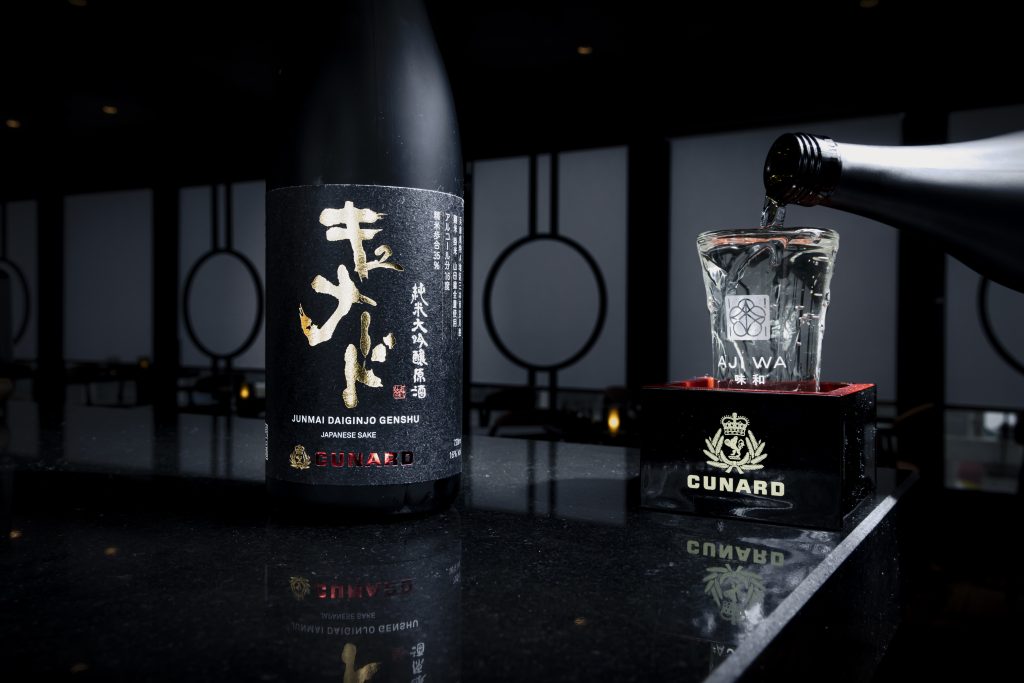
As the uptake increases, that does mean Akashi-Tai can be bolder with its events and activities. It has firmly established itself in the lucrative premium category, trading on sake’s artisanal nature, through key partnerships.
For instance, it has developed an award-winning range of premium sake exclusively for Cunard in collaboration with Edward Dieusaert, director of food and beverage development, recognised at the Kura Master Awards in Paris. This range is served across the entire fleet — including QE, QA, QM2 and QV. Cunard has also been offering Akashi-Tai sake onboard since around 2010, reflecting a long-standing commitment to broadening and elevating the guest beverage experience.
In an exciting recent development, Akashi-Tai also hosted its first UK bar takeover earlier this year. It invited Bar BenFiddich, Japan’s number one according to World’s 50 Best, to run shifts led by owner Hiroyasu Kayama at prestigious venues such as China Tang at The Dorchester Hotel and Sexy Fish in Manchester.
“This kind of collaboration helps position sake in leading global bar culture and shows its relevance in contemporary hospitality environments,” Komatsu enthuses.
It may not be the easiest product to bring to new audiences, but she is sure that the effort will be rewarded.
“Once consumers understand that sake is a carefully brewed craft product with natural ingredients and wide versatility, perception shifts quickly,” she says, “and long-term appreciation follows.”
Related news
India tightens rules on high-alcohol oral medicines to curb misuse
Pioneering Malaysian brewery cleared of smuggling suspicions after police probe


