



Côtes du Rhône and Alsace join forces in Asia
In a joint presentation, Côtes du Rhône and Alsace set aside the old French script of heritage and hierarchy to talk about uniting themes of freshness, generational handover and wines that no longer need a dinner table.
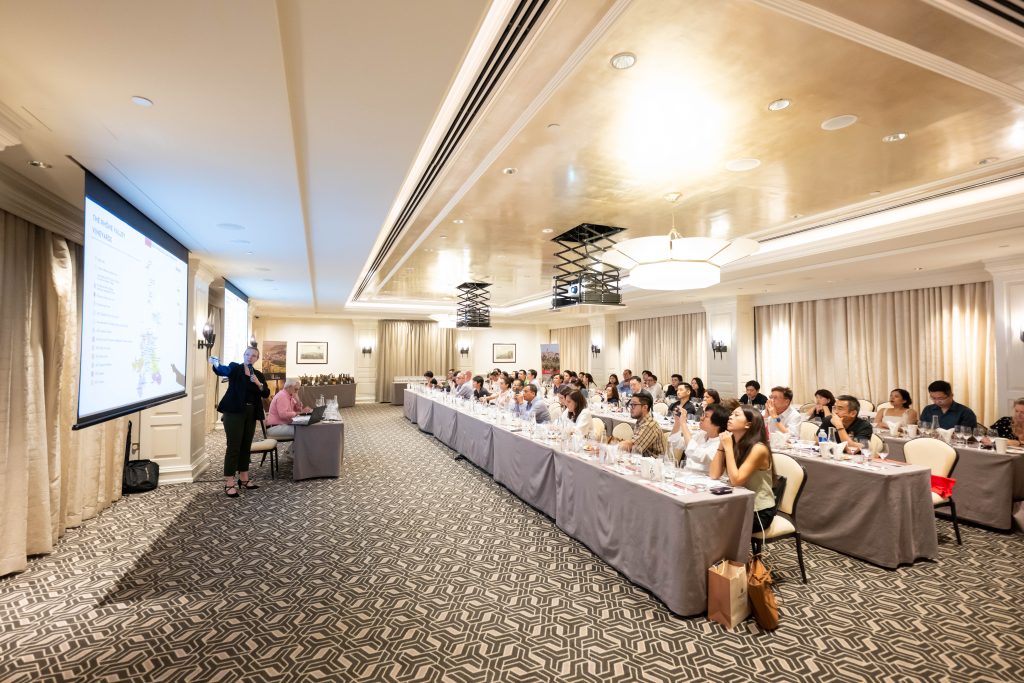
The white-wine-dominant Alsace joined forces with the red-wine focused region of Rhône in a series of presentations across Asia, to audiences of importers and trade in Japan, Hong Kong, Taiwan and Singapore. “We complement each other,” said Thierry Fritsch, head of training and conferences, at CIVA, the Alsace Wine Board. “They’re red, we’re white. We have the same philosophy of grape varieties; we don’t show off.” Julie Coutton of Inter Rhône, opening her half of the masterclass, agreed the fit is perfect. Being “unpretentious, simple and open-minded,” she said, “is truly something that we share.”
Underneath the stylistic contrast, the two regions shared similar stories of celebrating diversity over ages, a generational handover in the cellar, a decisive turn towards freshness and wine stepping out of its formal, table and pairing-bound dining format.
Alsace: complex, not complicated
Alsace is long and narrow. The vineyards run more than 100 kilometres and by law, since 1959, its wines must go into the region’s distinctive slender flute bottle. “Maybe the shape of this bottle reminds us of the shape of the vineyards: very long, very narrow,” Fritsch mused. “And in all the wines you will taste a backbone of acidity. All our wines are built around this freshness.”
The region boasts a high concentration of Michelin Guide restaurants, and the wines – which range from dry Riesling, Gewurztraminer, Pinot Blanc, among others – are produced to be enjoyed with food.
He is candid about the complexity of the region’s baroque classification: seven main grapes and 53 appellations, of which 51 are Grand Crus sitting atop a single regional appellation. The wines and the region, he insists, are “not complicated – they’re complex.”
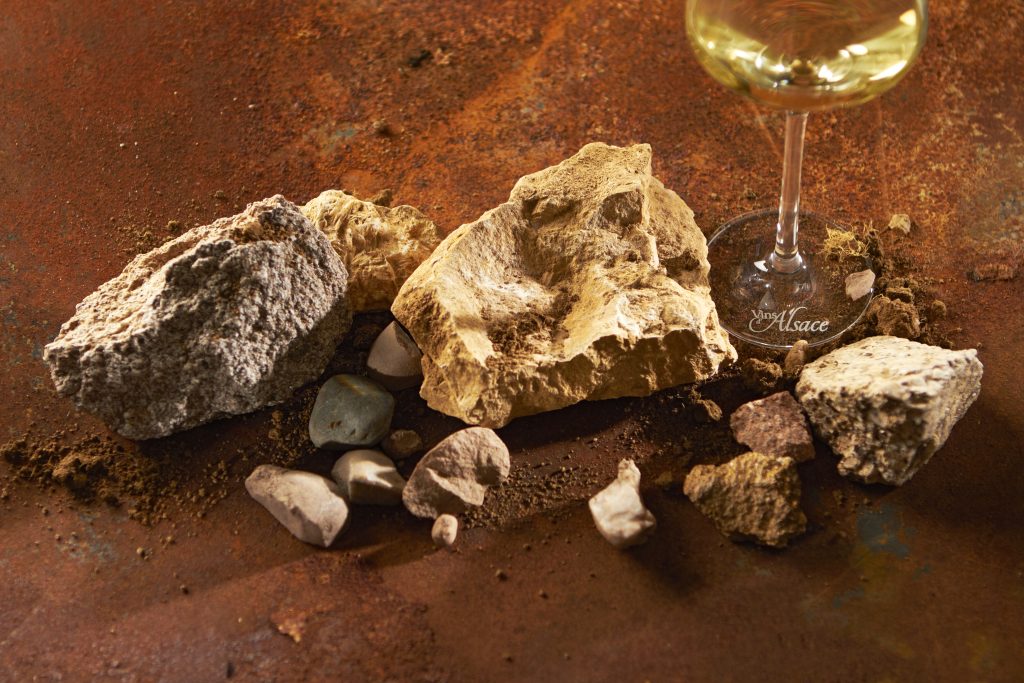
Notably, roughly 75% of its wines are sold in France. “If you draw a circle with a 400-kilometre radius around Colmar, you will capture more than 80% of our sales,” he said. In export markets, Asia is about widening that circle, finding new markets and about perception.
Having worked in Asian markets since 1997, Fritsch shared his deep understanding of how the wines find their places in Asian capitals. Japan was first to embrace Alsace, and over 30 years, he has witnessed the region develop a nuanced wine culture of its own. In Singapore, the top imported Alsace grape is not Riesling but Gewurztraminer. “I was surprised when I checked the figures,” he admitted, noting that “we don’t drink a lot of Gewurztraminer at home.” The other Singapore surprise is fizz. Crémant d’Alsace, which celebrates its 50th anniversary this year, has grown from 14% of the region’s production in 1997 to 40% today, and its sales in Singapore are climbing alongside the grand crus.
He saw consumer trends across markets moving Alsace’s way: “People are looking for white, people are looking for more elegance in the red, and people are looking for bubbles.” In Shanghai, he has watched white wine climb from an afterthought to achieve parity and a then majority share in Cantonese-influenced Shenzhen. “The white wines are booming over there. It’s just amazing.”
On food pairing, a reflex claim of every region courting Asia, three decades of travel has made him sceptical of formulas. “A lot of regions say ‘we produce food-friendly wines’. When you ask them how they match, they don’t know the answer,” he shared. The French instinct pairs spicy food with Gewurztraminer, whose “fatness will overcoat the spices and slow them down.” Asian palates, he has come to understand, often want the opposite, and Alsace’s dry Riesling fits the bill “because its backbone acidity, the Riesling will boost and reveal all the flavours of the dishes.”
Climate change
In the vineyard, Alsace’s response to climate change is not an abstract concept. “Strasbourg today has the climate Lyon had 50 years ago,” he said. “Growers are responding structurally, planting high-density vineyards up to 8–9,000 vines per hectare against a 4,500 minimum required in the grand crus, to push roots, temper ripeness and hold alcohol down.”
Sustainability, meanwhile, is coded into the Alsatian way. Alsace’s first organic estate dates back to 1961, and today roughly 35% of the region’s surface is organic against a French average of 22%. “It’s not marketing. We produce wine in respect of the environment, the land and our consumers.”
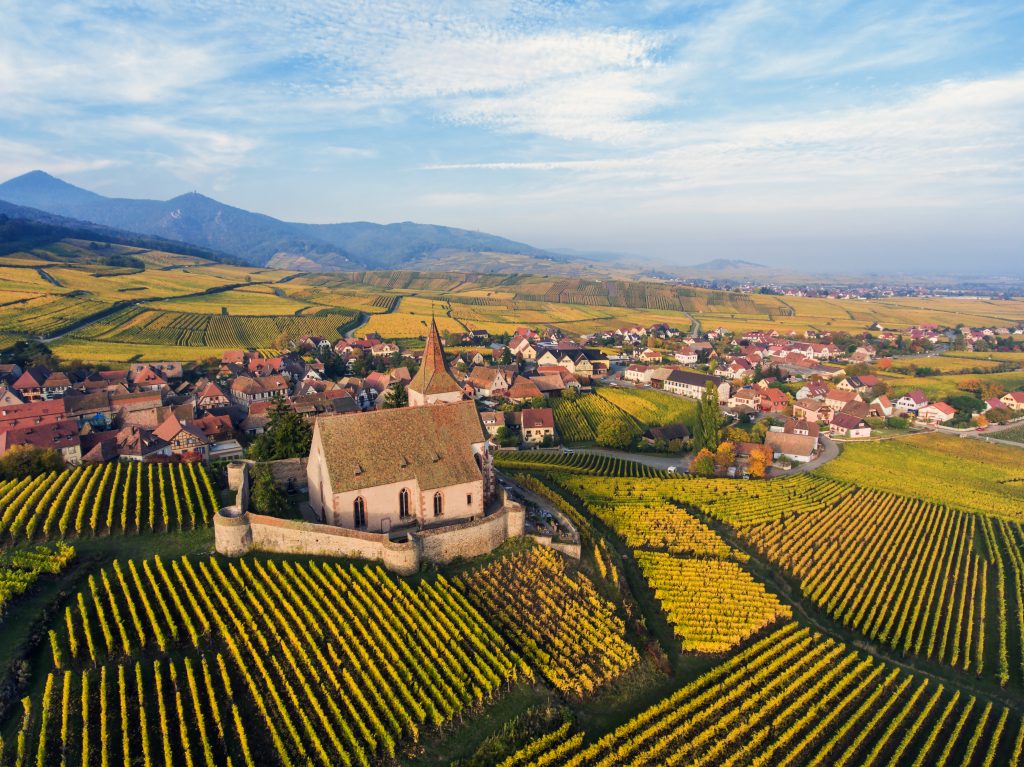
The clearest sign of change may be Pinot Noir, Alsace’s only red, now making up 13% of the production. “The Pinot Noir you drink now didn’t exist 30 years ago,” Fritsch said. “It’s not an evolution, but a revolution. The new generation has travelled a lot. They were in New Zealand, Burgundy, America and just learned how to produce Pinot Noir.”
Beyond racy, elegant and precise Pinot Noirs, the young are experimenting with maceration and natural styles, drier wines, even trialling plantings of Assyrtiko.
The older generation is handing over to the new. The prevailing attitude of fathers to sons and increasingly daughters, citing estates such as Domaine Pfister under Melanie Pfister, is one of generous handover. “This is your land, your heritage, and you have to continue as you see best,” is how Fritsch summed up the running sentiment. The new generation still respects the tradition, terroir and Alsace image. The distinction is the mindset: “Before it was fixed, it was square. Now it’s open.”
Côtes du Rhône recalibrated: 2000 years of adaptation
Roughly 500 kilometers south-east, Coutton’s argument starts from history, rather than image. “You cannot live and thrive and maintain your vineyards and keep making wine for 2000 years without adapting,” she said at the outset, as she introduced Côtes du Rhône’s deep-rooted tradition of winemaking and its constant evolution through the ages.
The Romans made wine with added water, honey, salt, spices and fruit, a style she has tasted. “It’s extremely interesting, but it doesn’t taste good,” she admitted. Côtes du Rhône, nearly 90 years old as an appellation, was from the very outset written about diversity and blending, with 19 varieties codified in its founding rules in 1937. “Blending is part of our DNA,” said Coutton. “All our winemakers, at heart, they’re master blenders.”
Today’s Côtes du Rhône winemakers work with a generous toolkit of 27 permitted varieties led by Grenache, Syrah, Mourvèdre. The wider Rhône Valley, whose vineyards stretch 200 km along the Rhône River from Lyon to Avignon, encompasses 32 appellations. Within it, the Côtes du Rhône family forms a dynamic quality pyramid of base-level Côtes du Rhône, Côtes du Rhône Villages without geographical name, Côtes du Rhône Villages and its 21 named villages and 18 crus at the summit. In 2025, production of these appellations was still dominated by red wine: around 85% reds, 8% whites and 7% rosés, with whites steadily growing in importance.
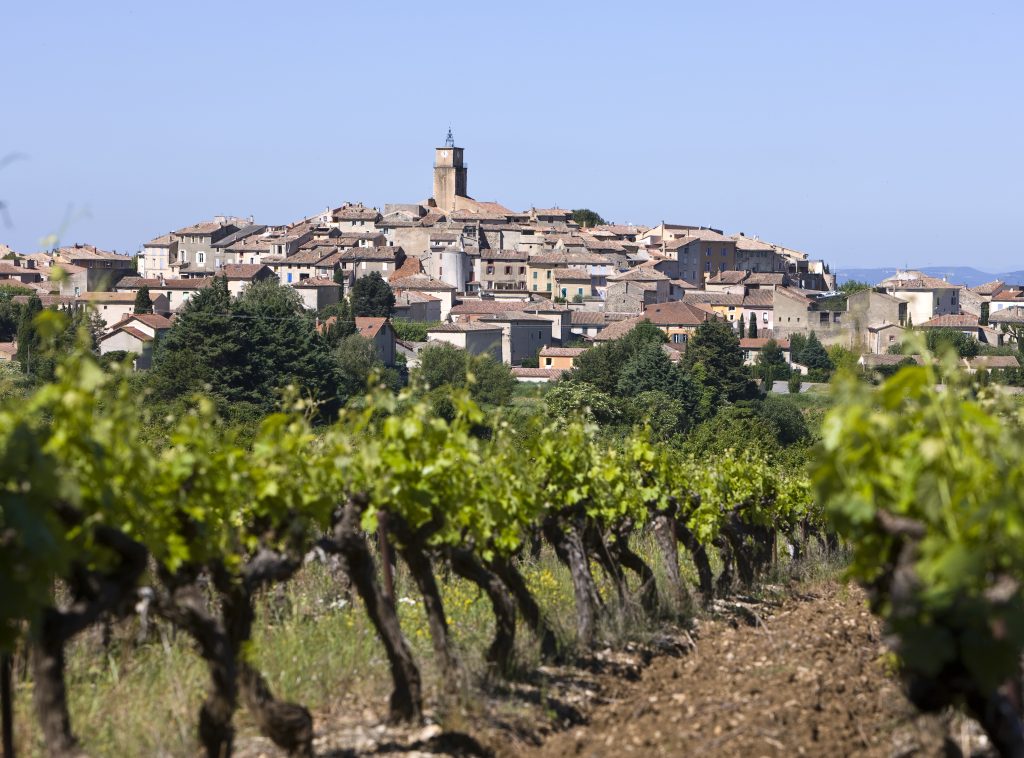
Coutton wanted her audience to know the pyramid is not carved in stone. Cairanne joined the cru family a decade ago, Laudun was promoted to become the 18th cru in September 2024, Gigondas has had its appellation extended to white wines from the 2023 vintage; and the red-only named villages are now collectively pushing to have their whites recognised too.
What drives a village up the ladder is people, not paperwork. “It’s not just about getting quality recognised — it’s not just a big file,” she said. “It’s because there’s a collective of growers and winemakers working together to say: hey, what we do is important and deserves recognition.”
Adaptation moving forward
The adaptation Coutton speaks of bends towards freshness. “It’s been mitigating the effects of climate change in the vineyard and cellars and finding strategies to work around that to retain freshness and balance,” she said. In practice, it means adapting to unusual conditions of very warm vintages on the one hand, and frosts such as in 2021 on the other. It also means using lesser-known varieties like Cinsault, Counoise, and Piquepoul to drive freshness in the blends.
A generational transition
Similar to Alsace, the generational change is defining. “There’s been a general move towards freshness, with the help of the younger generation coming into the family business,” said Coutton, estimating that 70–80% of Rhône companies now have 20–40-year-olds taking part in decision-making. This cohort is younger, educated, shaped by vintages in Australia, New Zealand, South Africa and the US and by shared years at the Lycée Viticole in Orange. Their parents are listening. Ask a grower why the estate has gone organic, biodynamic or regenerative, and Coutton finds the answer is often: “Because my kids wanted to do that and it makes sense. So, we’re doing it.”
The sustainability move is deliberate and measured. “It’s not bold moves, but small, simple, discrete ways to reduce our use of water, or to reduce waste that we generate,” she shared. “Right now, they’ve been trying and testing. In the next five to 10 years, we’re going to see way more of that.”
In the Rhône Valley, for the 2025 vintage, 25% of the harvest was certified as organic or biodynamic and 37% as HVE3. More than 60 per cent of total production is therefore covered by an environmental certification or label.
And, echoing Fritsch on breaking the food pairing codes, Coutton also finds wine has moved away from the traditions of formal dining and pairings. “Wine does not only belong to the table. A big shift that’s happening in consumption is people drinking in all sorts of settings,” she said. This summer, Côtes du Rhône is rolling container wine bars into major French music festivals, like Musilac in Aix-les-Bains, headlined by Katy Perry this year to a potential crowd of 200,000. “There’s no big masterclass. We are there because the wines are very good and you can enjoy them anywhere, outside of the table, in a place where you’re just having a fun time.”
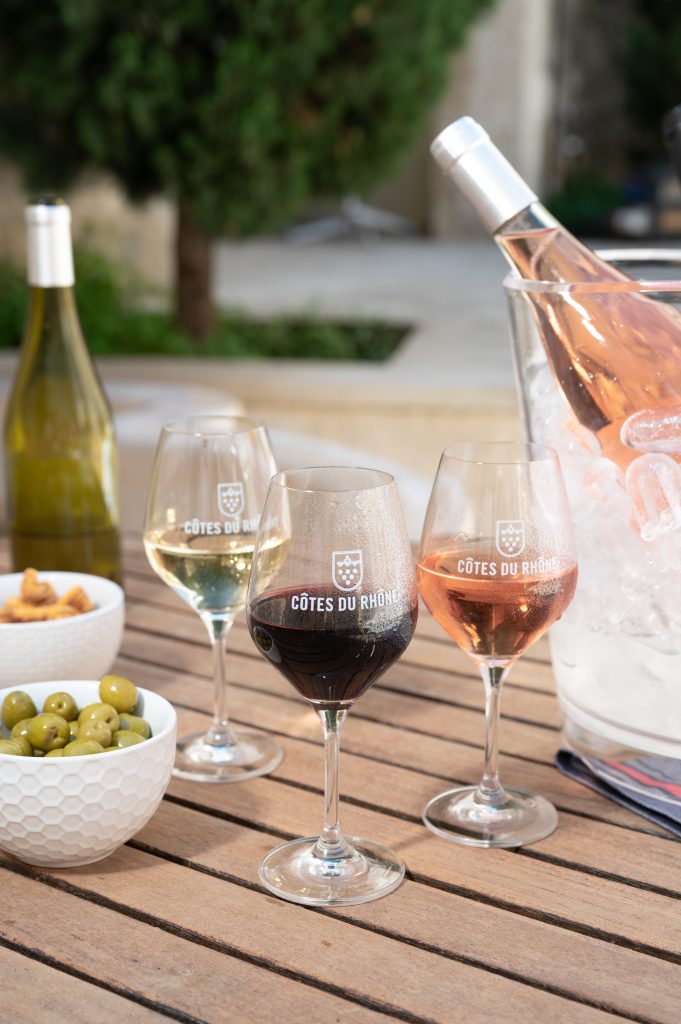
In response to shifting tastes, Côtes du Rhône new campaign, ‘Refresh your wines’, targets 21–40-year-olds, inviting them to rediscover the appellation through a more contemporary approach that reflects today’s lifestyles and drinking occasions. “We are not shy to show bottles of reds that have been chilled. We can go so far as to put some ice cubes in a rosé – it’s part of the simple and not-taking-ourselves-so-seriously trend as well.”
Find out more through the appellations’ official channels:
CIVA (Comité Interprofessionnel des Vins d’Alsace)
https://www.vinsalsace.com/
IG: WinesOfAlsace | FB: AlsaceWinesOfficial
Inter Rhône (Interprofession des Vins AOC Côtes du Rhône et Vallée du Rhône)
https://www.vins-rhone.com/en www.cotesdurhone.com
IG: cotesdurhone | FB: CôtesduRhône
Related news
India tightens rules on high-alcohol oral medicines to curb misuse
Pioneering Malaysian brewery cleared of smuggling suspicions after police probe
Adie Broswon Breweries and United Breweries sign manufacturing pact


