



Bordeaux 2025 in a nutshell: a high plateau
On his journey back from the en primeur tastings, db’s Bordeaux correspondent Colin Hay shares his initial impressions of an “incomparable vintage of great balance and harmony forged at the limits of climatic excess”.
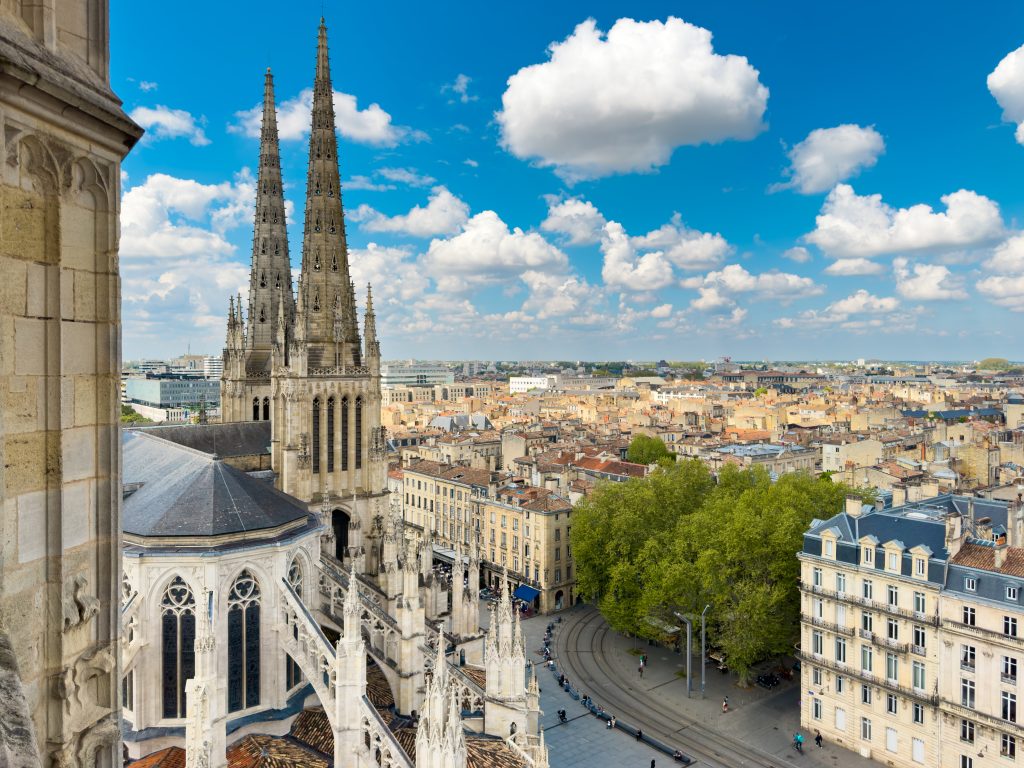
I write this, as is my now annual ritual, on the TGV as it races through south-western France on my way back to Paris. I tend to take the direct train from Bordeaux which has me back in the capital in just over two hours. But this year it’s the TGV from Libourne (5 minutes from Pomerol; 10 minutes from St-Emilion). It too is direct and it too travels faster than any train I’d ever been on before I came to live in France over a decade ago now. But, as it stops twice en route, it takes around an hour longer.
And, today at least, that’s a blessing. For 2025 is not the easiest of vintages to attempt to capture in two hours of feverish tapping on the keyboard. Let’s see where we’ve got to by the time we pause in Angoulême!
To be honest, I’m a little exhausted. I have tasted close to 500 wines and have amassed over 100 pages of tasting notes. These I hope to finalise and publish in the two weeks to come alongside my now customary series of appellation-by-appellation profiles (an ominously Herculean task in itself). By that time we may well already have seen an early flurry of releases. Indeed, I’m expecting the first this week (perhaps as early as Wednesday morning).
But although I’m exhausted – physically and perhaps emotionally too – and although en primeur 2025 has certainly been intense, it has never been gruelling. There are two reasons for this. The first is the characteristic kindness, generosity, and friendship of those who have shared their wines with us, talked to us (often in great candour) about the climatic conditions that have shaped them and the market conditions they will face when it comes to releasing them (the source of much anxiety). The second is the sheer quality of the wines themselves.
A high plateau
This time last year I characterised Bordeaux 2024 as a pyramidal-shaped vintage – with the base much more densely populated by wines and a long way from the apex.
2025, by contrast, is very different. Let’s deploy a visual analogy once again and call it a high plateau vintage. By that I mean that although, once again, this is a far from homogeneous vintage, it is undoubtedly excellent at its best. And, just as importantly, a great number of wines in a great variety of appellations on both the left- and right-banks and on a great diversity of soil types and terroirs have attained that excellence.
But this was a trying, difficult and stressful vintage in the vineyard and it was often quite challenging technically to vinify as well.
Close to the edge
Indeed, although excellence is widespread and the vast majority of the wines I have tasted are at least on a par with those produced by the same property in 2020 and 2022 (as we will see in detail when it comes to my appellation-by-appellation profiles), I return from Bordeaux anxious for the future – and not for the first time. But that anxiety is now much more widely shared than it was.
That is my first reflex. But don’t get me wrong. My anxiety has nothing to do with the quality of the en primeur samples that I have tasted. It is, instead, about the rather fortuitous – even serendipitous – set of meteorological conditions and contingencies that ultimately allowed these wines to turn out as well as they have, and the implications of that for the future.
Things could have been very different; and had they been only slightly different, things would not have turned out nearly so well. Perhaps more to the point, the probability of the kinds of compensating episodes that in 2025 ultimately tamed the searing heat and dryness of the vintage is falling. And it is falling at precisely the same time that the frightening combination of excessive heat and dryness is becoming endemic. In 2025, in other words, we came very close to the edge. We did so because, without the replenishment to full capacity of the water table throughout 2024, the further topping-up of the water table preceding the start of the vegetative cycle in 2025, the small potential crop that was the legacy of poor flowering in 2024 and, no less crucially, the rainfall episodes (above all at the end of August and the start of September) that allowed full maturation to be achieved, the vintage would have been a write-off. In short, this time we were lucky.
Here is not perhaps the place to discuss the implications of all of this in any detail. But what is clear is that the anxiety that comes from relying on serendipity is now widespread in Bordeaux. It is something to which I intend to return and something that Bordeaux now needs to think about, to talk about and, above all, to start to respond to, collectively.
Balance
It might seem paradoxical to suggest that 2025 is something of a breaking-point or boundary vintage and at the same time to suggest that it is a vintage of balance and harmony. But, as the TGV draws into Angoulême, that is how I see it. And that in turn suggests that it is something of a paradoxical vintage. That, too, feels right.
First of all, and as I have already sought to emphasise, this is an extremely precocious vintage characterised by at times excessive heat and sustained dryness, verging on drought in many places.
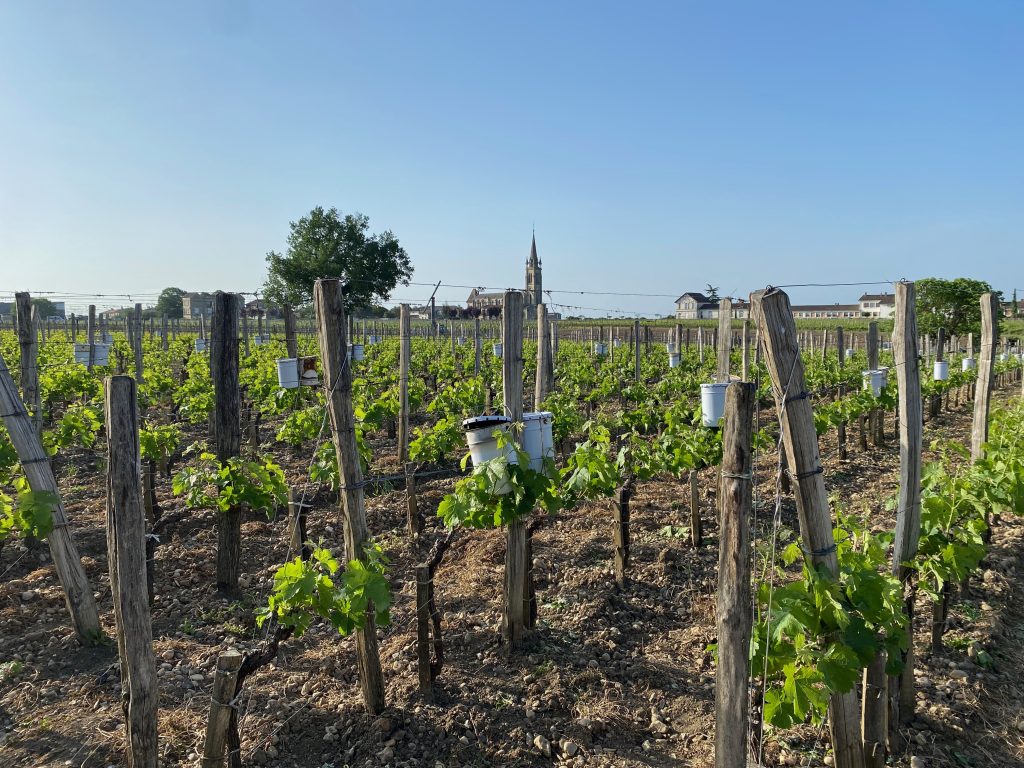
But herein lies the first of a number of the complexities that are crucial to understanding the vintage. For, whilst many Pomerol producers reported essentially three months without rainfall, vineyards in almost all other appellations received just enough rainfall – and often just when it was most needed – to prevent the onset of extreme hydric stress (unlike 2022). For a more detailed breakdown of the data at the appellation level see my vintage profile.
And even in Pomerol, above all on the plateau where a number of properties reported localised temperatures exceeding 50 degrees in the height of the summer, deep clay typically provided just enough residual water to the plant to see it through to the rainfall at the end of August that would ultimately save the vintage.
Where this was so, there was no actual blockage in maturation, with the effect of tolerable hydric stress being principally to reduce the plant’s capacity for photosynthesis and hence its production of sugar. This is why, in the end, we have a vintage with typically modest to low levels of alcohol and yet, for the most part, full phenolic ripeness. That is the secret to its balance.
Fine line
Yet here we come across a second complexity. For there is a very fine line between tolerable and intolerable hydric stress; between a deceleration of maturation on the one hand and full blockage on the other. Invariably, to attain full phenolic maturation of the grapes required the absence of blockage and sufficient time between the rainfall at the end of August/start of September and the harvesting of the grapes for the maturation process to resume, accelerate and conclude. And just to make this more complex still, during this final phase of maturation, triggered by the vital rainfall episode, acidity was falling significantly in the fruit (with pHs rising rapidly).
Partner Content
The implications of this were two-fold:
- many properties faced a trade-off between the full phenolic maturity they sought and retaining acidity in the fruit (the vital source of freshness); and,
- picking dates for each varietal, on each plot and sub-plot, and on each terroir were absolutely crucial.
Taken together these are the principle sources of unevenness – heterogeneity – in this vintage and that is reflected in my tasting notes. Whilst the figurative high plateau is densely dotted with great wines, there are plenty that failed to make it off the valley floor and even onto the lower slopes. This is true in all appellations, but some more than others.
As that already suggests, this will ultimately be a vintage to buy carefully, despite its greatness. And there are no simple proxies that we can use as a guide to quality. Here, too, we need to be careful. For, given the above, it might be tempting to see alcohol levels and pH as the key to the success of individual wines.
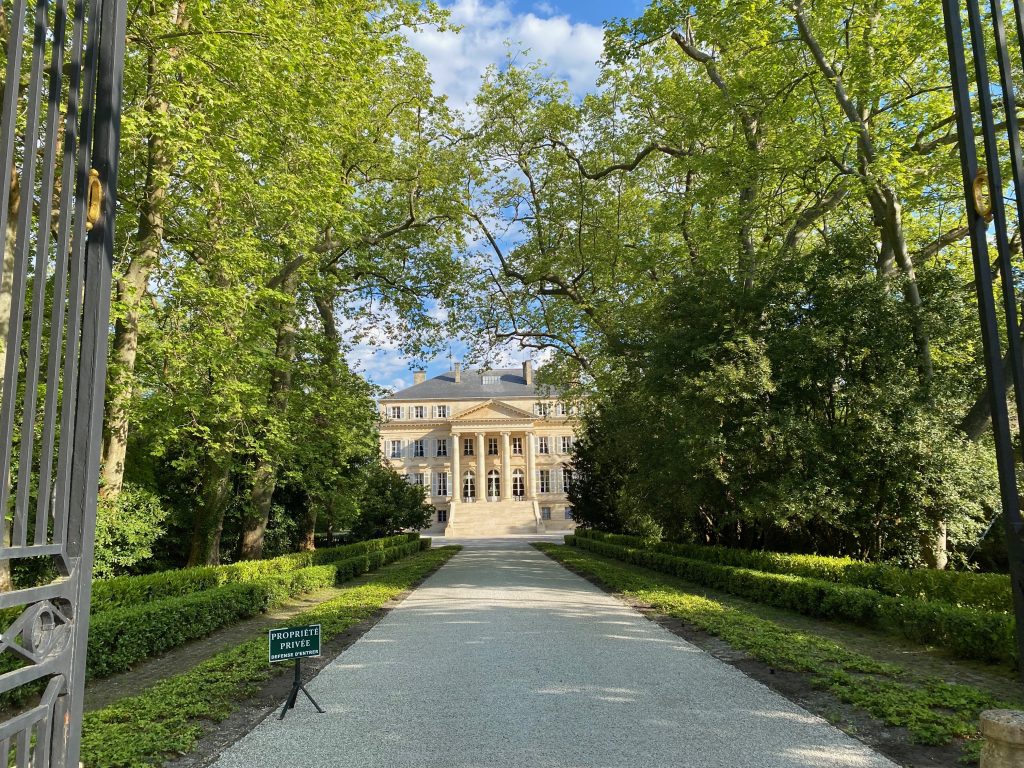
That would be a dangerous mistake in my view. For amongst the greatest wines of the vintage we have very significant and unusual differences in alcohol levels. At Château Margaux, for instance, with all his experience in California, Philippe Bascaules waited and waited for the resumption of the maturation of his Cabernet Sauvignon after the rain. The result is a brilliant wine, somewhat unique in the context of the vintage, at nearly 14 degree of alcohol with the first Cabernet picked after all his neighbours has finished the harvest. Yet, further north in Pauillac, Eric Kohler at Château Lafite-Rothschild was able to pick his Cabernet Sauvignon at full phenolic maturity rather earlier and at just 12.5 degrees of potential alcohol. The pH levels of the finished wines are almost identical.
Yet, by the same token, we have wines with both low alcohol levels and with high alcohol that simply lack full phenolic maturity, as it evident from the quality and presentation of their tannins. We also have some (admittedly rare) examples of wines with palpable levels of residual sugar. This is almost certainly the product of some tiny, extremely desiccated and thick-skinned grapes making it into the vinification vessel. Such grapes are very difficult to vinify and often seep unfermented sugar into the vat at the end of the vinification process.
In short, it’s complex.
Incomparable
For all of these and numerous other reasons, Bordeaux 2025 is incomparable as a vintage. It was forged out of meteorological conditions that were unprecedented – just as, in a sense, it will be released in market conditions that are unprecedented. It was also made by the first generation of vineyard managers and wine-makers to have the capacity to fashion greatness out of conditions such as these.
Respecting that achievement requires us to put aside simple generalisations; the simplest of all is the myth of the pair-matched vintage twin.
Without wishing to be harsh, it has almost always been a fool’s errand to compare vintages – or at least to expect a relevant comparator vintage from the past that might, for instance, give us a guide to how this or any other vintage will evolve in bottle and with the passage of time. But if there was ever any value in such comparisons, those days are over.
Baptiste Guinaudeau at Lafleur was perhaps the clearest on this point. With characteristic eloquence he talks of 2025 as belonging to a new generation of vintages that he calls post-modern. This new epoch, that we have entered only recently, is different in kind to the wines of the last 150 years which still typically provide our points of comparative reference.
That said, talk of comparisons still abounds. And, paradoxical again though it might seem, the most credible ones in a way are historical one – with 1989, 1961 and even 1947 all being offered as examples of vintages that offer some at least superficial similarities with 2025. Frankly, I remain sceptical. None of these vintages were available to have been tasted en primeur and, clearly had they been, they would have tasted nothing like the wines of today (whether from 2023, 2024 or 2025). They were made in another time, to a different code of viticulture and with altogether different yields to those seen in 2025.
For that reason alone, it is for me the comparison with more recent vintages that is more interesting. In terms of the clarity and crystalline purity of the fruit, its ripeness and its typical freshness it is 2020 and 2022 that come closest to me as points of reference for 2025. But 2025 is typically more luminous than both, more obviously structured than 2020 if less so than 2022, and perhaps more radiant in its capacity to express the terroir identity of its origins than either. It is perhaps also slightly more uneven that either, with greater within- and between-appellation variation (to which I will return). The cool, measured, balanced and harmonious depth of the mid-palate in the best wines of 2025 reminds me most of 2016 and 2010; where it is a little more solar and opulent (though this is rare) it can also remind me of 2019.
Crucially, for me at least, and as the TGV pulls into Paris Montparnasse on time, Bordeaux 2025 is the qualitative equal of each of these Bordeaux legends … 2010; 2016; 2019; 2020; 2022 … 2025.
What’s to come
In the days and weeks to come I hope to publish my appellation-by-appellation profiles. Alongside each piece and simultaneously we will release the associated tasting notes and ratings on db’s designated en primeur pages. These will be searchable by wine, property and appellation.
After that will come an analysis of the release prices and their all-important market reception.
By the time all of that is published, I hope to have revealed:
- the identity of the first wine ever to make me cry like a baby;
- my sense of the relative distribution of quality between the right- and left-banks and between appellations;
- my assessment of the dry (and not so dry) whites and of Sauternes and Barsac;
- my wine and wines of the vintage;
- the stars of each appellation;
- the two wines that broke the ratings system that I have used up until now for en primeur;
- my coups de coeurs; and, finally,
- my value picks.
Related news
Bordeaux 2025: some additional tasting notes
Bordeaux 2025 en primeur: star picks from the Right Bank 'satellites'
Bordeaux 2025 en primeur: Sauternes & Barsac ‘very rich, very powerful’



Great insights as usual, thanks a lot!
I look forward to reading you tasting notes and your assessment of the release prices.