



Should Spain’s top sparkling wines drop the name Cava?
During a discussion at London’s Taste Spain trade event on the fine wines from Spain, it was argued that the country’s most famous fizz, Cava, should change its name – at least for for its top tier cuvées. Patrick Schmitt MW reports.
The topic was fine wines from Spain, and the guests were some of the most knowledgeable on the subject, with technical director Carlos López de la Calle from Bodega Artadi – representing the producer’s view; Camino Restaurants founder Richard Bigg – representing the Spanish food and wine scene in London – and Sarah Jane Evans, a Master of Wine, journalist, author, judge, and wine commentator with a deep and long-standing love of all things liquid and Spanish.
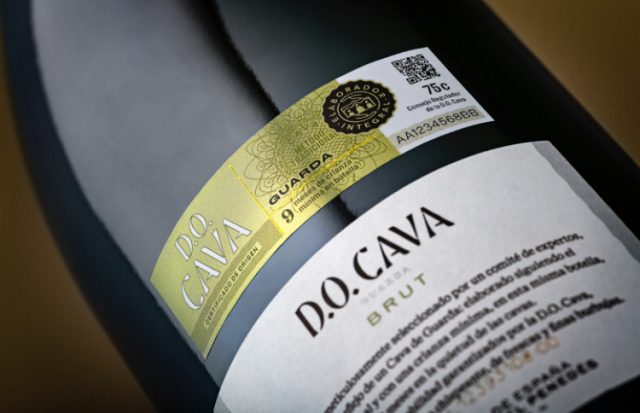
Having covered various issues, such as the secondary market for fine Spanish wine, age-worthy whites from Rioja, and the role of La Place de Bordeaux as a potential way to raise awareness for high-end brands from Iberia, the discussion turned to Spain’s fine fizz, primarily Cava – the traditional method Spanish sparkling wine that mainly hails from the Penedès region of Catalonia, but can also be made in Rioja and Requena, among a few other parts of the country.
And it was at this point that some of the strongest views were shared – as you can hear by listening to a recording of the discussion here and below.
Cava and Corpinnat
For Bigg, collectible status for Cava could be garnered “by some of the very best producers”, naming in particular Recaredo and Gramona – although both have left the DO Cava regulatory board to help create Corpinnat, a stricter collective mark for high-end sparkling wines from Penedès.
Not only do such Spanish sparkling wine brands have a strong reputation, but they are producing age-worthy fizz, often released with 10 years of cellaring, while bringing the market a point of difference from Champagne by using native Spanish grape Xarel-lo.
However, for Carlos López de la Calle, if Spain is to build a fine wine reputation for fizz, it needs to find a new name, and one that’s tied to a specific place.
“I think in order to make Spanish sparkling wine great again, we cannot call it Cava – Cava has suffered so much damage in terms of producing volume that we need to forget about that name,” he began.
A new name needed
As for Corpinnat – which was formed in 2015 by six initial sparkling wine producers, and comprises 11 today – he added, “I know and love all of them, and I’m 100% behind their idea, but my only concern with Corpinnat is that no-one puts Corpinnat in Google and if they do, it won’t appear as an area.”
For Evans, who initially chose to remain silent on the topic, then added to the debate, saying, “When I was finishing my book last year on the wines of Central and Southern Spain – including – Catalonia, I really had to think about Cava, and my conclusion was that Cava should be used for everything aged for less than 18 months,” she said.
Continuing she commented, “But actually all these wonderful and lovely and individual diverse wines that are Cava over 18 months should be called something else, and we should recognise that these are from Catalonia – and that there are different ones that come from Rioja or Requena.”
Partner Content
She concluded, referring to Corpinnat, “I can see why people are leaving Cava, because they have tried everything to make Cava a valid name, but it needs another name.”
Top places for Spanish sparkling
López de la Calle agreed, commenting, “And I think we need to be more specific in terms of the sparkling; we need to define the areas that are specific for sparkling production.”
Among these, he said the most obvious would be Penedès, while another could be Galicia, while for him, there is great potential for northern Spain’s Chacolí (or Txakoli) – which he said benefits from naturally low alcohol levels and high acidity.
In each case, he said, “These are locations that are unique for their sparkling wines.”
As for Cava, he concluded, “It is too generic”.
Certainly the Cava DO has make considerable efforts to raise its reputation for quality, and, indeed, levels of environmental sustainability too – with all Guarda Superior Cavas released from 2025 certified as 100% organic.
Speaking to db last year about this particular development, Javier Pagés, president of DO Cava explained that the premium nature of the Spanish fizz, along with its accessibility, were key elements to its success.
“The future of Cava lies in continuing to focus on quality and the value of the Cava brand,” he said.
Read more
Why Cava is ‘undergoing an exciting renaissance’
Cava DO now 100% organic for Cava de Guarda Superior
Premium organic Cava rises in popularity in the US
Spain’s most overlooked wines, according to the experts
Related news
Jaume Serra uncovers Cava's Mediterranean identity



If you consider Crémant in France, being Crémant de Bourgogne, Bordeaux, Limoux, Alsace etc, why cannot Cava be called Cava de Rioja, Penedès, Requena etc
No definitely not the word ‘Cava’ is globally recognised. Drop the name Bordeaux, Champagne see the consequences. Just call it Cava Especial or prestige or riserva.