



Bordeaux 2025 en primeur: Saint-Émilion ‘terroir turned out to be crucial’
db Bordeaux correspondent Colin Hay crosses the Pont d’Aquitaine to start his tour of the Right Bank’s 2025 en primeur offerings in Saint-Émilion, home to many of the vintage’s star turns.
In a vintage in which generalisations don’t really apply there is more than the usual occupational hazard in penning an appellation profile of Saint-Émilion. For it is, of course, a vast and diverse appellation with over 4,000 hectares of grand cru vineyards alone in 2025 (in comparison, say, to Margaux’s 1,500 and Pomerol’s 770). It is also arrayed over a rich tapestry of terroirs of rather varying qualities and, not less significantly, differing capacities to cope with the climatic challenges thrown their way.
Of course, heterogeneity is hardly new to Saint-Émilion. We tend to think of it as coming from three sources: first, the sheer size of the appellation; second, the qualitative range and diversity of its terroirs (notably their respective capacities to respond to the climatic conditions they face); and, third, its stylistic diversity.
All were important in 2025. But of the three, it is the second and third that are perhaps the most interesting. Variation in the type and quality of terroir turned out to be crucial. It did so both in the sense that this vintage, more than most (though not unlike 2024 before it), is something of a terroir-amplifier and, no less significantly, that the capacity of limestone and clay-over-limestone terroirs of the plateau and côteaux to continue to supply water to the plant in periods of hydric stress was crucial. The rather more precocious terroirs – those adjoining the plateau of Pomerol and those on the slopes of Saint-Émilion with a southern exposition – suffered much more under the relentless heat and drought of the summer. But they in turn suffered less than the flat expanse of primarily sandy terroirs towards the river.
Conversely, stylistic variations, which might well have been a major factor a decade ago were much less significant in 2025, certainly among the leading properties. For while this was definitely not a vintage for over-extraction nor over-exposure to toasty oak, the new classicism that now pervades Saint-Émilion has always regarded both as the sins of an increasingly bygone era. Where they are present they are obvious, the wines angular, brutal and dry on the finish. But they are (thankfully) very rare indeed, certainly among the classed growths. It is notable here that all of the grands cru classés employ a wine consultant these days and have done so now for a number of vintages.
Table 1 shows the composition of the grands vins from a number of the leading estates (chosen, invariably, on the basis of access to the data) and the final yields from which they were made in 2023, 2024 and 2025.
| Wine | % Merlot | % Cabernet Franc | Yields (hl/ha) | ||||||
| 2023 | 2024 | 2025 | 2023 | 2024 | 2025 | 2023 | 2024 | 2025 | |
| Angélus | 60 | 60 | 50 | 40 | 40 | 30 | 40 | 38 | 30 |
| Ausone | 40 | 35 | 30 | 60 | 65 | 65 | — | 33 | 29 |
| Beauséjour | 70 | 72 | 69 | 30 | 28 | 31 | 46 | 28 | 39 |
| Bélair-Monange | 98 | 98 | 98 | 2 | 2 | 2 | 45 | 35 | 26 |
| Canon | 71 | 78 | 76 | 29 | 22 | 24 | 45 | 44 | 40 |
| Clos Fourtet | 87 | 84 | 84 | 7 | 10 | 10 | 46 | 30 | 28 |
| Cheval Blanc | 52 | 46 | 51 | 46 | 48 | 45 | 40 | 28 | 15 |
| Figeac | 41 | 33 | 38 | 32 | 28 | 30 | 45 | 31 | 25 |
| Pavie | 51 | 51 | 30 | 32 | 32 | 60 | 33 | 24 | 21 |
| Rocheyron | 75 | 80 | 80 | 25 | 20 | 20 | 35 | 33 | 30 |
| Troplong Mondot | 84 | 85 | 85 | 3 | 2 | 2 | 53 | 35 | 27 |
| Average | 66 | 66 | 63 | 28 | 27 | 29 | 40 | 33 | 28 |
| 10-year appellation average | 38.2 | 37.9 | |||||||
Table 1: Percentage of Merlot & Cabernet Franc in the grands vins and final yield (hl/ha), 2023, 2024 & 2025
They make for interesting reading. In general (and with my caveat about generalisations still ringing in my ears), they show a modest but significant increase in the proportion of Cabernet Franc in the final blends of the grands vins.
That is intriguing in a way. For Cabernet Franc yields were typically lower and suffered more than those for Merlot. But the quality of what was harvested was exceptional. In short, where it was there to be used, it was used. Indeed, the principal factor for it not being even more present in the final blends of these wines was simply its low and variable yield.
| 2020 | 2021 | 2022 | 2023 | 2024 | 2025 |
10-year average |
% Change | |
| Saint-Émilion (GC) | 36.7 | 27.5 | 41.2 | 40.5 | 36.4 | 34.7 | 37.9 | -8.4 |
| Margaux | 36.3 | 38.6 | 31.3 | 37.7 | 33.1 | 28.8 | 39.2 | -26.5 |
| Saint-Julien | 34.3 | 35.2 | 34.3 | 50.3 | 32.5 | 26.4 | 36.3 | -27.3 |
| Pauillac | 37.4 | 35.1 | 34.8 | 47.1 | 29.5 | 30.2 | 40.2 | -24.9 |
| Saint-Estèphe | 41.2 | 40.7 | 31.5 | 51.6 | 33.6 | 36.8 | 44.4 | -17.1 |
| Pessac-Léognan | 34.6 | 30.7 | 35.7 | 38.1 | 39.0 | 31.0 | 35.6 | -12.9 |
| Pomerol | 39.8 | 28.9 | 32.3 | 45.2 | 28.4 | 25.9 | 36.6 | -29.2 |
Table 2: Average vineyard yield by appellation (hl/ha)
Partner Content

Source: calculated from Duanes data compiled by the CIVB Service Economie et Etudes
What we also see, as is further confirmed by Table 2, is that yields in Saint-Émilion, even among the leading estates, were down significantly. But, crucially, they were also rather higher than in the other iconic appellations of the region. Saint-Émilion might have suffered like everyone else under the baking summer sunshine and in near drought conditions, but it suffered a little less – notably when compared to Pomerol (to which we will return in my next appellation profile). It did so largely because of the compensatingly higher yields on limestone and clay-limestone terroirs, aided by a little more late summer rain than across the appellation border.
Generalisations, as I have been at pains to stress, don’t go very far in a vintage like this, above all in an appellation like Saint-Émilion. So rather than offer some more by way of conclusion, let me instead hone in on three rather more focussed and specific observations.
The first is to highlight the considerable success in the vintage of wines with high levels of Cabernet Franc in the final blend. There are 12 grands vins with over 40% Cabernet Franc in the blend that feature in my Saint-Émilion report. Table 3 shows just how well they have performed in 2025.
| % Cabernet Franc | Rating | |
| Angélus | 50 | 97-99 |
| Ausone | 65 | 98-100 |
| Canon-La-Gaffelière | 45 | 95-97 |
| Cheval Blanc | 45 | 98-100 |
| Clos Saint-Julien | 50 | 93-95 |
| Le Dôme | 80 | 96-98 |
| Fleur de Lisse | 42 | 93-95 |
| Haut Simard | 80 | 93-95 |
| Jean Faure | 65 | 95-97+ |
| Lassègue | 46 | 95-97+ |
| Pavie | 60 | 96-98+ |
| Trottevieille | 51 | 97-99 |
Table 3: Proportion of Cabernet Franc in the final blend and 2025 rating
The second observation is the concentration of quality now to be found in and around Saint Christophe-des-Bardes and, along the plateau beyond, towards Castillon. This used to be rather mockingly described at the “Saint-Estèphe” of Saint-Emilion – in other words, the part of the appellation in which the fruit was never ripe. As Table 4 shows, that is no longer the case (and hasn’t been for a long time). The former cold spot of the appellation is now the figurative hot spot.
| Rating | |
| de Ferrand | 93-95 |
| Croix de Labrie | 96-98 |
| Fleur Cardinale | 93-95 |
| Laroque | 96-98+ |
| Rocheyron | 98-100 |
| Valandraud | 95-97+ |
Table 4: The “Saint-Estèphe” of Saint-Émilion
Third and finally, let me reiterate one of my conclusions from 2024. The average quality of the grands cru classés of Saint-Emilion is, now, excellent. Even in a far from homogeneous vintage, these are now a far more homogeneous bunch in qualitative terms than has ever been the case in the past. The competitive classification system for the wines of Saint-Émilion has many detractors. But it does seem to have passed this, perhaps the most important test of all, with flying colours.
Needless to say, there will be plenty of value to be found among its members.
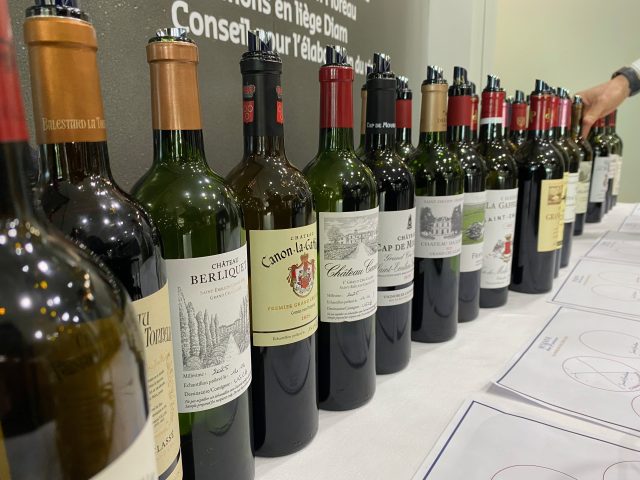
Highlights in 2025 (from over 200 wines tasted)
Best of the appellation:
- Château Ausone 98-100
- Château Beauséjour 98-100
- Château Cheval Blanc 98-100
- Château Figeac 98-100
- Château Larcis Ducasse 98-100
- Château Rocheyron 98-100
Truly exceptional:
- Château Angélus 97-99
- Château Bélair-Monange 97-99
- Château Canon 97-99
- L’If 97-99
- Château Trottevieille 97-99
- Château Beau-Séjour Bécot 96-98+
- Château Laroque 96-98+
- Château Pavie 96-98+
- Château Berliquet 96-98
- Clos Fourtet 96-98
- Clos Saint-Martin 96-98
- Château Croix de Labrie 96-98
- Le Dôme 96-98
- Château La Mondotte 96-98
- Château Troplong Mondot 96-98
Value picks:
- Château Laroque 96-98+
- Château Bellefont-Belcier 95-97+
- Château Jean Faure 95-97+
- Château Lassègue 95-97+
- Château Clos de Sarpe 95-97
- Château Tour Saint-Christophe 94-96
- Château Fonroque 93-95+
- Château La Marzelle 93-95+
- Couvent des Jacobins 93-95
- Château La Dominique 93-95+
- Château Haut-Simard 93-95
- Château de Ferrand 93-95
- Château Fleur de Lisse 93-95
- Château Montlabert 93-95
Tasting Notes
Please click here for the 2025 tasting notes, which can be searched by château and by appellation.
For full appellation-by-appellation reviews as they are published, click: Margaux, Saint-Julien, Pauillac, Saint-Estèphe, Haut-Médoc & Left Bank satellite appellations (Listrac-Médoc, Médoc, & Moulis-en-Médoc), Pomerol, Saint-Émilion, ‘satellite’ Right Bank appellations (Fronsac, Lalande & Castillon), Pessac-Léognan & Graves red, Pessac-Léognan & Graves white, Medoc & Bordeaux including Vin de France (white) and Sauternes & Barsac.
Related news
Bordeaux 2025: some additional tasting notes
Bordeaux 2025 en primeur: star picks from the Right Bank 'satellites'
Bordeaux 2025 en primeur: Sauternes & Barsac ‘very rich, very powerful’


