



Summer brings trend-setting IGP Méditerranée
At London Wine Fair, IGP Méditerranée demonstrated its commercial appeal, with producers and masterclasses winning the UK trade round to the ‘Med Way of Life’.
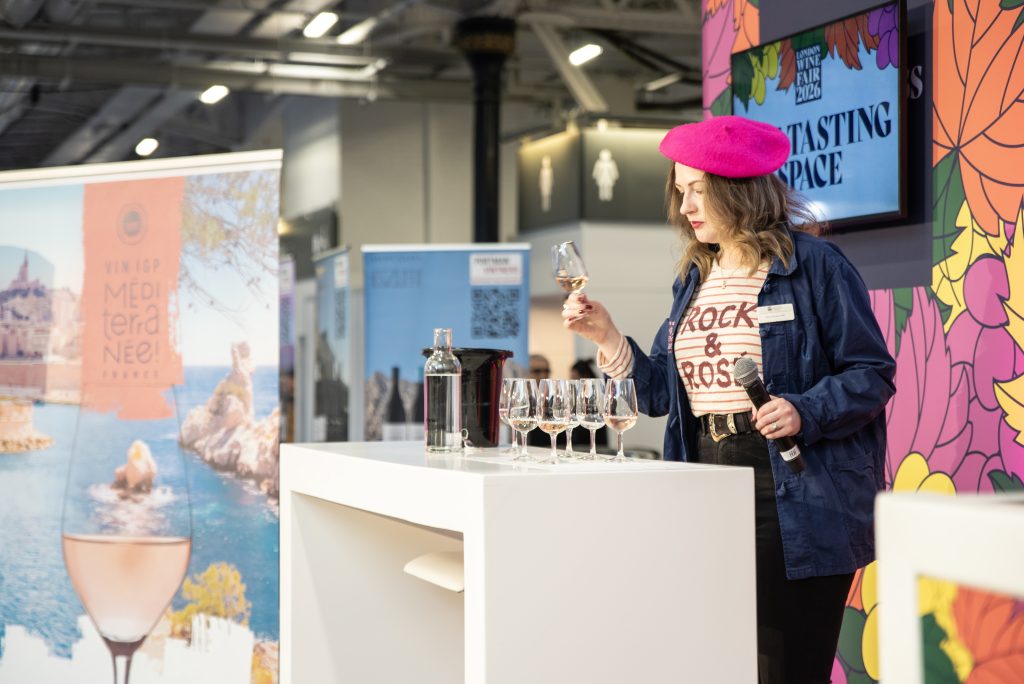
London Wine Fair, which took place in mid-May, is truly at the mercy of British spring weather. In some years, it is scorching hot. In others, there is a steady stream of heavy-coated, umbrella-toting drinks professionals.
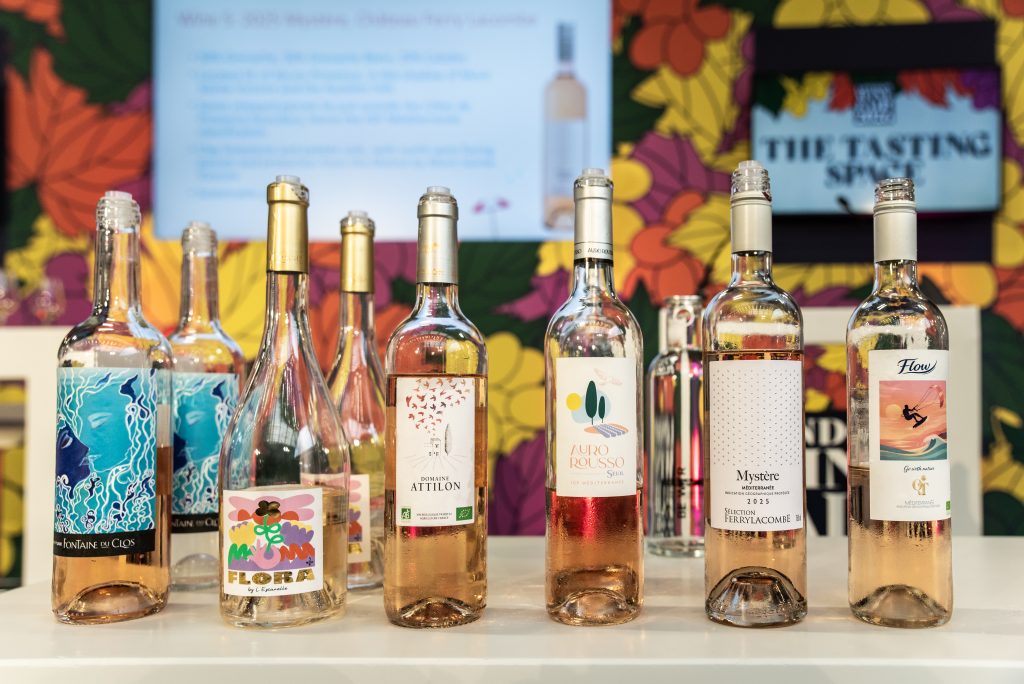
This year was closer to the latter, but there was nonetheless a burst of sunshine in the hall. IGP Méditerranée took up a spot just yards from the show’s entrance, pouring rosés, whites and reds that bottle the region’s southern French sun in easy-to-drink wines.
The show was a substantial showcase for the region’s winemakers. A delegation of producers attended to present their cuvées, joined by Roger Ravoire, president of Intervins Sud-Est (the professional association behind the IGP). London Wine Fair also saw two masterclasses hosted by Anne McHale MW, an expert in French wines, which allowed visitors to survey the IGP’s diversity.
This was, certainly, a justified response to a booming UK market for IGP Méditerranée wines. In 2025, the region’s exports to the UK increased by 12%. This was led by strong thirst for rosé – 93% of IGP Méditerranée wines imported into the UK fall into that category.
Yet the story is not just a love affair with pink wines: 20% of production is red and 15% is white – an area of particular growth. In fact, IGP Méditerranée is capitalising on the breadth of its potential, as well as a commercial mindset that is taking advantage of every opportunity.
Story and scale
“Fun, accessible and brilliant,” was how McHale introduced the wines in her rosé masterclass. It is both an appealing message to send to the consumer and an insight into where the IGP positions itself.
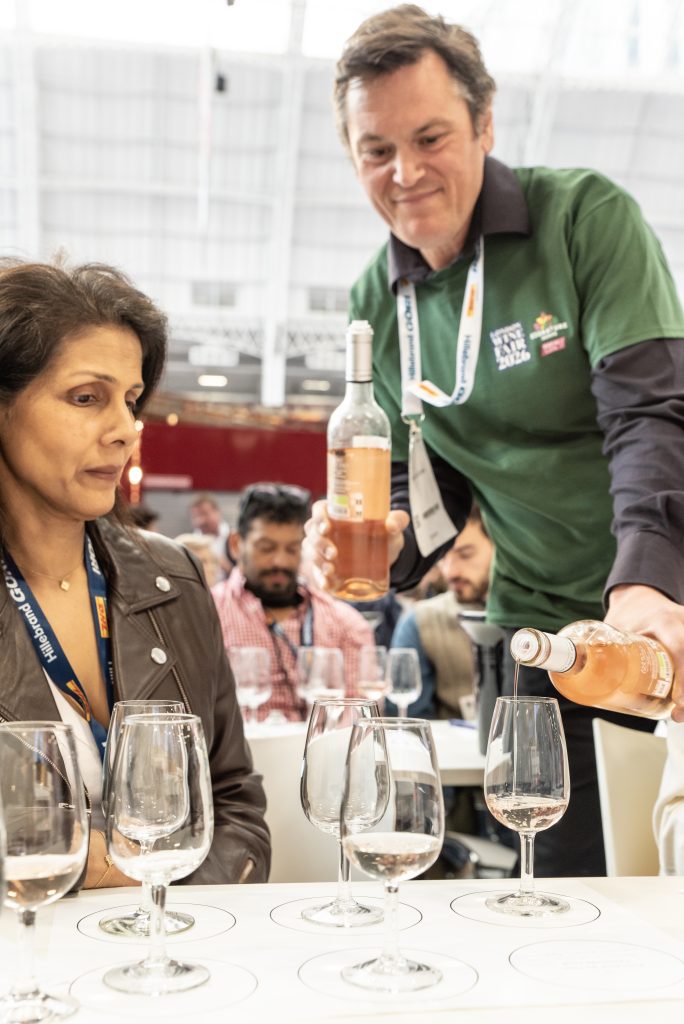
The central message it has brought to the UK is not built around terroir or winemaking expertise (though both factor into its quality proposition), but about lifestyle. Its slogan – ‘The Med Way of Life’ – conjures an image of the sun-soaked conviviality that suffuses France’s Mediterranean coast.
Within it, you find al fresco entertaining, wines paired with delicious speciality dishes, and historical settings that tempt you to while away an afternoon. It is a compelling story even for locals, but for Brits, long enamoured with the South of France, the narrative is almost irresistible.
Emphasising that story makes even more sense once you consider IGP Méditerranée’s scale. As an IGP, it exists with a much larger scope than France’s more heavily regulated Appellations d’Origine Contrôlée (within which you find the likes of Bordeaux or Côtes du Rhône).
That applies geographically. The IGP spans the coastline from the Italian border to the Camargue (just a few miles east of Montpellier) and extends northwards nearly as far as Lyon.
Across that area, you find a wide variety of terroirs, but the wines still demonstrate their shared origins. As McHale explained: “No matter where in the IGP a producer has their vines, they’re going to have an element of freshness.”
You also find scope in the range of permitted grape varieties. More than 100 are authorised, with blends being the norm for the IGP. That includes famous varieties – such as Grenache, Merlot, Syrah, Viognier, Chardonnay and even Muscat – as well as local varieties like Caladoc and Marselan that “add a lot of character to the blend”, as McHale commented in the masterclass.
Meanwhile, winemakers can choose how to make wines that best express the Mediterranean climate. Although the rosés tend to follow a well-honed format (pale colour, lower alcohol, cool-temperature fermentation and protective winemaking), the white wines are showing versatility as producers sometimes play with rare varieties, lees contact and barrel ageing.
The freedom that the IGP affords is key to its success. For an IGP which aims to capture something as diverse as the Mediterranean Sea, its range is essential. That makes it a premier ambassador for the South of France. As Ravoire put it: “Wines that express the Mediterranean most clearly deserve to be the flagbearers for the Mediterranean.”
Commercially relevant
More than ensuring a strong winemaking identity, the freedom afforded by IGP Méditerranée also positions the region for success in the UK market. “All that flexibility gives you a lot of commercial agility as well,” commented McHale. In the current market, that means meeting the key trends that are driving purchases. First and foremost, the wines have the right style. They are dry, fruity and quaffable when chilled, which is exactly what consumers are currently seeking out.
The Mediterranean climate – particularly the abundant sunshine – also means that sustainable viticulture is relatively easy for producers, with more and more of them adopting such practices. For younger consumers in particular, that is a real selling point.
Marrying with the popular style, the wines hit the price point that British drinkers want to pay. Particularly when consumers are concerned about the cost of living, being able to provide an affordable treat is advantageous.
“With today’s economic climate, they are accessible wines for people looking to spend a little less,” commented Ravoire. McHale concurred, highlighting that the vast majority of the wines retail in the UK below £15, placing them in the realm of everyday quality, rather than a fine wine treat.
The upshot is that off-trade buyers can turn the wines into favourites for customers – the sorts of wines that you keep in the cupboard or fridge just in case you fancy a glass. For the on-trade, the lower price point also opens up opportunities. As McHale advised: “If you don’t have a dry, pale rosé by the glass, you’re missing out.”
Perhaps most excitingly, that commercial agility is driving growth. There is plenty of doom and gloom in the wine industry at the moment, as commentators look to patterns of declining consumption, but IGP Méditerranée’s flexibility means that it is able to grow with the market’s demands. Within a few years, the IGP expects to have doubled its current production, and producers have ramped up white winemaking. Although currently the smallest of the three categories (red, white and rosé), whites are in explosive growth as winemakers meet the growing demand.
As sparkling wine continues to offer a bright spot in international markets, there are also plans to introduce it as a category within IGP Méditerranée. Ravoire’s hope that, within a decade, it would surpass Prosecco production may have been expressed with a chuckle, but it reveals the serious potential the region has to adapt to the market.
“Whatever happens, IGP Méditerranée can thrive,” Ravoire explained. “People will find a wine that can suit them for any occasion.”
Find out more about IGP Méditerranée by visiting https://www.vin-de-mediterranee.org/en/
Related news
What drinks legislation would you change?


