



WSET’s Michelle Brampton on the future of drinks education
In an interview last month with the drinks business podcast, Michelle Brampton outlined her vision for the future of the Wine & Spirit Education Trust (WSET) as a more sustainable and global organisation that remains the benchmark for drinks education worldwide.

Since taking over as CEO nearly four years ago, Brampton has led a broad transformation of WSET — from its branding and teaching methods to its role within the wider drinks industry.
Modernising a Global Institution
Brampton described WSET as both a trusted institution and an organisation that needed to evolve with the changing drinks landscape.
“What I felt needed doing was really around modernisation,” she said. “Making sure we move with the times and stay relevant to the industry is really important.”
That modernization includes the greater use of technology, along with hybrid learning models, more accessible educational materials, as well as online exams and remote invigilation, and a stronger focus on student experience.
At the heart of the changes, Brampton said, is a desire to ensure WSET remains both inspirational and rigorous.
“We’re focused on not just an inspiring learning experience, but a trusted qualification all over the world.”
A new identity for WSET
One of the most visible changes is WSET’s rebrand. The organisation is shifting away from the full “Wine & Spirit Education Trust” name and moving toward the simpler “WSET,” alongside a new strapline: “Global Drinks Education” (pictured, below).
The changes are designed to reflect the organisation’s growing scope beyond wine.
“We are a multi-category education body,” Brampton explained. “We have qualifications across wine, spirits, sake and beer.”
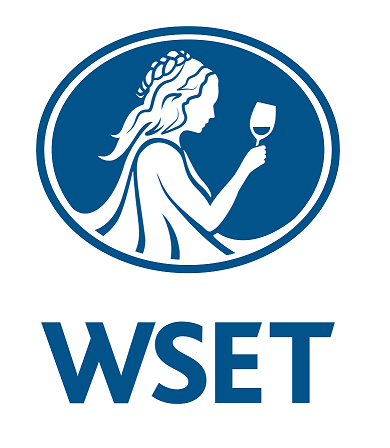
The rebrand also removes the long-standing Ariadne logo, which depicted the figure from Greek mythology – who was married to Dionysus – holding a wine glass (pictured, bottom).
Brampton acknowledged that the imagery could feel exclusive or overly wine-focused.
“We absolutely don’t want to feel academic or exclusive,” she said. “The brand is about making sure the language we use and the way we present ourselves is welcoming for people, and that everybody can belong.”
She added that simplifying the name and visual identity is also important for digital communication and global recognition.
“It needs to be simple, digital, easy for people to talk about and understand that we are global drinks education.”
Sustainability as a core strategy
Sustainability emerged as one of the central themes of the interview.
Brampton said WSET now sees sustainability not simply as environmental responsibility, but as supporting the long-term health of the entire drinks trade.
“How do you sustain the trade?” she asked. “It’s got a huge amount of headwinds at the moment.”
WSET is preparing to publish its first public sustainability report, detailing initiatives such as switching London offices to renewable energy, introducing digital certificates, reducing operational emissions, and integrating sustainability content into courses.
According to Brampton, some internal initiatives have already reduced WSET’s carbon emissions by 10%.
But she also sees WSET playing a broader role as a facilitator of industry-wide knowledge sharing.
“I see our role in this space as connecting people, helping them share best practice, and stimulating ideas in other people.”
Diversity, inclusion and social impact
Alongside environmental sustainability, Brampton highlighted diversity and inclusion as strategic priorities.
She argued that a more diverse drinks industry would ultimately become a more innovative and resilient one.
“More diverse thought will lead to more innovation, and therefore the sustainability of this trade is more likely to thrive.”
WSET has expanded a number of social impact initiatives designed to improve access to education for underrepresented or financially disadvantaged groups.
These include bursary programs; partnerships with charities; educational outreach projects, and international scholarship initiatives.
Examples mentioned in the interview included projects in Angola with Sogrape and UK hardship support through The Drinks Trust.
Brampton said WSET has supported around 1,000 learners across 36 countries through these programmes.
Partner Content




The rise of the enthusiast learner
One notable shift for WSET is the changing composition of its student base.
Brampton revealed that students are now split roughly equally between trade professionals and enthusiasts.
“It used to be slightly more trade, but it’s become more enthusiast,” she said.
Those enthusiasts range from casual learners to retired professionals pursuing wine and spirits education purely for personal interest.
She noted that one of the strongest aspects of WSET courses is the sense of community they create.
“What they all seem to get from it is a sense of community on those courses – the people they meet, the things they learn from each other.”
Why drinks education matters
Throughout the interview, Brampton repeatedly emphasized the importance of education within the drinks industry.
For trade professionals, she believes education builds confidence and credibility, along with communication skills and a commercial advantage.
“If somebody knows what they’re talking about and displays that confidence, you’re more likely to listen and learn from them.”
She also argued that education creates a shared language across the global drinks trade.
“Education gives you the language to be able to understand and communicate to other people.”
For consumers, education enhances confidence and enjoyment.
“It’s a much nicer experience than looking at a 50-page wine list and wondering where on earth to start.”
In defence of training during tough times
When asked about businesses cutting education budgets during difficult market conditions, Brampton offered a clear response.
“Please don’t.”
She argued that investing in staff development during downturns can create long-term competitive advantages.
“When the market’s tough, your people knowing what they’re talking about is a competitive advantage.”
Training, she said, improves retention, engagement, product knowledge, and sales performance.
Maintaining standards in a global network
WSET now operates through nearly 800 providers across more than 100 countries, delivering courses in 15 languages.
Maintaining consistency across such a large network is a major challenge.
Brampton stressed that educators must complete WSET qualifications, while providers must include certified teaching staff, and courses are governed by strict quality-control systems.
“The course is consistent globally, which is one of its strengths.”
At the same time, she acknowledged the practical challenges of sourcing benchmark wines in emerging markets.
“Our providers have to work really hard to get the samples that they need.”
Looking ahead
Toward the end of the interview, Brampton hinted at future expansion into new educational formats and categories.
WSET has already added beer qualifications in recent years and is exploring short-form specialist courses, along with bespoke business training, and potentially no- and low-alcohol education.
“We’re open to thinking about new things.”
Ultimately, Brampton said she hopes WSET evolves into more than simply an exam provider.
“I hope it feels like it really makes a difference to the trade,” she said. “That people see us as a place to come, to share knowledge, to collaborate, and to benefit everybody.”
In essence, her vision is of WSET as a global educational community – one that supports the drinks industry from producer to consumer while helping shape its future.
Related news
WSET drops Greek goddess from logo in brand overhaul


