



How Maipo demands ‘elegance over sheer power’
In its 57 Rocas Cabernet Sauvignon, Emiliana Organic Vineyards demonstrates the benefits of letting terroir inform winemaking.
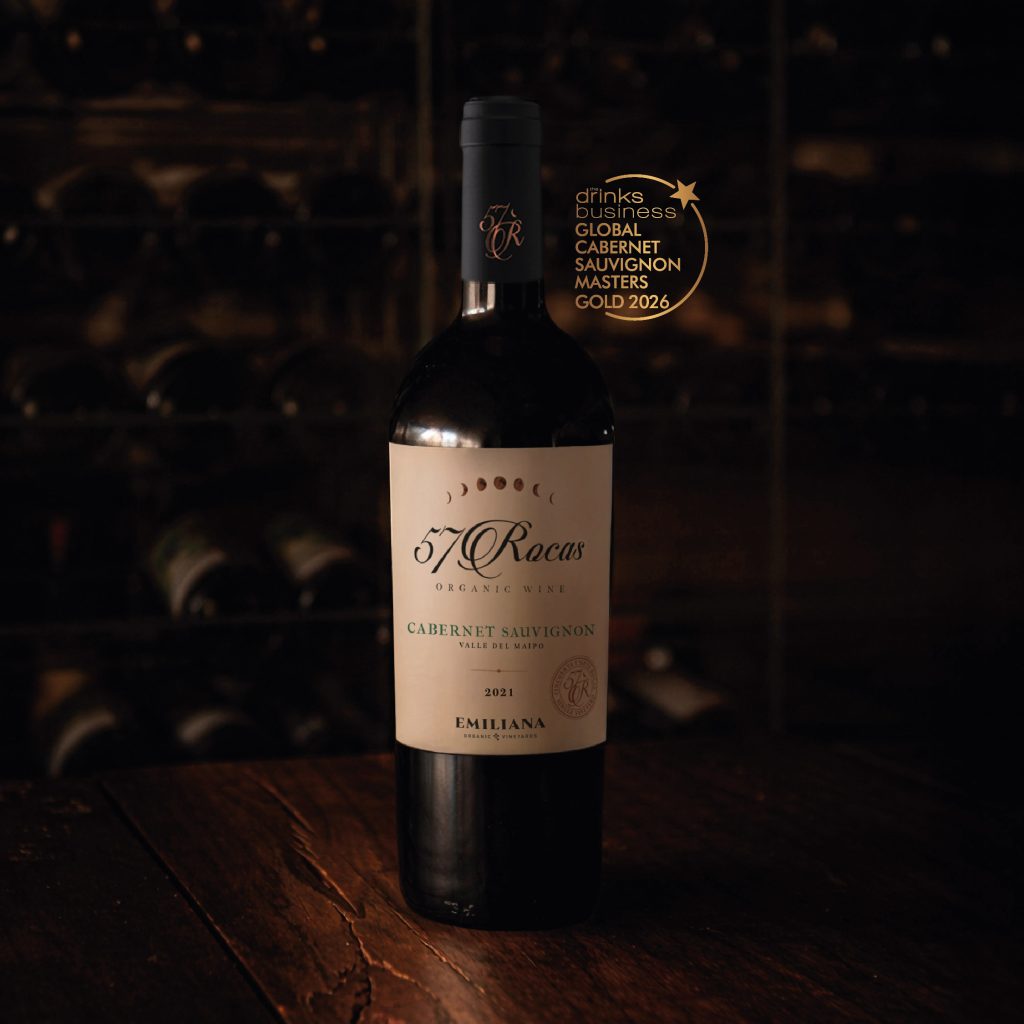
Around half the vineyards in the Maipo Valley are planted with Cabernet Sauvignon. The region – the part of Chile’s Central Valley winemaking belt closest to Santiago – is one of the international regions that has thrived on cultivating Bordeaux’s full-bodied export.
For Noelia Orts, premium winemaker at Emiliana Organic Vineyards, the Alto Maipo in particular is a “world-renowned” location for Cabernet Sauvignon. In The Global Cabernet Sauvignon Masters 2026, her point was proven eloquently.
Emiliana 57 Rocas Cabernet Sauvignon secured a Gold medal in the blind-tasted competition. Its success – particularly given its accessible price point – tells the story of the Alto Maipo’s potential, as well as the winemaking expertise required to realise it.
The raw material of the land
Chile is a remarkable country. Long and thin, spanning latitudes and defined both by mountains and the sea, its geographic diversity is exceptional among winegrowing nations.
In the Alto Maipo, the mountains are particularly important. This is the zone where the valley starts to butt against the imposing Andes, meaning vineyards may well be planted to hundreds of metres in altitude on north-facing slopes of the Maipo River. Protected from the Pacific influence, the sites are warm and sunny, but cooling breezes from the mountains mean there is high diurnal variation.
57 Rocas Cabernet Sauvignon is directly informed by that terroir. The vineyards are planted between 570 and 600m, benefitting from the mountainous terrain. The soils are therefore complex: loam and clay-loam, but with abundant stones. Indeed, the wine’s name references the 57 rocks found in the heart of Emiliana’s Los Robles estate.
Orts therefore sees her winemaking goal in direct relation to the site.
“When crafting a Cabernet Sauvignon from this exceptional terroir,” she explains, “the most vital characteristic I strive to capture is the elegance over sheer power.
”My goal is always to preserve the natural freshness and vibrant acidity of the fruit. It is precisely this structural tension that gives the wine its remarkable ageing capacity and allows the authentic voice of the Maipo landscape to speak clearly and honestly in the glass.”
Led by the wine
In practice, that means that the Emiliana team has adopted a responsive approach in winemaking. There is little dogma; instead, winemaking decisions are determined by that terroir’s optimal expression.
“I simply listen to the wine,” Orts explains, “observe its evolution, and let it tell me exactly what it needs to reach its truest and healthiest expression.”
You see that, for instance, in the wine’s ageing. It develops over 13 months, with 65% of the wine in French oak barrels of different uses, 20% in foudres and the final 15% in concrete egg vats.
“I deeply appreciate the way tannins evolve in oak,” says Orts. “It allows them to gradually soften and integrate beautifully over time.
“Concrete eggs, on the other hand, offer a completely different and complementary dynamic,” she explains. “They possess a unique ability to preserve the vibrant freshness and purity of the fruit, while the natural, continuous movement of the lees inside the egg builds a wonderful volume and texture on the palate.”
The combination of the two was not a dogmatic pursuit of something distinctive, but instead informed by what the wine needed.
“By thoughtfully blending these components, we achieve a harmonious balance between structural depth and bright, juicy fruit expression,” she says.
Indeed, the impressive thing is that, even when crafting Emiliana’s most premium wines, such as the biodynamic Gê, the philosophy is the same as for 57 Rocas Cabernet Sauvignon. When it comes to the key choices – the timing of the harvest, how often to pump over or the draining of the tanks, for instance – it is led by tasting and evaluating the wine’s progress.
“My fundamental philosophy and respect for the vineyard remain exactly the same,” she summarises.
The importance of organics
It is, evidently, an approach that is responsive to the wines. However, one thing is non-negotiable. The clue is in the name: Emiliana Organic Vineyards will always work its sites with an organic mindset.
Some advantages of organic viticulture are well-known. By restricting the use of artificial pesticides or fertilisers, damage to other organisms and the environment more generally is avoided. It also avoids the contamination of any product for human consumption.
Yet Emiliana’s regenerative organic approach is more than environmental altruism. It has a profound effect on the wine.
“You might not taste a specific “organic flavor” directly,” Orts admits, “but our regenerative viticultural practices fundamentally change everything about the wine’s quality and balance.
“By cultivating healthy, living soils, we encourage the vines to develop much deeper root systems. This allows the plant to ripen the grapes more gradually and experience significantly less hydric stress.”
The vine’s health is central. Resilient, enduring plants can create healthier grapes, yielding a higher quality crop and greater opportunities in winemaking.
There are also fascinatingly specific benefits that an organic approach can confer. She highlights, for instance, the fact that a thriving soil ecosystem helps the vine to absorb potassium in a more regulated manner.
Excess potassium, if absorbed, will neutralise tartaric acid within the berry. By keeping potassium in check, the fruit naturally retains its freshness, meaning no adjustment is required in the winery.
Organic viticulture may be essential to Emiliana’s production, but in 57 Rocas Cabernet Sauvignon, it demonstrates its use. That same freshness that Orts seeks is secured in careful adherence to organic principles.
From the vineyards to the winery, that care and responsiveness has defined the wine. It is why 57 Rocas Cabernet Sauvignon has a firm following – and why it secured a Gold medal.
David Round MW offers his tasting note from The Global Cabernet Sauvignon Masters 2026.
57 Rocas Cabernet Sauvignon 2021
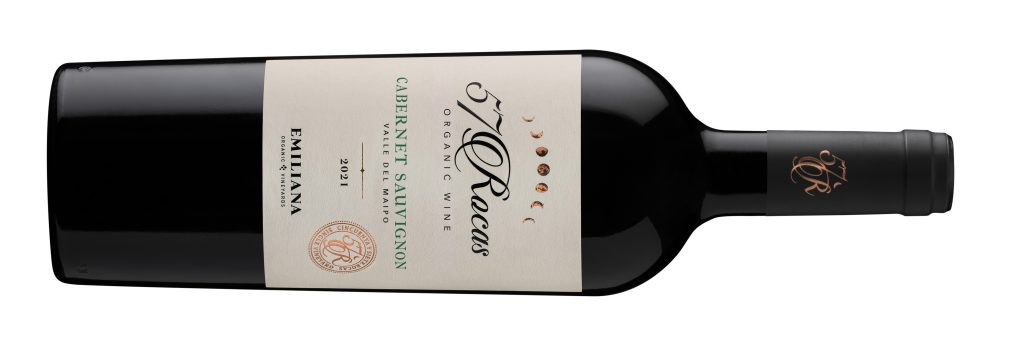
- Producer: Viñedos Organicos Emiliana
- Region: Maipo
- Country: Chile
- Grape variety: 100% Cabernet Sauvignon
- ABV: 14%
- Residual sugar: 2.84g/l
- Approx. retail price: £18
Medium to deep ruby in appearance, this has a nose of raspberry, blueberry and pomegranate molasses, with notes of cocoa and vanilla. The palate has a striking vitality to it, with densely ripe fruit, grippy, supporting tannins, great concentration and some savoury, meaty, balsamic notes on the finish.
Related news
How artificial intelligence is safeguarding a millennia-old practice
The winery betting on the ‘next chapter’ for cool-climate Australian wine


