



How artificial intelligence is safeguarding a millennia-old practice
Futuristic machine learning and Iberian cork forests may seem poles apart, but M.A.Silva is using AI to offer ever more precision and reliability to winemakers.
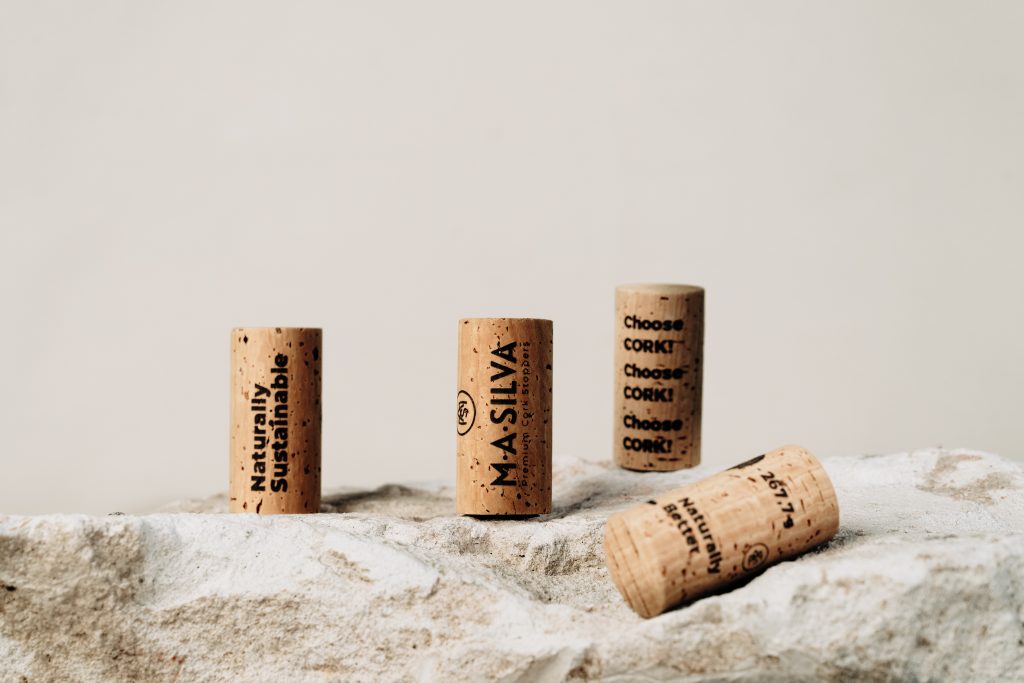
Cork and wine have been intertwined for a long time. There is evidence of it sealing amphorae in the ancient world and, while it fell out of fashion until the early modern period, it has been the most popular closure for more than 300 years.
AI is much newer on the scene. Its story can be measured only in decades. In the form we most interact with, it has been years.
Yet the two fields are now working in tandem. Cork producer M.A.Silva is using high-tech AI models to assist in the production of its Nobeltech corks. The top-of-the line closures employ Bionic Eye, an integrated AI system, as one of three core technologies assuring their quality.
The fundamentals of the company, at a glance, look the same. M.A.Silva still prides itself on quality rather than scale, and still operates a vertical production to ensure sustainability and control.
Yet AI is pushing the boundaries in terms of completeness, consistency and predictability. The corks may look no different, but it is facilitating a quiet revolution that provides winemakers with the ultimate guarantee for their wines.
Inspection from every angle
Checking corks for quality and consistency has always been key to the cork industry’s success. As a natural product, there will always be variability, and so both employees and automated optical inspection systems have been used to find those corks that do not meet M.A.Silva’s rigorous requirements.
AI is taking on the same job. Its scale and its accuracy, however, represent a step change.
M.A.Silva’s AI-powered inspection system runs multiple independent inspections of a cork, assessing it from every angle and across a range of parameters.
Ahead of the final classification of a Nobeltech cork, 12 inspections are made. Taken together, they offer a judgment on TCA (the compound behind cork taint), mechanical performance and sealing; in short, M.A.Silva can assure winemakers that any cork passing classification will operate effectively and maintain the wine’s character.
Unlike human checkers, such a system is unaffected by fatigue and can adapt seamlessly to different conditions. While M.A.Silva has found that human consistency in such checks hovers around 75%, the AI system is close to 100% consistent.
Where it has the edge on previous machines is in its capacity for deep learning. It is not bound by an existing algorithm – instead, as it encounters more of the product, it finds nuances in assessment.
The precision with which the AI system can detect faults is remarkable. It can spot structural cracks, clay contamination, lenticel exposure and even insect holes (both open and closed). As new patterns emerge, the model adapts, and that information is never forgotten.
For a producer seeking to safeguard their production, therefore, M.A.Silva’s AI-powered system offers more assurance than ever.
Improving the product
Those advances – essentially, doing the work of checking corks more effectively than ever before – is a selling point in itself. But it is not the end of the advance. M.A.Silva is discovering ways in which AI is expanding the possibilities in cork production.
While reliability is paramount, uniformity in a cork batch is also crucial. Over a short period ageing in the bottle – as long as the seal holds – the oxygen transmission rate (OTR) will not be hugely significant. Yet over an extended period, especially when it is a fine wine, the OTR is bound up with the wine’s performance.
The slow ingress of oxygen is a key determiner for tertiary development, one of the key determiners of quality in the world’s best wines. Thus, a consistent cork is desirable. If the OTR is the same across a batch, the wines should age in a uniform manner.
M.A.Silva’s research indicates that AI-selected corks are highly consistent in their OTR after one year, and that the wines’ taste profile is likewise consistent.
In practice, the machine learning can extrapolate performance based on past data, predicting performance over longer periods. That moves cork assessment from aesthetic judgment to a results-oriented process. If long-term consistency in OTR is the goal, AI is meaning that M.A.Silva can select for that.
Moreover, as the ultimate guarantee, the AI system delivers traceability. Even though the system works at an immense scale, its work can be tracked.
It is possible for M.A.Silva to produce up to 40,000 corks per hour (more than 11 every second), and yet every single inspection is recorded independently. Each stopper receives multiple documented quality decisions, including imaging and classification, ensuring that the entire process is tracked.
That traceability of Nobeltech corks proves the difference, and offers an assurance that M.A.Silva has done its work.
Moreover, it proves the value when the improvements may not be visible. There is no sci-fi adornment, no microchip in the closure. The AI-powered system is a great leap forward that actually means the traditional means of production – a natural, sustainable product – remain the same.
The difference is an ever stronger promise that M.A.Silva will deliver quality. That is the remarkable union of AI and cork – the industry of the moment protecting a historic trade.
Related news
Aldi launches rosé colour swatch as shoppers reject the ‘wrong’ shade


