



Château Galoupet puts sustainability at the heart of rosé
Château Galoupet’s 2025 vintage shows how detailed parcel work and regenerative farming are shaping a more precise expression of Provence rosé. Backed by LVMH, the estate is also investing in water management, soil health and lower-impact packaging as it prepares for a hotter future.
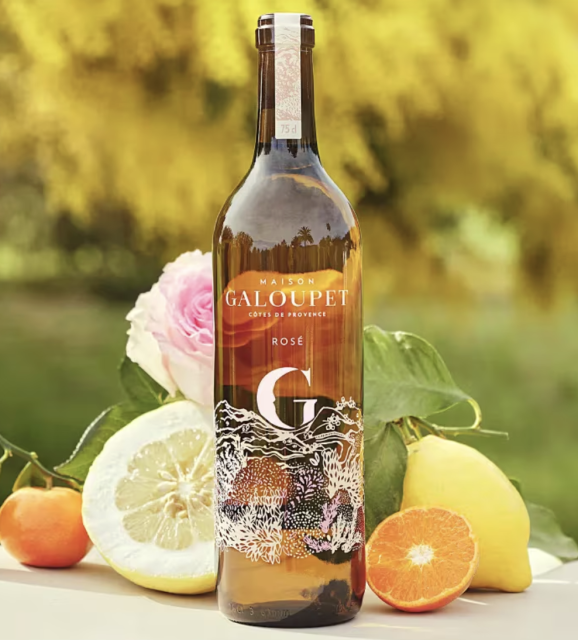
Ever since Mathieu Meyer became technical director of Provence’s Château Galoupet in 2019, the estate has focused on cutting-edge sustainability and innovation, alongside an in-depth study of how individual varieties, terroirs and parcels contribute to the final rosé blend.
The estate comprises 65ha of vineyards, surrounded by 77ha of forest, on the south-facing schistous slopes of the Massif des Maures, in La Londe, only a few hundred metres from the sea. Certified organic since 2023 and regenerative organic since 2025, Meyer believes that what makes Galoupet so unique is “the context of the forest, the diversity of plots and terroirs”, integrating every element to create a harmonious ecosystem.
Different cover crops are planted depending on the macro-terroir. Instead of grazing sheep among the vines, they are kept strictly on fallow land, cover crops are ploughed directly into the soil to build organic matter. The estate has noticed a large increase in insects and a more complete chain of predators, giving it a stable ecosystem and reducing the need for pest control.
The mild climate, with the nearby sea acting as a giant air-conditioning unit, prevents frost. Meyer has also integrated a hydrology system to protect the vineyard from drought. It does not rain often but when it does it is heavy and the water normally rushes directly into the sea without infiltrating the soil.
“We have created trenches along contour lines to capture the water, plus restoration of a historic reservoir constructed in the middle of the vines”, allowing the estate to irrigate in an emergency.
Tasting the 2025 vintage
At a lunch and tasting on 5 May 2026, we had the chance to taste the component parts of the 2025 vintage alongside the final blend and two older vintages, 2024 and 2023. This enabled us to discuss the character of each variety and vintage.
Meyer commented: “As long as we are small we can continue to innovate”, vinifying parcel by parcel to create the optimum blend.
Partner Content
Because 2025 yielded bigger berries, achieving phenolic maturity was a challenge. Consequently, Meyer used less Cinsault and more Tibouren. Winemaking here also involves taking the lees from every tank and stabulating them together for two weeks to build complexity.
The resulting 2025 Cru Classé was pretty and crystalline, with elegant floral notes and intense fresh fruit, while the G, made entirely from estate fruit this year without buying in grapes, showed lighter, fresher zestiness.
The 2024 was more powerful, schistous and structured, while the copper-pink 2023 was silky, calm and seamlessly intense, barely showing its age. Working to create a style that reflects the vintage rather than imposing a style on the wine, and still maintaining fresh elegance in increasingly hot summers, is no mean feat.
Planning beyond the next vintage
But there is more to Galoupet than simply producing good wine every vintage. Meyer is working hard on planning for the future.
Looking beyond sustainable viticulture, Meyer and director Nadine Fau are aiming to create a fully integrated vision for the property. Their lightweight, recycled brown glass bottle was a radical and controversial choice in a market dominated by non-recycled clear glass.
As supermarkets and distributors cut back on wines with capsules, as previously reported by the drinks business, Galoupet has adopted a 100% biodegradable wax capsule based on 85% pine resin and 15% paraffin. Five years later, the distinctive packaging remains a strong part of the estate’s identity.
Investing for the long term
Backed by LVMH, Meyer recognises the privilege of allowing short-term profitability to take a back seat. Instead, the focus is squarely on the long game: investing in soil health today to secure climate resilience for the future.
Related news
Patrick Schmitt MW: Don't dilute rosé's success


