



China is rebuilding its on-trade around a new kind of drinker
At Vinexpo Hong Kong a panel of China market experts dived into the nation’s on-trade, exploring how the industry is evolving despite the headwinds. Nimmi Malhotra reports.
The reality of China’s on-trade sector is sobering. Wine imports have dropped by 70% in volume from 2018 to 2025.
The pandemic has changed consumption patterns, plus the economic headwinds, including the real estate downturn, reduced consumer spending, and the government’s austerity measures, have ended banquets and corporate drinking. As a result, the F&B sector is facing empty tables, closures and stagnant wine listings. How can this be a fertile ground for premiumisation in the on-trade?
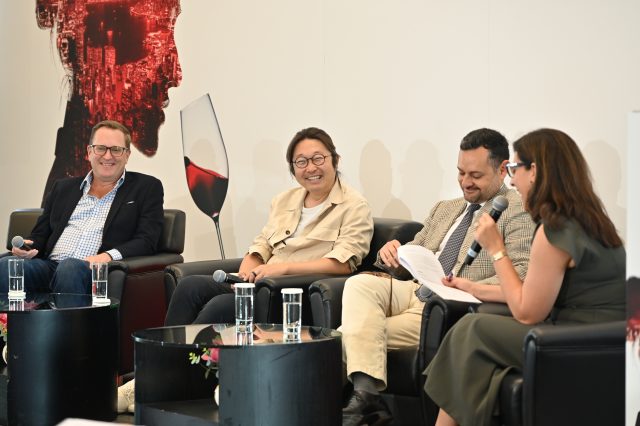
The question was put to three leading China voices at a panel discussion held during Vinexpo Hong Kong: Lu Yang MS, China’s foremost wine authority; Oscar Nagore, CEO of EMW Wines; and Ian Ford, co-founder of Nimbility.
Scene setting
Ford offered two contrasting statistics that set the scene: “The average bottle sale price is down 25 to 30%. That is the opposite of premiumisation.”
At the same time, he highlighted the dichotomy through figures from the Customs Bureau in China: the average import price per nine-litre case entering China roughly doubled between 2020 and 2025, from approximately U$43 to U$86.
Three forces in play
The panel identified a number of interlinked factors affecting wine sales across the value chain: price transparency, instant retail, changing consumer habits, compounded by the longstanding challenges of China’s permissive BYO culture, and the ban on charging corkage fees.
Price transparency is a global issue, and in China’s digital economy, it has taken on particular intensity. Restaurant guests frequently bypass the in-house wine list, ordering through Waima – Meituan’s instant delivery platform and receiving a chilled bottle of wine at the table within minutes.
The impact is felt across the supply chain, forcing importers and restaurateurs alike to rethink how they position and protect their portfolios.
For Nagore, the answer lies in deliberate segmentation. “In China, you need one portfolio for instant retail, another for online and very specific SKU’s reserved for on-trade,” he said. “The whole value chain has to be segmented properly if you want a sustainable business.”
Lu Yang goes further. When he identifies wine available through importers like EMW, he books the whole lot. “This way, you can only find this wine in the restaurant we are consulting for”, he said, giving his company, Top| Somm, a distinct competitive advantage.
Downward pressure
Price transparency is also creating downward pressure on restaurant wine lists. The ‘3x markup’ is no longer viable, Lu Yang argued. “We have evened out the price of wine at 50%, or two times the cost and even less for more premium wines. I think that’s the way to go for the whole world,” he said.
He identified Bordeaux – currently heavily oversupplied in China and available at lower price points than in France – as a trust-building tool. He lists them at his restaurants at lower margins. “Many consumers still see Bordeaux as a pricing benchmark, and if you price Bordeaux at a lower rate, it gives consumers the perception that the whole wine list is very well priced,” he said.
On instant retail, Ford’s advice is simple: “If you can’t beat them, join them.”
He suggests restaurants tie up with delivery platforms, offering a curated wine list through a QR code. “They’re making less margin, but it’s better than the guest buying off Waima.”
Premiumisation “only relevant” to top range
The consensus among the group was clear: premiumisation in wine is concentrating at the very top of the market.
Through his consulting work across 60 restaurants, Lu Yang has mapped China’s restaurant sector into a nine-tier pyramid based on average cheque size. “Wine premiumisation is only relevant to the top range of restaurants where the average cheque amounts to over 2000 RMB,” he explained. Wine sales are inconsequential to the low and mid-tier restaurants.
“The middle-tier restaurants have already given up on having a wine list because everyone’s bringing BYO wines to those restaurants,” shared Ford, a trend Lu Yang confirmed.
Partner Content




Nagore observed a parallel shift in food: “The food upgrade is happening regardless of wine. We are seeing a very big rise in regional Chinese cuisine, to the point that some hotels don’t even care to have a specific Western restaurant in second-tier cities anymore.”
Can wine capitalise on the premium food moment? Not really, said Lu Yang. “Food and wine pairing is not a major driver for sales or premiumisation.” Evidently, the opportunity for wine premiumisation is significantly narrower than for food.
But one area where premiumisation is clearly working is domestic Chinese wine. Lu Yang pointed to producers from the Shangri-la region as a live example: “You can price these wines at three times the cost, and people still buy.” Chinese wines is pulling new drinkers into the category.
Consumer experience
China’s new consumer – younger, digitally savvy and drinking for pleasure and not social obligations – sits at the heart of the solution.
Nagore is optimistic: “They’re more emotional in the way that they consume, less institutionalised in their thinking, and that is leading to a better experience that probably would be a bright future.”
The opportunity lies in new consumer recruitment. “If you don’t have a new consumer, you pretty much don’t have a future, he said. EMW’s portfolio already reflects the shift. White wine accounts for 38% of all the volume, while reds are shifting towards lighter, fruitier styles.
But reaching the generation requires more than the product; they need an occasion.
“Your people in China don’t socialise as much as before,” he observed. “You go home, order takeover, scroll TikTok and the whole night is gone.”
Ford pointed to Bunch, a Shanghai event series popular with Gen Z, for creating deliberately unstuffy wine experiences. “There’s a huge opportunity to introduce a whole new generation of Chinese consumers to wine in a way that isn’t the French gentleman with a cravat swirling the glass,” he said. “It’s real, it’s happening, and it’s energised.”
The way forward
When asked if premiumisation is an opportunity, the panel was unanimous. It is, but it’s a different flavour of premiumisation.
Lu Yang challenged the industry to stop thinking only in terms of higher bottle prices and start thinking about the guest as the unit of premiumisation.
“Premiumisation really needs to focus on the guests’ journey. And that’s when you can really scale up,” he asserted.
Ford kept the macro-opportunity in view. Baijiu, he reminded, claims 160 billion dollars of the alcohol-beverage market, whereas wine barely reaches 1.3 billion dollars at import value. “If we can claim 2-3% of the Baijiu category, that converts to billions of dollars for wine and could double or even triple the current size of the imported wine category in China,” he said.
The old model is not returning. The new one will be built on consumer development, channel discipline and connecting to a generation that drinks by choice.
Nagore’s statement echoed the panel’s sentiments: “We need to stop thinking about pre-Covid times like ‘the good old times’. Now is the opportunity to start building up where we want to be.”
Related news
Why China could be fine wine's next success story
China axes tariffs for African imports, but what does this mean for South African wine?


