



Wine Society rolls out ‘high intention’ wine collection
The Wine Society is rolling out a 60-strong curated range that highlights “high-intention” wines that go “above and beyond” standard sustainability and ethical standards of production to cut through the confusion of claims and help consumers make a more informed choice.
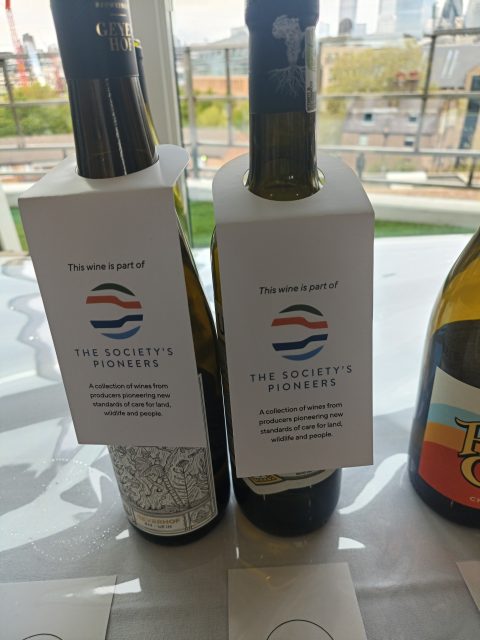
The wines, which all come from the organisation’s existing portfolio, will come under a new banner called ‘Society’s Pioneers’ banner, and launch on 20 April.
Speaking to the drinks business at yesterday’s tasting, Pierre Mansour explained the selection process, which has seen more than 70 producers from more than 20 different countries assessed in the last four months.
A wine first has to be nominated by a buyer, which is then followed by an in-person visit to the winery and assessment against a strict criterion. Each wine must hold a recognised third-party sustainability certification, have full grape traceability and use lower carbon packaging (including a bottle weight of under 420g). It must also achieve a distinction-level score against the Wine Society’s in-house sustainability assessment, which looks at vineyard practises, winery operations, people and packaging, energy use, labour standards, and community engagement. This is then verified with a detailed call between the team and the producer, before the wine is added to the range.
“We haven’t just done it as a simple box-ticking exercise,” Mansour said. “We have put in a very, very robust rand rigorous approach to the selection.”
He argued that this space has become “quite easy” to enter, depending “on how low you set your criteria”, but the Wine Society wanted to set a benchmark for “future-facing production”.
“We could have said anyone with a sustainability certification would qualify, but that wasn’t enough because most sustainability certifications don’t include the social labour element, they only include the environmental elements,” he said. “So, we’ve taken it a step further.”
Dom de Ville, the Society’s director of sustainability and social impact pointed to the “extraordinary things” producers are doing; “restoring soils, reducing chemical inputs, investing in biodiversity and supporting their communities”.
“We believe that kind of effort deserves recognition.”
He added that it was “incredibly hard” to fit into a binary pass/fail world” but the approach prioritised “rigour and transparency”.
Partner Content

“There are always trade-offs, regional differences, economic realities and local constraints. But what we can say is that we’ve been thorough – we’ve spoken to every producer, challenged their practises, and verified every detail before including them,” he said.
The goal is to provide members with an easy way to identify wines that are not only environmentally-friendly but also ethically produced. The range will have its own dedicated page on the Wine Society website and members will be able to search for these wines on the website too. ‘Pioneers’ will also be sign-posted throughout the Wine Society’s marketing and promotional material identified by its new logo, although this isn’t included on the bottle.
“That is something we may think about for phase two,” Mansour said. “We know that members are increasingly mindful of choosing wines – and products in general – and want the assurance that what they’re buying is good for the planet, and for people. And we see it becoming increasingly important.”
“It’s very common in other product categories for this sort of element, but less so in wine.”
Wider work on labour standards
The new range builds on the work already done by the mutual through its sustainability plan and its work highlighting the issue of labour standards and ethics across the viticulture sector. Last May, The Wine Society started a “constructive conversation” about the realities of seasonal agricultural labour at a roundtable, bringing together a panel of experts, companies and organisations who are already trying to tackle the problem to share best practise and discuss what it will take to tackle it, as an industry.
Mansour argued that the easier part of the sustainability plan to implement was the environmental element, because it was something very clear and tangible, and could be seen and understood, prompting producers to take action very quickly. “The labour standards [side] has been a much slower burn, but we knew that it would be. It’s a very complex area, it’s very sensitive. But we do see there is risk, particularly in seasonal workers,” he said.
The Wine Society is making stable progress, he said working with its own-label suppliers, who have signed up to a new code of conduct and a new due diligence process around identifying any labour risks within their businesses. “The response has been really good – some are really advanced and are already doing it, and others are on the beginning of the journey,” he said. “We are working with organized two sets of trainings for all of those suppliers at our expense, because we know that many of them are too small to to have that resource.”
Related news
Château Galoupet puts sustainability at the heart of rosé
The winery betting on the ‘next chapter’ for cool-climate Australian wine
Goedhuis Waddesdon: ‘there is appetite for fine wine among the younger generation’


