



Concha y Toro launches new subsidiary focusing on Chardonnay and Pinot from Limarí
Viña Concha y Toro has spun out Viña Amelia into a new subsidiary that will focus exclusively on its “exceptional” Chardonnay and Pinot Noir from its extreme vineyards in the Limarí Valley. Arabella Mileham reports.
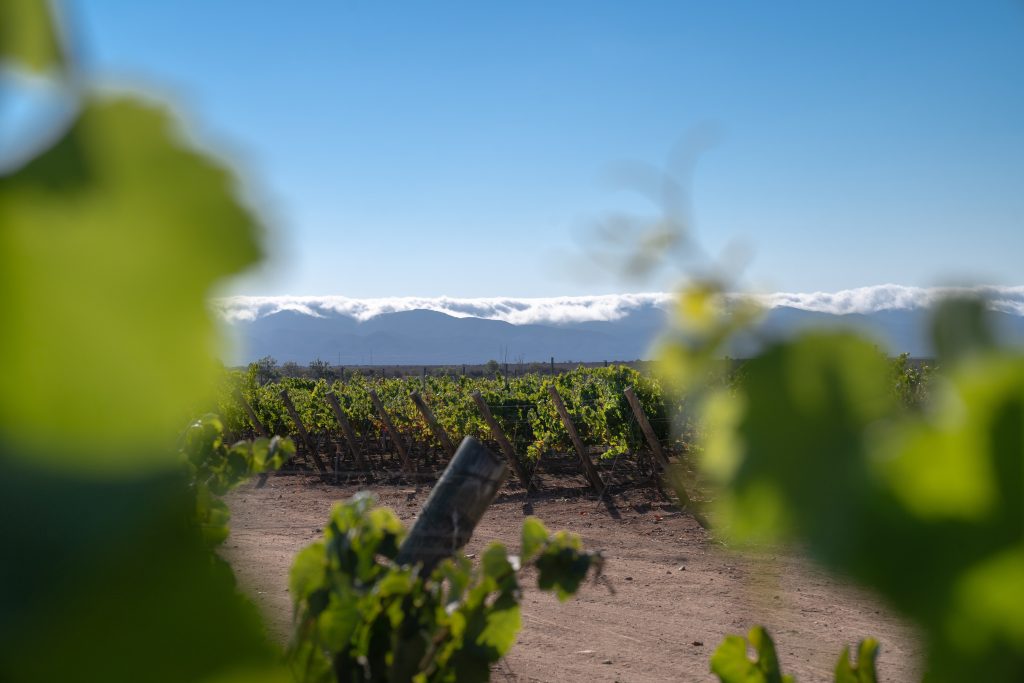
The move is similar to the creation of Don Melchor as an independent entity in 2019, and ties into the wider group’s strategy of premiumisation through specialisation and origin. It is intended to strengthen the brand’s identity and offers “new opportunities in the global premium wine segment, where origin, oenological precision, and differentiation are key to sustainable growth”, the company said.
Marcelo Papa will lead Viña Amelia’s strategic and oenological development as the subsidiary’s technical director.
Viña Amelia’s Quebrada Seca vineyard in Limarí lies at “the gateway to the Atacama Desert”, 400km north of Santiago and only 23 kilometres from the Pacific Ocean, on clay-rich soils with calcareous content. This situation, particularly the influence of the ocean and the Humboldt current gives it “extraordinary potential” to become “a defining source for these varieties”, the company said, producing wines “with great freshness, tension, and depth, excellent ageing potential, and distinguished by minerality and elegance”.
The move is “a new milestone” lay firmly within the group’s broader premiumisation strategy, according to Viña Concha y Toro’s general manager Eduardo Guilisasti.
“This step reflects our conviction that the future of high-end wines is built on specialisation, origin, and identity,” he said. “After many years of study, research, and fieldwork, we are convinced that in the Limarí Valley, specifically in our Quebrada Seca vineyard, there exists an exceptional terroir for Chardonnay and Pinot Noir, with unique climatic, soil, and oceanic influences. This origin, within its category, has the same potential and significance as Puente Alto in the Maipo Valley is for Don Melchor.”
Isabel Guilisasti, vice president of Fine Wines at Viña Concha y Toro, added that there were very few projects in the New World dedicated exclusively to these two varieties. “In this scenario, Viña Amelia marks a milestone as the first 100% Chilean project focused solely on Chardonnay and Pinot Noir. This decision allows us to deepen our competitive advantage, communicate our Limarí Valley origin more clearly, and project a brand with solid foundations for independent development on the international stage,” she said.
Decades in the making
Marcelo Papa called it the result of years of work by the group’s agricultural and oenological teams.
“We have studied this terroir in depth, understanding every block, every micro-expression of the vineyard, and the different soil series that provide exceptional qualities to both Chardonnay and Pinot Noir. Exclusive specialisation in these two varieties has been part of the project’s DNA from the outset, and today we formalise it within an independent structure that reinforces our pioneering leadership in Chile.”
Speaking to db during our visit to Chile last year, Marcelo Papa described the evolution of Viña Amelia and what makes its wines stand out.
Originally the brand was founded in Casablanca in 1993 – at the time the epicentre of Chile’s Chardonnay production – however, it was later moved in 2017 to Limarí and Pinot Noir was also planted. Here, there was a stronger ocean influence as well as different soils that are unique in Chile – an unusual mix of sedimentary red clay over limestone (rather than the more usual granite). This is because the coastal range originally formed part of the seabed, with alluvial soils deposited between two creeks (the Quebrada Seca and the Bandurrias, named after a local bird).
“The first pillar of getting the quality is ocean influence,” Papa told db. The ocean breezes, fuelled by the Humboldt Current, are magnified through the Quebrada Seca, the dry creek that the vineyard is named after, cooling the vineyards. But it is not the only influence – as the temperature goes up during the day, the heat causes evaporation from the Pacific, which results in morning coastal fogs (the Camanchaca), which protect the grapes from the high intensity radiation of sunlight, burning off by around midday.
Partner Content

“Chardonnay and Pinot Noir don’t like a lot of sunlight – they like some, but not too much, just enough to ripen the fruit, but not to burn the freshness and acidity,” Papa explained. “But for 50% of the day, the vineyard is receiving filtered light, not direct light. Then in the evening, you start to receive sunlight, which is very important in the area.”
Historically the Limarí Valley was known for its Pisco-production, but some companies started to experiment 30-40 years ago with varieties such as Merlot and Cabernet – and although Papa acquired some, they found “the grapes were too green with pyrazines and very, very heavy.”
But that same intensity and unusual soil are ideal of Chardonnay and Pinot Noir.
The 65ha Quebrada Seca vineyard itself can be divided into two main soil types, which though made of the same red clay and limestone, formed in a different way. Thus the Quebrada Seca has thin soils with no stones, while the Santa Cristina sub-region (generally blocks 3 and 5) is characterized by stony colluvial soils, rich in red clay and calcium carbonate. The Chardonnay and Pinot Noir are planted on both types of soils although the Pinot Noir, originally included more of the Santa Cristina plots, this has gradually changed, with more Quebrada Seca soils included, as it makes the wines “more tense”.
Classic Chardonnay
The Amelia Chardonnay comes from blocks 8, 9 and 11a, planted in 2010, 2009 and 2012 respectively, using clones 548 on 110R (“we always use it as our rootstock as the roots are moving downwards and as it is a very dry area, we want to get them going down,” Papa explained).
The cool and cloudy 2023 vintage produced a very classic, very “Burgundian” Chardonnay, Papa noted, made without malolactic conversion in order to create an “austere style with fantastic salinity and freshness” that has “fantastic” evolution in the bottle. It is also pressed like a champagne is – limiting the rotation of the press in order to produce a good structure.
“The fruit is very concentrated so you need to be very gentle to get the juice, and that’s it,” Papa said. The wine is 100% barrel-fermented and barrel-aged on the lees (without any racking), using only 10-15% new barrels.
“It’s a wine that when people taste, it’s a surprise. You could keep it for 10-15 years, easy, and after five or seven, you get a fantastic complexity.”
Perfect for Pinot
The Amelia Pinot Noir is more dominated by clay (“more like Volnay and Pommard”, Papa notes) and over time, there has been an increase in the proportion of wines from the Quebrada Seca soils, which lends a black fruit, mineral quality (the stonier soils of Santa Cristina lean more towards red fruit and cherry). Papa is also increasingly using whole bunch, up from around 10-15% in 2017 to 50% now, while dialling back of oak from 20% new oak to only 10-12% for the Pinot Noirs.
“It is a very mineral site, so too much new oak would kill it,” Papa said. “I love to work with oak, but I don’t’ want to feel the effects of it.”
Related news
Brazilian demand gives Chilean wine a winter boost


