



How ‘sexual confusion’ is helping Lake Garda
Roberta Bricolo, CEO of Gorgo winery, explains why she converted 50 hectares to organics and how techniques such as sexual confusion underpin her approach to sustainable viticulture.
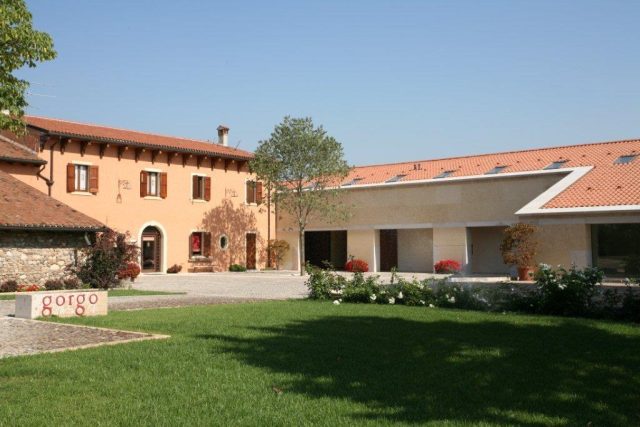
From philosophy to practice
“When I joined my family winery, I chose organic viticulture as the most consistent way to express my values,” Roberta Bricolo, CEO of Gorgo winery, told db. “The vineyard must be seen as an ecosystem, where the balance between vines, soil, and biodiversity is preserved.”
This approach excludes synthetic herbicides, pesticides, and fertilisers, instead relying on cover crops, hedgerows, green manure, natural treatments such as copper and sulphur, and natural control methods like sexual confusion. “It is a demanding path that requires more manual labour and higher costs, but it allows us to produce wines that authentically reflect their origin and preserve the land for future generations,” she said.
Gorgo began converting to organics in 2014 and achieved full certification across its 50 hectares in 2018.
Sexual confusion as pest control
One of the key techniques Bricolo employs is sexual confusion, used against the grapevine moth (Lobesia botrana). “Pheromone diffusers release signals that disrupt the mating cycle of the moth, preventing reproduction,” she explained. “This allows us to protect the vineyard from this specific disease without using insecticides, fully in line with our organic philosophy.”
First introduced in the early to mid-1990s, sexual confusion remains a relatively niche practice, with only around 3% of French winemakers currently using the technique, VinePair reported in 2022. While its adoption is growing, most producers still rely on insecticides to control pests — a method with environmental downsides.
Challenges in the vineyard
Lake Garda’s natural ventilation provides favourable conditions, but farming organically still requires “great rigour and precise timing,” Bricolo noted. “The main challenge is managing fungal diseases such as downy and powdery mildew, which we address through canopy management, careful monitoring, and timely natural treatments.”
Partner Content


Organic farming also demands more manual labour and higher costs, from mechanical weeding instead of herbicides to more expensive natural products and certification procedures. “These challenges demand constant attention but also reinforce the authenticity of the final product,” she said.
Consumer demand and future outlook
The commitment to organic viticulture at Gorgo ultimately feeds into the character of its wines.
The commitment to organics is expressed through Gorgo’s full range of certified wines. The estate produces Custoza DOC Organic, which Bricolo describes as “the hallmark of our identity,” reflecting the history of the territory and the culture of the place. Alongside it is Pinot Grigio delle Venezie DOC Organic, offering citrus, pear and green apple notes, and Chardonnay IGT Organic, marked by its bouquet of fruit and flowers.
For reds and rosés, some of the line includes Bardolino Chiaretto DOC Organic, fresh and aromatic with a strong Lake Garda identity; Bardolino DOC Organic, a lively and fruity wine that gains spice and complexity with age; and Valpolicella Ripasso DOC Classico Superiore, a fuller-bodied red combining fruit with spice through the region’s traditional ripasso technique.
Bricolo believes consumer demand for organic wines is steadily growing. “Consumers increasingly associate organic wines with transparency, environmental responsibility, and authenticity,” she told db. However, she added that clearer communication across Europe is needed, as consumers sometimes confuse “organic” with terms such as “natural” or “sustainable.”
Looking ahead, she is cautious about whether organics will become the regional standard. “The trend is not straightforward at the moment. While the climate was favourable in 2022 and this year, it posed challenges in 2023 and 2024. Staying true to an organic project requires real commitment, continuous investment, and higher costs, and currently the choice to convert to organic is not expanding in the region.”
Related news
Château Petit-Village unveils its new relationship with La Place de Bordeaux
The Italian region selling rosé to the French
China is rebuilding its on-trade around a new kind of drinker


