



The winery betting on the ‘next chapter’ for cool-climate Australian wine
Having made its name on the cool slopes of Adelaide Hills, Bird in Hand is expanding the operation to Tasmania. Founder Andrew Nugent explains how it meets the market’s need for authenticity and could prove “the next chapter” for key varieties.
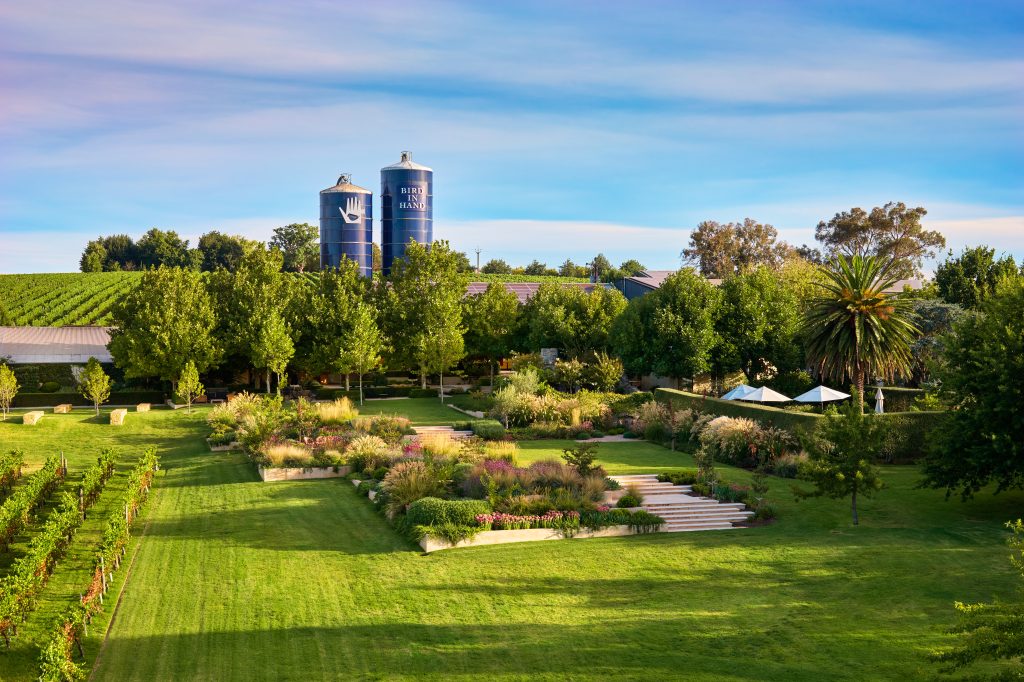
Since 1997, Bird in Hand has made the case for specificity in Australian wine. While many were still drinking Shiraz and Chardonnay from the massive farms of Riverland, Andrew and Susie Nugent were making the case for the cool climate and diverse terroirs of Adelaide Hills.
At their winery, aided by a hardworking team, they formed an operation that has always been led by its land. Whether in the terroir-focused wines of the Tribute range or a concerted effort to make viticulture sustainable, respecting the slopes of Adelaide Hills is central. Even the hospitality and tourism arm, with its award-winning garden and LVN restaurant, seems rooted in the area.
Bird in Hand’s expansion to Tasmania is therefore a pretty notable shift. Suddenly, the family operation spans around 1,000 kilometres.
Yet for Andrew Nugent, it is an evolution rather than a disjuncture. The new project is staying true to first principles, even if separated by hundreds of miles and choppy waters. Moreover, it is helping Bird in Hand lean into its USP in a challenging global market.
Why Tasmania?
“For Bird in Hand, expanding into Tasmania is about pushing quality even further,” Nugent explains, “producing the best product we can to craft wines that compete at the top echelon of global wine.”
In that pursuit, the experience of cool-climate winemaking in Adelaide Hills can be transferred directly to Tasmania, home to Australia’s southernmost vineyards. In fact, more than terroirs, it is a philosophy that unites winemaking in the two regions.
He comments: “Both are relatively young Australian regions, so both give winemakers freedom to explore rather than being bound by tradition.”
They offer different opportunities for Bird in Hand, however. Adelaide Hills is hugely geographically diverse: vineyards between 300 and 600 metres in elevation, a range of aspects, significant variety in microclimates and layers of ancient soils. You can broadly term it a cool climate, but speaking of just one climatic definition cannot convey the region.
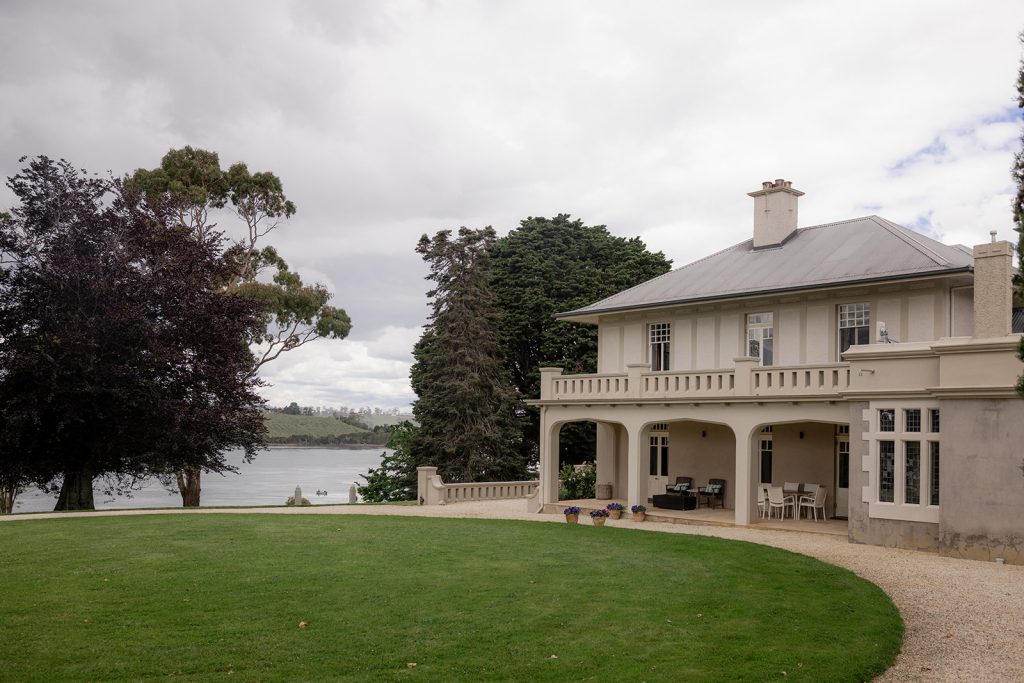
The story in Tasmania is somewhat different. Instead of all these different influences, there is one dominating factor: the waters surrounding the island. Bird in Hand has found itself a northeast-facing site on ancient, alluvial soils, just west of the Tamar River. It is distinctly maritime, sitting close to the Bass Strait and with the cool influence of the Southern Ocean.
“That gives Tasmania as a whole a longer, slower, cooler ripening season than almost anywhere else in Australia,” Nugent says, “which is what preserves the natural acidity, purity and varietal intensity in the wines.”
With awards and critical attention settling on Tasmania, particularly for its sparkling wine and lighter styles, some are now suggesting that it is Australia’s best region for Chardonnay. On that, Nugent is sanguine, but evidently excited.
“I’d put it this way, Tasmania is producing some of the most exciting, world-class Chardonnay in the country right now, alongside Pinot Noir and sparkling,” he says.
“I wouldn’t necessarily crown it ‘the best’ over other cool sites, because there’s excellent Chardonnay coming out of the Adelaide Hills, Yarra Valley and Margaret River,” he reasons, “but Tasmania has a genuine claim to leading the next chapter.
”It’s a style that draws real comparisons to cool-climate Burgundy and Chablis more than anything traditionally Australian.”
Meeting demand
As cool-climate specialists, the winemaking appeal is evident. That is only half the equation, however: commerciality is a key consideration.
The market is tough. Australian exports fell by 8% in value in 2025 as key markets like the UK, the US and China cut their drinking. A number of factors, among them pressures on the cost of living, fewer wine-led occasions and a wellness-driven move away from alcohol, have combined to create a tough market.
Bird in Hand’s response is to look to where growth is possible. Indeed, those parts of the market play straight into its hand.
Take the UK, consistently Australia’s largest export market by volume. Overall off-trade sales in the UK are falling, as is the volume that Australia exports there. Yet the picture is not universal, suggesting that it may be more of a realignment than a long-term decline.
Nugent explains: “UK exports valued above $7.50/litre are actually up around 15%, spread across Shiraz, Cabernet, Chardonnay, and Sauvignon Blanc. Cheap, commodity wine is under real pressure whereas quality wine with a genuine story and provenance behind it is holding up, and in some cases growing. That’s exactly the space Bird in Hand is built for.”
Moreover, being so invested in terroir and Australian potential, Bird in Hand is banking on Australia’s identity as much as any price point.
In its sparkling production, for instance, the winery runs the gamut from vibrant and fruit driven wines made with the tank method to a “celebratory, but quietly serious” Tasmanian traditional method fizz. To win over drinkers, Nugent sells them on their own terms, rather than against benchmarks.
“I think the trick has been not trying to be a cheaper Champagne or a more serious Prosecco, but to make something that’s unmistakably a product of Australia,” he says. “It’s about giving drinkers a distinct, high-quality alternative with its own sense of place.”
Even aside from the implications for sparkling, Nugent believes that the new Tasmanian project hits demand for authenticity and precision: “There is a global surge in demand for premium, cool-climate wine, and Tasmania is one of the few places in the world positioned to answer that demand with real purity, acidity and elegance.”
Getting the word out
There is palpable excitement around Bird in Hand’s work in Tasmania, marking its first project outside of its own back yard. Yet anyone worried about world domination should rest easy – there is no sign of limitless expansion.
“First and foremost, the focus is on producing exceptional wines, an integral part of Bird in Hand’s DNA,” Nugent says. If there is no quality basis backing up a project, Bird in Hand will not move on it.
Therefore, instead of rampant expansion in winemaking, the Nugents are making sure Bird in Hand gets the recognition it deserves.
Certainly that is true in hospitality, which often goes hand in hand with winemaking. Bird in Hand, like many family-owned properties, has embraced hospitality as a homespun supplement to winemaking. What marks it out, however, is the scale of the operation.
There is still a local connection. At the Woodside Estate in Adelaide Hills, guests can taste at the Cellar Door or explore the award-winning gardens. There is also a fine dining restaurant, LVN, that draws on the winery’s Australian bases, as well as luxury guest quarters for its diners.
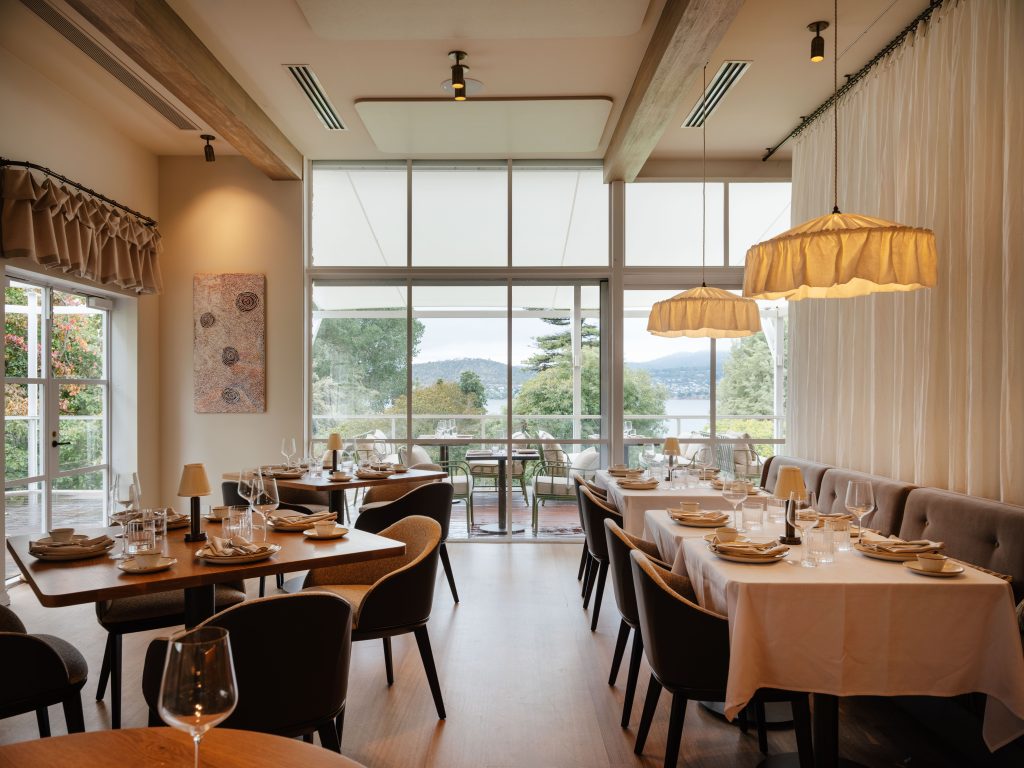
With the Tasmanian operation underway, Bird in Hand has further expanded its Australian hospitality. This includes a bespoke events space and farm cottage, overlooking its 10 hectare leased vineyard in Rowella, Tamar Valley, as well as the prestigious new Bird in Hand restaurant in the Royal Tasmanian Botanical Gardens, complete with its own tasting room
Yet, fittingly for a winery that sells both a £16 best-selling sparkling and super-premium Chardonnay, its local markets are the beginning, not the limit, of the hospitality operation. It is now truly international. Both the venues – like New York’s The Carlyle or London’s Scott’s and Harry’s Bar – and collaboration partners, such as Chatsworth House in Derbyshire, Alexa Chung, Victoria Beckham and Brooke Shields, speak to Bird in Hand’s high standards and impressive connections.
As the next step, the winery is taking over the Dante Mayfair Terrace at Claridge’s in London this summer.
“This collaboration really grew quite organically from longstanding relationships and a shared focus on quality rather than being a one-off commercial partnership,” explains Nugent.
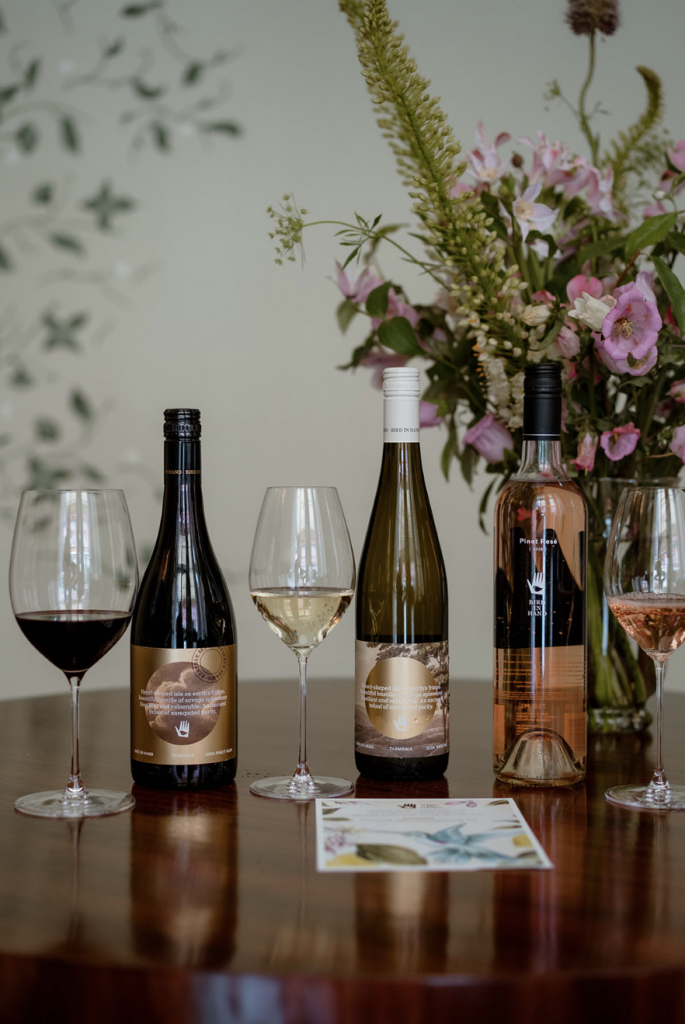
Having listed the rare and premium Tribute Series since 2019, Claridge’s has a long partnership with Bird in Hand. Even if the takeover is temporary, it builds on enduring respect. You can see that in the range of wines on show: perennial bestsellers like the Pinot Rosé but also rarer gems like Tasmanian Riesling and Reserve Pinot Noir.
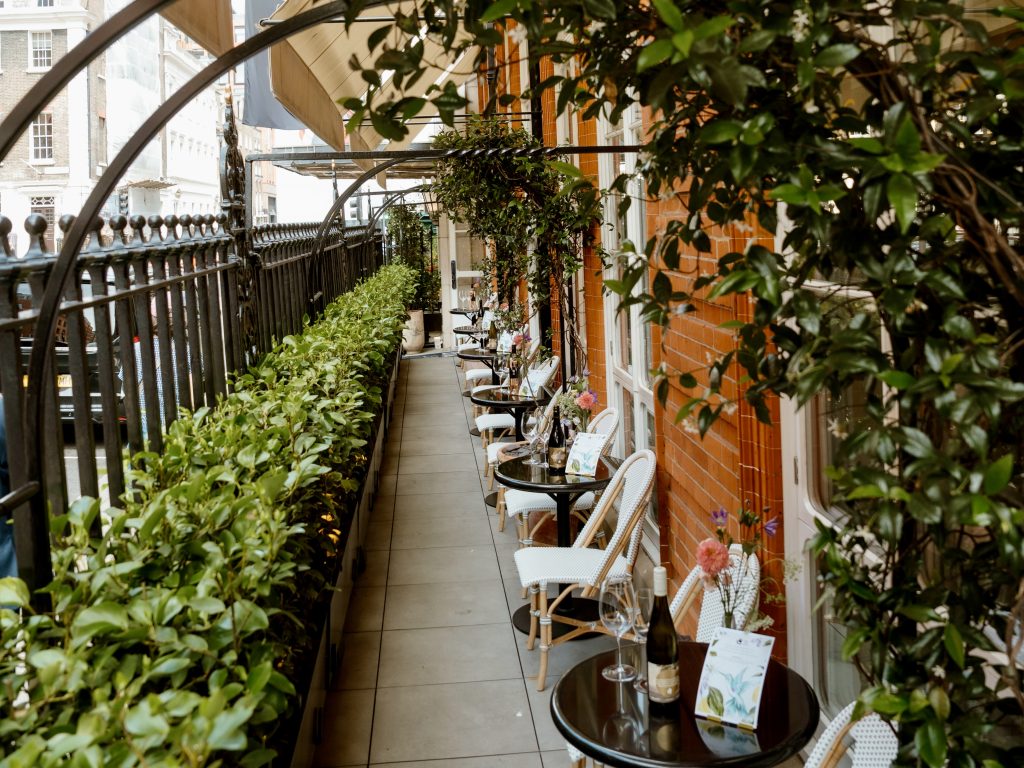
Much like the move to Tasmania, it is not change for change’s sake, but an alignment of sensibilities. These are evolutions that are not altering the fundamentals, but are expanding horizons.
“Dante is consistently regarded as one of the best bars in the world, and that level of global recognition and craft is exactly the standard Bird in Hand strives for,” Nugent summarises.
“It’s not just about visibility, it’s about being in environments that reflect the same pursuit of excellence.”
Related news
Château Galoupet puts sustainability at the heart of rosé
Goedhuis Waddesdon: ‘there is appetite for fine wine among the younger generation’
Bordeaux vineyard values plunge as wine sales fall below three million hectolitres


