



Wine List of the Week: Willett’s at Belmond Cadogan
Douglas Blyde visits Willett’s at The Cadogan, A Belmond Hotel, where a restored Chelsea landmark pairs polished British cooking with one of London’s “most thoughtful” hotel wine lists, placing English still wines firmly in the spotlight without losing sight of international classics.
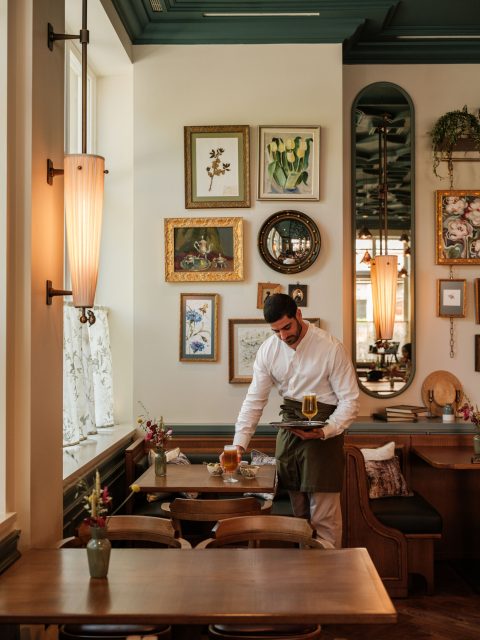
Now a 54-room address formed from a row of nineteenth-century Queen Anne Revival townhouses at the hinge of Chelsea and Knightsbridge, The Cadogan, A Belmond Hotel, still lets old London show through its red brick. Oscar Wilde was arrested here in 1895, in Room 118, while Lillie Langtry’s front door, mosaic floors and wooden panelling survive. Langtry, “The Jersey Lily”, turned aristocratic beauty into early modern celebrity, converting notoriety, royal proximity, endorsements and acting success into a marketable personal brand long before influencers learnt to stare into ring lights.
Downstairs, the dining room has passed through several lives, including an era of bottomless brunches poured into stemware better suited to dolls’ houses. Then came Adam Handling Chelsea, followed by The LaLee, a grand café named for Langtry’s personalised railway carriage during her American touring years – a detail made sharper by Belmond’s own devotion to legendary trains. Now, Willett’s has found a voice equal to the house.
Named for the family behind the original 1887 townhouse, while glancing at William Willett, the daylight-saving campaigner, the restaurant concerns itself not with grand occasion dining but accessible, all-day British eating: breakfasts by the pass, lunches extending beyond schedule, pre-Royal Court suppers, and Sunday roasts designed to steady several generations at once. The bar even has Willett’s Hour, a daily 6-7pm nod to the “stolen hour” of daylight saving. Shayne Brady, also behind the refurbishment of Simpson’s in the Strand, gives the bar a handsome, pub-like glow before the room turns at the kitchen, where table 31 peers directly onto the skirted pass. Beyond: heritage greens, bronze accents, mirrored walls, and cuts of meat displayed with enough confidence not to need quotation marks around provenance.
Executive Chef, Michael Turner, formerly of Savoy Grill, The River Restaurant, and briefly, The Beaumont, understands exactly what the room requires. His menu trades in recognisable British comforts – sourdough crumpets, pies, puddings, and ex-dairy beef. Wallpaper* admired the room’s “savoir faire”, while one TripAdvisor pilgrim reportedly became transfixed by the edible-wrapper passion fruit chews served at the close.
Drinks
Overseeing all things consumable is the sharp-suited, Thomas Borghi MCA, Director of Food & Beverage, formerly of The Ritz, where he won Young Waiter of the Year, and The Lanesborough. Working under him is Head Sommelier, Alessandro Medas, who joined The Cadogan in July 2025 after Berners Tavern at The London Edition. There, he worked under Giuseppe D’Aniello, now Wine Director of Gordon Ramsay Group, and still a mentor. Earlier came The Lanesborough, under Borghi and Valerio Badioli, and Sketch under Frédéric Brugues. Before wine came five years in the Italian Army as a Marshal in the Sassari Brigade, Cagliari. It shows, though never loudly. The list has drill beneath the silk: generous without sprawl, luxurious without vanity, personal without becoming a private notebook. What emerges is less a trophy cellar than a wine programme shaped around Willett’s role as a “Neighbourhood British Bistro”: approachable, commercially alert, and led by the guest rather than the sommelier’s appetite for applause.
Champagne remains the centre of pull: Krug 173ème, Dom Pérignon Œnothèque 1982 and Cristal Vinothèque 1995 supply the prestige-house voltage, while Jacques Selosse Le Bout du Clos, Benoît Lahaye and Lelarge-Pugeot draw the section back towards grower champagne rather than boardroom luxury alone.
English wine, prominently displayed in glass cabinets, receives uncommon bandwidth for a London hotel of this stature. There is a serious sweep through the contemporary scene: Flint’s Norfolk-rooted Silex Blanc; Danbury Ridge Chardonnay from Essex; Simpsons’ Gravel Castle Chardonnay and Railway Hill Pinot Noir Rosé from Kent; Henners Pinot Gris; Sharpham Dart Valley Reserve from Devon; and Chapel Down’s Orange Bacchus Discovery Series. The London thread is especially welcome: Blackbook’s Fragments of Time Sauvignac and Tamesis Bacchus beside London Cru Chardonnay and Pinot Noir Précoce, giving the list an urban pulse where many hotel cellars still stop at West Sussex fizz.
Yet the sparkling category tells a narrower story. English fizz is entrusted entirely to Chapel Down, from Brut Reserve 2021 to Kit’s Coty Blanc de Blancs 2019. Commercially, the logic is clear: scale, distribution, recognisable luxury cues. But it narrows the conversation precisely where many guests first meet English wine – the aperitif.
Outside England, the list becomes most vivid once it slips free of prestige shorthand. Hungary recurs through Sauska Furmint and Tokaji Aszú; Slovenia arrives via Edi Simčič’s Rebula and Duet; Switzerland through Domaine de Beudon Petite Arvine 2017; Peru via Intipalka Syrah Rosé; Long Island through Red Hook Winery Chardonnay 2016. The Coravin section, meanwhile, permits improbable grazing: Egon Müller Scharzhofberger Kabinett 2021 beside Kongsgaard Chardonnay, Delas Condrieu La Galopine and Margaux du Château Margaux 2019. Orin Swift appears almost compulsively – Mannequin, Abstract, Papillon, Palermo, Machete – though the impression is less corporate placement than genuine enthusiasm for Dave Phinney’s maximalist California register.
Partner Content
Pricing is assertive, though not absurd. Ottella’s Lugana Le Creete still sneaks in below three figures, while Rioja Blanco, Castillo Ygay 1986 waits at £840 for the guest who arrived intending to order pie and left discussing time itself. At the summit sits Krug Clos du Mesnil 2000 at £3,600, while the cheapest pour on the list – the precise, moreish Susana Balbo Malbec Signature Late Harvest – begins at £8 per John Jenkins glass, leaving a welcome gap between everyday drinkers and oligarch fantasy.
Cocktails, meanwhile, are more rooted than they first appear. The Not So Bloody Mary is limpid rather than lumbering, built from Isle of Wight tomatoes, Norfolk lovage, English horseradish and Belvedere vodka.
Dishes
Lunch from Stephan Ho Wing Cheong’s kitchen, within Turner’s broader direction, had the feel of someone doing the daily, difficult work of making British comfort appear effortless while keeping it exact. Matters opened with mushroom tea poured from a teapot, accompanied by a Willett’s-branded take on the Bourbon biscuit intended for dipping. Then came fried sourdough crumpets lavishly buttered and topped with a brisk Gentleman’s Relish alongside dressed Dorset crab – dishes which managed to feel both clubbable and mischievous.
A Scottish langoustine cocktail proved textbook in the best sense: chilled, sharply composed and entirely unembarrassed by Marie Rose sauce. Crisp, presumably hydroponically grown London lettuce provided snap, while LDN CRU Bacchus 2024 offered elderflower, nettle and green citrus in reply. Founded in 2013 within a former Fulham gin distillery, London Cru continues to show how persuasive urban English wine can be when treated with the same seriousness as any other grown-up bottle.
Then came grilled monkfish shank with samphire and peppercorn sauce, a dish which arrived looking almost prehistoric before eating with surprising refinement. Lightly chilled, clean, purple, Gribble Bridge Dornfelder 2024 from Biddenden Vineyards was a canny match. Biddenden, Kent’s original vineyard, has remained under Barnes family ownership since 1969, with second and third generations now involved across its 23-acre site. The Dornfelder itself, poured from behind an unmissably vivid orange label, was raspberry-led, lightly spiced and barely tannic. Spring tomatoes with pickles and extra virgin Shropshire rapeseed oil cut neatly through the richer register.
Rice pudding with Yorkshire rhubarb jam closed proceedings very successfully indeed – creamy, nostalgic, though held firmly in check. Hattingley Valley Entice supplied a measured wash of sweetness without heaviness. Produced from Bacchus grapes frozen before pressing in ice-wine fashion, it concentrated the fruit while retaining freshness.
Last Sip
In less capable hands, Willett’s might have become another luxury hotel dining room mistaking heritage for identity. Turner avoids that trap, while Ho Wing Cheong gives the cooking daily focus. Together, they give The Cadogan, A Belmond Hotel what it has lacked through several previous incarnations: a culinary voice aligned with the building. There is also something pleasing in an international hotel becoming one of London’s more persuasive advocates for English wine. Oscar Wilde might have relished the irony: Essex Pinot Noir now served with the certainty once reserved for Burgundy. Langtry, who converted beauty, notoriety and social access into enterprise, might have admired a dining room again understanding how to turn identity into currency.
Best for:
- English still wines
- Kitchen tables, including no. 31 beside the skirted pass
- All-day dining
Value: 93, Size: 95, Range: 94, Originality: 96, Experience: 96; Total: 94.8
Willett’s at Belmond Cadogan – 75 Sloane St, London, SW1X 9SG; 020 8089 7070; [email protected]; belmond.com
Related news
Wine List of the Week: Cooper’s Cut, Four Seasons Hotel London at Tower Bridge


