



The Last Round: Why the wine trade must fight for the restaurant and the on-trade
Britain’s hospitality sector is facing an existential crisis, and the wine trade can no longer afford to treat it as someone else’s problem, writes Benjamin Jack. Cutting hospitality VAT isn’t just about saving restaurants – it’s about protecting the future of wine itself.
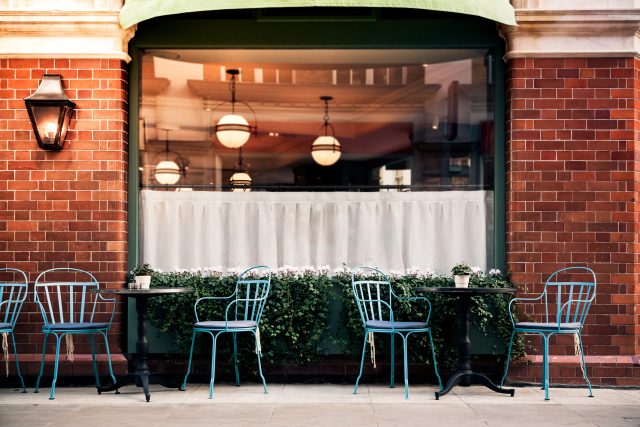
There is a particular kind of afternoon I would defend with my life. It begins at Bouchon Racine with no fixed end time and a delicious bottle from the Northern Rhone that somehow turns into £5 Negronis at Brutto around the corner. It is the gloriously indulgent lunch that bleeds into early evening, the one where you try all the brown liquids and start planning the next place you and your companions simply must visit while you’re still on the cheese, where nobody at the table can quite remember whose idea the third bottle was, and nobody cares.
It is the hungover, restorative pilgrimage to Speedboat Bar, where chilli and a cold beer put you back together. It is an hour at a counter watching someone who is properly good at their job cook six inches from your face. It is an ice-cold cocktail in a Notting Hill pub on a Tuesday for no reason at all. It is a wine bar in Shoreditch you walk into a stranger and leave having had three conversations you never planned on but are so glad you did.
My friends know I believe restaurants are the single greatest thing human beings have ever invented. I’m not being flippant. We have been gathering around fire to eat and drink together since before we were fully human; the restaurant is simply the campfire that learned to pour you a good glass of wine. And the quiet miracle of it is this: it works even among strangers. You can sit in a full dining room of people you’ve never met and feel something unmistakably like community, a shared, generous, slightly conspiratorial good humour that exists in almost no other public space we have left.
That community lives in two rooms at once. There is the community behind the pass: the chefs, the commis, the pot-wash, the sommelier who has been on her feet since eleven: and the community in front of it, the room full of guests who, for a couple of hours, belong to the same warm and noisy thing. Both are under threat. And if we lose them, nothing is coming to replace them. Not a delivery app. Not a sofa. Nothing.
Why this is the wine trade’s fight, not someone else’s
Now, before this reads like a love letter to restaurants from a misty-eyed regular — it isn’t. It’s a warning to my own trade that I adore just as equally, because too many of us have been treating this as somebody else’s emergency.
It is ours.
Wine and spirits make up around half of everything served across the on-trade, and they carry far higher margins than a pint of lager. The restaurant and the pub are not just a place to sell wine. For an enormous slice of this trade, they are the primary route to market, the place where someone tastes a grape they’d never have dared buy in a shop, where a sommelier turns a curious drinker into a lifelong wine lover, where the bottle you spent a year importing stops being a label and becomes an evening somebody actually remembers. The dining room is the wine industry’s greatest shop window, its best classroom, and its most profitable sales floor, all at once.
And we are being squeezed at both ends. The UK now pays the highest wine duty in Europe, we have overtaken Finland who taxes drink into the stratosphere on purpose, to stop people drinking. The UK has managed the same thing by accident, while insisting we’re the party of growth, rather like burning down your own house and listing ‘arson’ under hobbies.
The duty payable on a typical full-bodied red has risen by close to half in barely two and a half years, and the punchline the Treasury cannot bring itself to read aloud is that the takings have gone down. Tax the wine harder, raise less money. I honestly don’t understand how the people responsible for designing our tax system in the UK appear never to have encountered the Laffer Curve.
So when the on-trade goes dark, the wine trade doesn’t simply lose a customer. It loses its stage. The independent that lists six growers nobody else is brave enough to pour. The neighbourhood wine bar that does more to champion independent producers in a week than most supermarket aisles do in a month. The pub that finally put a proper list on the wall. Every one that closes is a permanent narrowing of what this country will ever get to drink, and of who gets to sell it. These are not a worthy cause we support from a polite distance. They are our own house.
Partner Content



A system under strain
This isn’t romantic doom-mongering; it’s just the arithmetic of where we are.
British pubs closed at a rate of nearly two a day in the first quarter of 2026, 161 of them in three months, up 26% on the same period the year before, taking around 2,400 jobs with them, roughly half belonging to people aged between sixteen and twenty-four. The country has lost more than 2,000 pubs in five years. Across hospitality more broadly, venues have been shuttering at something like twenty-one a week. These are not necessarily failing businesses. Many are busy, but their profits are wiped out by a tax burden no other corner of the economy is asked to shoulder.
And the single heaviest stone in that load is VAT.
A British restaurant or pub hands 20% of its takings to the Treasury. In France, Spain and Italy, hospitality VAT sits at 10%. In Germany it’s 7%. Somewhere in Whitehall there is a man who has studied a sector losing two pubs a day and concluded that the real problem is we simple aren’t taxing the corpses hard enough. Sometimes I look at the on-trade and think of James Bond in Casino Royale, strapped to the bottomless chair, having his tackle worked over with a length of knotted rope, but Bond gets to leave the room at the end of the scene.
This summer the Government will briefly drop VAT to 5% on children’s meals and family attractions. Which is welcome, and also a quiet confession, since the relief apparently expires at the precise moment an adult might enjoy himself, whereupon you are returned to your scheduled 20%. They have admitted, in writing, that a lower rate works. So let’s hold them to it past the school holidays.
This is the heart of the #VATsTheProblem campaign, the one Tom Kerridge, UKHospitality, the British Beer and Pub Association and others have thrown their weight behind, calling for a permanent cut in hospitality VAT from 20% to 10%, in line with our European neighbours. The petition is climbing toward its million-signature target. The wider public push begins on the 1st of July. This is the moment. Let’s talk about it loudly, because if we don’t now, nobody else will.
The call to arms
So this is the ask, and it isn’t complicated.
The wine industry, every importer, every distributor, every winemaker who sells into this country, every merchant, every sommelier, every drinks business that has ever made a penny off a British dining room, needs to put its full weight behind cutting hospitality VAT to 10%.
Sign the #VATsTheProblem petition. Get every member of your team to sign it. Put it in front of every customer you have. Make noise to your friends, your neighbours, anyone who has ever shown the faintest passion for food or drink. Write to your MP with the same speed you would summon if the duty hike had landed on your own invoice, because, in every way that counts, it has. Stand publicly and loudly with the on-trade, because their survival and ours are the same.
#VATsTheProblem. Stand with the on-trade.
Related news
World Cup fans drink bars dry as Scotland and England supporters descend on US host cities
China is rebuilding its on-trade around a new kind of drinker
Feynman’s forgotten 'restaurant problem' finally solved after 50 years


