



Centre-Loire grabs attention in London
Terroir-driven, stylistically diverse and increasingly relevant in commercial terms, the wines of Centre-Loire were celebrated at this year’s London Wine Fair.
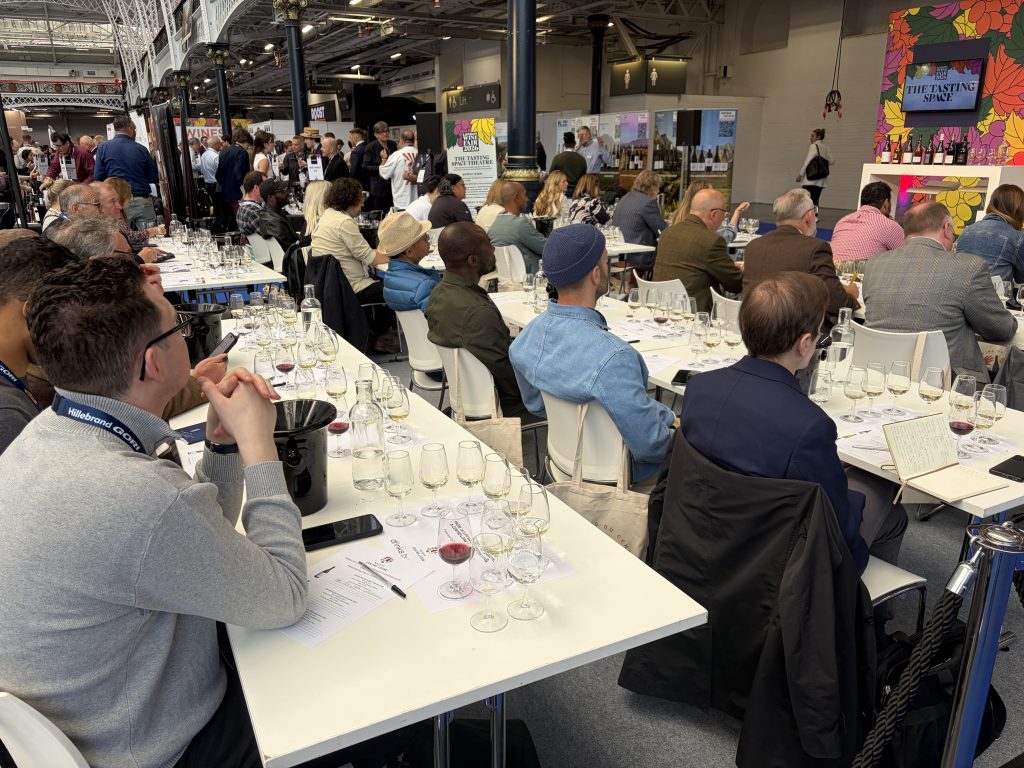
At this year’s London Wine Fair, Patrick Schmitt MW used a tasting of Centre-Loire wines to make a broader point about one of France’s most recognisable – yet still underestimated – wine regions. Moving beyond the familiar shorthand of Sancerre and Pouilly-Fumé, the session highlighted the geological diversity, stylistic range and growing commercial relevance of the Centre-Loire appellations.
Stretching along France’s longest river at roughly the 47th parallel north, the Loire region has long benefitted from a climate moderated by water. As Schmitt explained, the river’s ability to warm and cool more slowly than the surrounding land helps to reduce frost risk in spring while preserving freshness during hotter vintages through cooling air flows. The result is a style of wine that aligns neatly with current consumer preferences: bright, refreshing and lower in oak influence, rather than rich or heavily textured.
Terroir to the fore
The tasting also underlined how terroir-driven the region has become. While Sauvignon Blanc remains the dominant grape, producers are increasingly isolating vineyard parcels and foregrounding soil types in an effort to demonstrate how geology shapes flavour and texture.
The masterclass noted that the Centre-Loire shares ancient chalk and limestone bedrock with areas such as Champagne and even the white cliffs of Dover, with four principal soil categories shaping the Centre-Loire wines: limestone, clay-limestone, sands and gravels, and silex.
That geological focus has become particularly important as the category evolves beyond simple varietal recognition. “The Centre-Loire is the birthplace of Sauvignon Blanc, where it reveals the most beautiful expressions,” Schmitt said during the session, arguing that the region offers some of the clearest demonstrations of Sauvignon Blanc’s ability to transmit site.
Accessible entry point
The masterclass began with Domaine Maxime Hubert Origines 2024 from Quincy, positioned as an accessible entry point into the category. Quincy was highlighted as a logical starting point when tasting Centre-Loire Sauvignon Blanc due to its lighter profile and comparatively affordable pricing.
With entry-level Sancerre now commonly retailing above £20 in the UK market, appellations such as Quincy and Menetou-Salon are increasingly being viewed as offering consumers similar levels of freshness and minerality at lower price points.
That commercial reality was a recurring theme during the masterclass. Despite rising prices, it was observed that demand for top Centre-Loire wines has remained resilient, particularly for established names in Sancerre and Pouilly-Fumé.
Schmitt also suggested that Sauvignon Blanc’s premium positioning is often underestimated by consumers. “Sauvignon is often up there with some of the most expensive wines in the world,” he said. “The market does tend to award greatness.”
Pop culture
The discussion also touched on the unexpected role of pop culture in driving awareness of the category. Schmitt referenced the recent attention surrounding Sancerre after Taylor Swift was seen drinking the wine in her Eras Tour documentary, helping to introduce the appellation to a younger audience and prompting a spike in online interest and sales.
Schmitt argued that the moment had helped reposition Sancerre from a supposedly “unfashionable” French wine category into something newly visible and aspirational among younger consumers.
Stretch of styles
Several wines in the tasting illustrated how far styles can stretch within the region. Domaine Roger Champault Domaine 2024 from Menetou-Salon showed the fresher, linear side of Sauvignon Blanc, while Domaine de Villargeau Les 2 Silex 2023 from Coteaux du Giennois highlighted the influence of silex soils in delivering a more mineral profile. Coteaux du Giennois was described as an “ancient, very small, very niche region” that nonetheless continues to produce wines of notable quality.
At the richer end of the spectrum was Domaine Landrat-Guyollot La Rambarde 2023, a Pouilly-Fumé bottled at 14.5% ABV. Rather than presenting overt weight or oakiness, the wine was characterised as a late-harvest expression with “body, viscosity and stone fruit”, shaped by a long growing season and riper fruit development.
The session also touched on the Loire’s historic relationship with Pinot Noir. Before Sauvignon Blanc became dominant, parts of the Centre-Loire were better known for red varieties, something reflected in the inclusion of Domaine des Chasseignes Évidence 2022, a Sancerre Pinot Noir. Alongside the whites, the wine served as a reminder that the region’s identity extends beyond a single grape variety.
Food pairing remains another major strength of the region. The classic partnership of goat’s cheese and Sancerre was highlighted during the discussion, with Schmitt arguing that Sauvignon Blanc’s acidity and texture make it one of the few wine styles capable of matching the tang and richness of chèvre successfully. More broadly, Schmitt positioned Loire wines as highly adaptable at the table due to their freshness and moderate weight.
Strongly sustainable
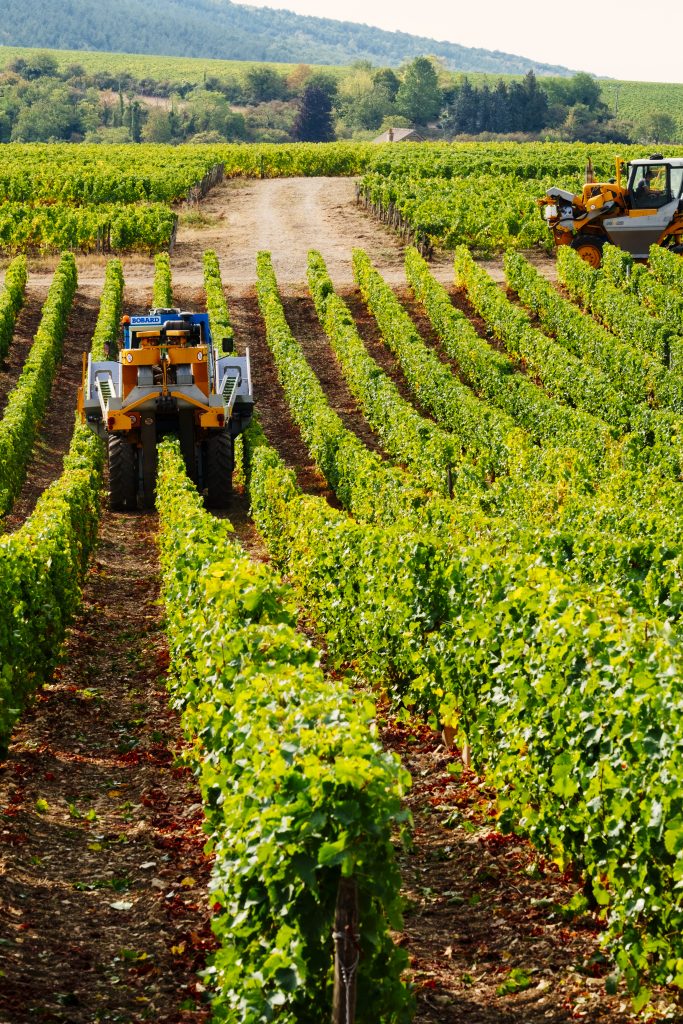
Sustainability and viticultural practices also featured prominently. The Centre-Loire today is dominated by family-run domaines – more than 700 growers in total – some of whom can trace their history back 10 or 12 generations. According to Schmitt, many producers are now reducing reliance on herbicides and systemic fungicides in favour of more targeted vineyard management and modern equipment.
Ultimately, the London Wine Fair tasting positioned the Centre-Loire not as a monolithic Sauvignon Blanc producing region, but as a patchwork of appellations capable of producing markedly different expressions depending on soil, site and producer approach.
Arguably, the challenge now is ensuring that consumers look beyond the headline names of Sancerre and Pouilly-Fumé to discover the wider diversity the region has to offer.
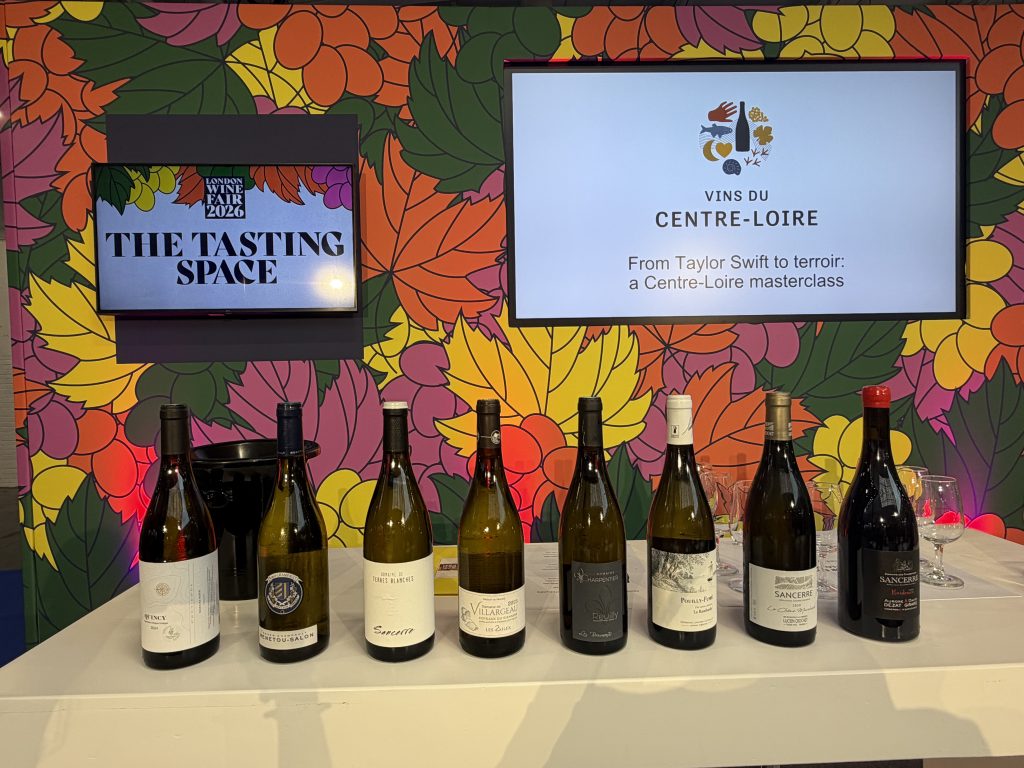
Wines poured at the Centre-Loire masterclass
• Domaine Maxime Hubert Origines 2024 – AOC Quincy – 100% Sauvignon Blanc
• Domaine Roger Champault Domaine 2024 – AOC Menetou-Salon – 100% Sauvignon Blanc
• Domaine de Terres Blanches 2024 – AOC Sancerre – 100% Sauvignon Blanc
• Domaine de Villargeau Les 2 Silex 2023 – AOC Coteaux du Giennois – 100% Sauvignon Blanc
• Domaine Charpentier Les Beaumonts 2022 – AOC Reuilly – 100% Sauvignon Blanc
• Domaine Landrat-Guyollot La Rambarde 2023 – AOC Sancerre – 100% Sauvignon Blanc
• Domaine Lucien Crochet Le Chêne Marchand 2020 – AOC Sancerre – 100% Sauvignon Blanc
• Domaine des Chasseignes Évidence 2022 – AOC Sancerre – 100% Pinot Noir
Related news
Orlando Bloom becomes new face of Casillero del Diablo


