



Top talking points from Vinexpo Americas
The Miami-based trade fair, held at the end of April, reflected an industry in transition with Latin America and Gen Z firmly in the spotlight, reports Jacqueline Coleman.
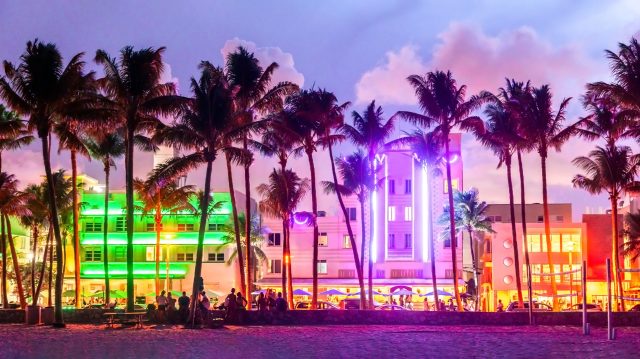
Vinexpo Americas returned to Miami Beach (29-30 April) with 170 exhibitors and a sharpened focus on several priorities shaping the global wine trade, including expanding into Latin American markets, navigating an increasingly complex US landscape, and finding new ways to engage younger consumers.
For organisers, Miami’s role is central to all three.
“Miami allows us to go beyond the US and Canada and connect with the wider Americas, such as Central America, South America and the Caribbean,” said Grace Ghazale, overseas events director for Vinexpo Americas organiser, Vinexposium.
“It’s not just about North America anymore, it’s about being present across the Americas.”
That positioning is reflected in a change in the name from “America” to “Americas” this year, as this focus becomes a broader goal across the beverage industry.
While the US remains one of the world’s most important wine markets, producers are increasingly looking to diversify as consumption softens in some traditional regions and trade conditions grow more uncertain.
“Producers need to diversify,” Ghazale added. “They can’t depend on one market anymore.”
Success is about relevance
At the same time, Vinexpo Americas is deliberately resisting the pressure to scale up in size, instead focusing on curating the right mix of exhibitors and buyers.
“Success isn’t about being the biggest show, it’s about being the most relevant,” Ghazale emphasized. “It’s about having the right buyers in front of the right diversity of producers.”
Placing importance on relevance in a changing industry is evident in the growing attention on Latin America. Exhibitors reported interest from buyers across markets including Brazil, Mexico, and Argentina, with many using Miami as a point of access to regions that have historically been more difficult to reach.
For some producers, the opportunity is more immediate. For others, their presence at the fair represents longer-term strategic expansion.
“Vinexpo Americas is not just a US fair, it’s a platform for the entire Americas,” said Carlos Fernandez, export manager Americas for Spanish wine producer Vicente Gandia. “We’ve had the opportunity to meet not only US distributors, but also importers from Latin American markets where we want to grow our presence.”
Partner Content
Fernandez added that while the US remains a priority, the ability to connect with multiple markets in one place is increasingly valuable.
“Miami is the gateway to the Americas,” he said.
Yet while new markets offer opportunity, the realities of the US remain a defining factor. Producers continue to face tariff uncertainty, pricing pressure, and the structural challenges of the three-tier system, which can slow market entry and expansion.
More brand personality
Even so, few are retreating. Instead, exhibitors expressed optimism about returning to Miami next year for Vinexpo Americas.
“Wine is going nowhere,” said Vidit S Verma, business developer for the US at Bordeaux-based cooperative, Tutiac. “People are still going to drink, it’s just changing.”
That change is most visible in shifting consumer preferences, particularly among younger drinkers. Across the show, exhibitors highlighted growing interest in more approachable styles, from lighter reds to rosé and non-alcoholic options, as well as the need to adjust messaging for a new audience.
A panel of students from the Wine Studies program at Florida International University’s Chaplin School of Hospitality & Tourism Management, located in Miami, expressed the need for the wine industry to tell different stories if they want to reach younger consumers; re-introduce wine with more transparency and brand personality to inspire passion. The old way of communication from the industry created a sense of unattainable prestige and inaccessibility for younger consumers, but they are open to learning about wine in other ways, such as in more casual, community-focused settings.
Pierre Ogren Sereys de Rothschild, brand ambassador for Bordeaux wine brand Mouton Cadet, attended the fair to present a newer “generation-led” range with fresher wines. The objective of adding an easier-drinking style to the portfolio is to be less intimidating and create an entry point for younger consumers.
Relaxed environment
This laid-back sentiment about wine reinforces the importance of environment as well as content. For organisers, Miami Beach’s less formal setting, compared to traditional European trade fairs, is seen as an asset rather than a deterrent.
“Doing business in a more relaxed environment like Miami is actually a strength,” Ghazale said. “People are more open, more engaged.”
Ultimately, Vinexpo Americas is positioning itself as a complementary platform within the worldwide trade fair calendar; one that reflects the wine industry’s obligation to find relevance in a globally-connected marketplace, with a sharper focus on flexibility to changing tastes and consumer requirements.
In a casual, culturally diverse South Florida, where there is direct access across the Americas and a growing young wine community, those elements feel less like future projections and closer to present reality.
Related news
Gusbourne launches exclusive British Airways sparkling wine


