



‘Thoughtful and experimental’: the evolution of Bangkok’s wine scene
There is “growing curiosity” among Bangkok’s sommeliers, who are keen to explore bottles outside the classic European remit that complement local cuisine – including wine from Thailand itself – the chef-owner of Michelin-starred Potong tells db.
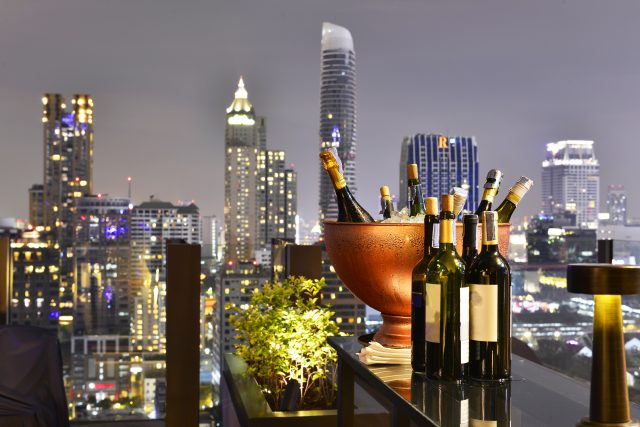
Bangkok often wins the epithet of ‘Asia’s culinary capital’. A trip to Thailand’s capital is synonymous with flavour, and the fine-dining scene is well steeled with an explosion of upscale restaurants serving spectacular. world-class cuisine. The Michelin Guide Thailand 2026, revealed in November, is testament to this: 10 new venues across the Southeast Asian nation bagged stars, with a total of 468 dining spots winning recognition in the prestigious handbook.
At the same time, wine culture is climbing in the Southeast Asian nation. Recent IWSR data revealed that local consumers are increasingly gravitating towards wine while beer and whisky sales slide. Speaking to the drinks business, Jalene Teng, IWSR senior market analyst, put this down to its perceived health benefits: “Wine is seen as ‘age-defying’ and healthier, especially among women and urban professionals”.
Lists become ‘more thoughtful and experimental’
So how does this play out in Thailand’s restaurants? Pichaya ‘Pam’ Soontornyanakij, chef-owner of fine dining restaurant Potong in Bangkok, offers her two cents: “Wine lists are becoming more thoughtful and experimental,” she says.
“Traditionally, pairing wine with Thai food was considered difficult because of the spice, acidity, and complexity of the flavors,” Pam, who won The World’s Best Female Chef Award in 2025, continues. “Today, sommeliers are exploring a wider range of wines – including lighter styles, natural wines, and unexpected regions – that can complement Thai cuisine more naturally. It’s becoming a more creative process rather than relying only on traditional European pairings.”
Pam founded Potong in 2021. Based in Bangkok’s historic Chinatown district, the restaurant is housed in a 120-year-old former herbal medicine shop owned by her family, which operated under the name “Potong” since 1910.
Potong features a 20+ course tasting menu focused on storytelling, heritage,and the “5 elements” (salt, acid, spice, texture, Maillard reaction). Since its launch, the restaurant has bagged numerous awards, including a Michelin star, for its innovative take on Thai-Chinese cuisine.

Partner Content

Local wines take the spotlight
At the restaurant, Pam works closely with her sommelier, Phuengthum ‘Phueng’ Khathipphathee, to select every bottle of wine. Spanning 26 countries, the catalogue focuses on sustainable, biodynamic and natural wines. Several local wines appear on the list, which the restaurant calls a ‘Wine Odyssey’. There’s Sato 422’s 2026 Sun Pa Tong Sticky Rice from the northern region of Chiang Mai, and a 2019 Shiraz, 2023 Chardonnay and 2023 Chenin Blanc from Khai Yai’s Issara Winery.
The latter bottle was a collaboration between Potong and a local artist from Song Wat. “The label and concept celebrate the philosophy of Potong, while the grapes themselves come from carefully selected vineyards from Issara and are produced using sustainable practices,” says Pam. If picking a dish pairing, she would go for the scallop course served with curry and milk bread.
“The wine has a bright acidity and a clean, expressive profile that balances the richness of the scallop and the warmth of the curry flavours,” the chef explains. “At the same time, its freshness lifts the dish and keeps the pairing very harmonious. For me, it’s also meaningful because it reflects our philosophy – supporting local producers while creating something that connects culture, art and cuisine in one experience.”
What’s next for Thailand’s winemakers?
Today, Thailand has yet to be internationally recognised for its wine. But in a previous conversation with db, Pam predicted a rosy future for local producers: “Thai wine has made significant progress over the last decade, especially in terms of quality and experimentation,” she said. “Winemakers here are learning how to work with Thailand’s unique climate and terroir, which is very different from traditional wine regions.”
In the next 10 to 20 years, she believes “Thai wine will continue to develop its own identity rather than trying to imitate other countries.” That uniqueness, she adds, “could become its greatest strength”.
And as the quality continues to grow, so does interest from the on-trade. “There is growing curiosity and openness among chefs and sommeliers to explore Thai wines,” explains Pam. “As quality improves and more producers emerge, it’s natural that restaurants want to support local craftsmanship.
“Featuring Thai wines also creates an opportunity for guests to experience something that truly belongs to this region, which adds another dimension to the dining experience.”
Related news
Cape Mentelle: ‘Thailand is an increasingly important and dynamic market for premium wine’
Thailand reviews alcohol dispenser rules to close retail loopholes


