



Archaeologists unearth 2,300 year old bottle of Chinese beer
Excavations of a fourth-century tomb located a mile from the Great Wall of China uncovered a “masterfully fermented” beer thought to have been brewed under the Zhou dynasty.

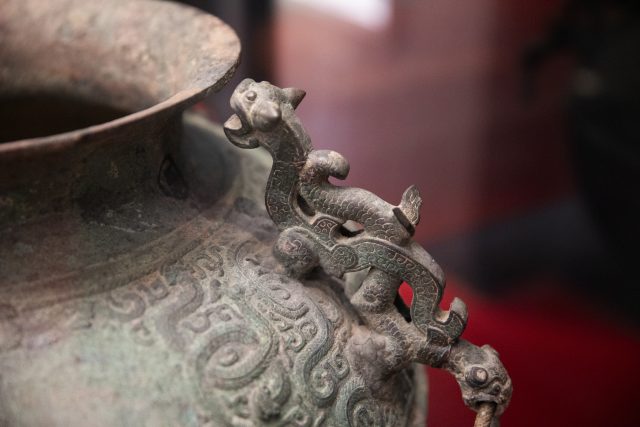
A dig in Shanjiabo Cemetery, located in the Shaanxi province in northwest China, revealed a centuries-old bottle of beer that offers a glimpse into how people brewed in Quin, an ancient Chinese state during the Zhou dynasty.
According to a report in the Journal of Archaeological Science, the bottle is dated between 547 and 221 BCE (Before Common Era) and demonstrates that Quin citizens used “diverse cereals” in their brewing practices, and even had a clever method for effectively sealing bottles.
Refined brewing
When scientists tested the liquid inside the bottle they found it contained 23 different organic compounds, with “intricate sugars” suggesting its makers had “a good understanding of fermentation”.
Featuring 8,571 yeast cells as well as millet, wheat, barley and amino acids, the 2,300-year-old beer is proof, said the report, of a “refined and technical brewing process”.
Due to the presence of cereals, scientists were able to ascertain that the bottle contained beer rather than a fruit-based beverage. It puts the Quin discovery squarely in the middle of China’s long brewing history because although residue analysis of ancient pottery has shown that the Chinese were fermenting alcoholic drinks from rice, honey, and fruit as early as 7,000 BC, the earliest evidence of grain-based beer (using malting and mashing techniques) dates to around 3,400 to 2,900 BC (about 5,000 years ago).
Double layering
The latest finding also revealed a sophisticated “double layering” technique used by the Quins to seal the bottle closed and ensure the beer lasted.
First, the brewer sealed the inside of the uncapped bottle with fabric before mixing “mud and organic compounds” over the top. The mouth of the bottle was then fashioned into the shape of a “head of garlic”, another clue as to the contents of the bottle as this was a classic stylistic motif in ancient Chinese culture for vessels housing alcoholic drinks.
Why was the bottle of beer buried in a cemetery?
The Shanjiabo Cemetery is thought to have been a popular burial ground for both troops and civilians in Quin, with 183 known tombs. Ancient Chinese citizens were often buried with fermented beverages as a ceremonial offering to honour the dead. These brews were thought to facilitate communication with the spiritual realm and provide the deceased with sustenance and luxury in the afterlife, making it an important part of the funeral ritual.
The Quin bottle is certainly not the first time that beer has been discovered in an ancient Chinese burial site, with several high-profile digs turning up evidence that drinking at funerals was as common then as it is today. As db reported in 2021, archaeologists in south-east China found “microfossil residues” left over from beer housed in 9,000-year-old ceramic pots uncovered alongside two human skeletons on a burial mound almost the size of a football pitch.
Partner Content



“This ancient beer would not have been like the IPA that we have today. Instead, it was likely a slightly fermented and sweet beverage, which was probably cloudy in colour,” said archaeologist Jiajing Wang, lead author of the study, in a press release at the time.
Long history of drinking
Research shows that ancient civilisations across the globe have made drinking a priority throughout history.
A 2021 study by Durham University found that middle eastern farmers actually put wine before olives, with analysis of thousands of plant remains revealing that Bronze and Iron Age farmers in the Levant invested scarce water into vineyards, highlighting wine’s cultural and economic importance in the region.
Furthermore, a burial urn uncovered in Carmona in Andalusia, Spain, in 2024, was thought to contain the world’s ‘oldest’ wine. The origin of the “fino-Sherry”-like beverage was traced back to the area of Doña Mencía in southern Cordoba, near major Roman archaeological sites such as Almedinilla, Priego de Córdoba, and Torreparedones.
“The results obtained in this work strongly suggest that the reddish liquid in the ash urn was originally wine that decayed with time, and that it was about 2000 years old, and hence the oldest wine found to date,” detailed a scientific report entitled ‘New archaeochemical insights into Roman wine from Baetica’ following the finding.
Additionally, Israeli researchers were surprised to discover the presence of vanilla in Old Testament-era wine. Researchers from Tel Aviv University and the Israeli Antiquities Authority analysed fragments of 2,600 year old wine jars and found traces of vanilla inside with the spice thought to have been added directly and intentionally to the wine itself as opposed to being the result of any wood influence.
“The discovery of vanilla fantastically illustrates which luxury products came here – possibly from India and its surroundings, thanks to Jerusalem sitting on the international trade route,” said Ayala Amir, a doctoral student at Tel Aviv University, who led the residual analysis.
Related news
Younger drinkers reshape China's alcohol market, says IWSR
China seizes 75,000 cases of counterfeit alcohol
China is rebuilding its on-trade around a new kind of drinker


