



Livermore Valley winemakers vote for two-grape strategy
Winegrowers in California’s Livermore Valley region have officially decided that their future lies in two signature grapes – Cabernet Franc and Sauvignon Blanc – with producers starting to rip out other varieties. Roger Morris reports.
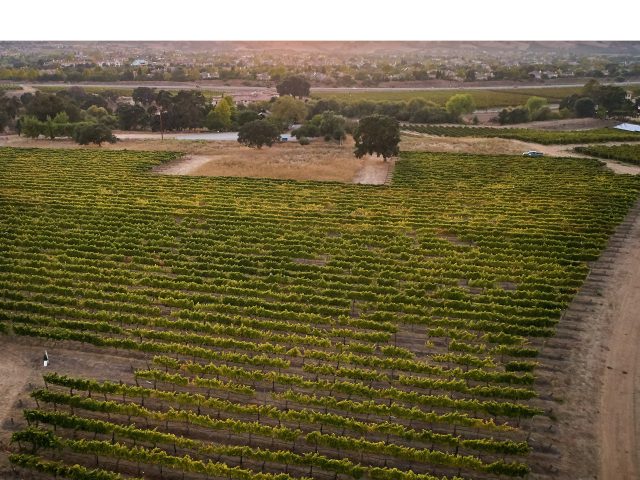
“Let Napa Valley and Sonoma be known for their Cabernet Sauvignons and Chardonnays,” says Brandi Lombardi, executive director of the Livermore Valley Wine Community, which represents vineyard owners and wine producers in the Livermore AVA (American Viticultural Area).
The move to strongly brand the region’s identity was made this spring after a long period of study and came just as many winegrowers were planning to replant ageing vineyards in the area lying in the foothills about an hour’s drive from San Francisco in the foothills east of San Francisco Bay. A primary driver behind the decision was a 2022 report by the University of California at Davis declaring Cabernet Franc and Sauvignon Blanc as particularly well-suited to Livermore’s agronomic conditions, including climate, soils and irrigation water.
Livermore’s winemakers overwhelmingly voted to approve the plan. Currently there are about 52 wineries in the region with more than 5,000 acres of vines, at the moment predominantly Cabernet Sauvignon and Chardonnay, as is the case in most areas of northern California.
Ripping out vines
Wente, Livermore Valley’s best-known winery, founded in 1883, is currently taking a few hundred acres out of production, and piles of pulled vines can be seen through the valley.
“We are going to let the ground lay fallow for a few years as part of our commitment to sustainability,” says Peter Yeung, CEO of Wente, adding, “We are one of, if not the largest, grower of Cabernet Franc and Sauvignon Blanc in the Livermore Valley, and we see a lot of potential for growth.”
Along with the other major AVAs in the San Francisco region – Napa Valley, Sonoma County and Santa Cruz Mountains – commercial vineyards and wineries began appearing in Livermore Valley in the second half of the 1800s when northern California was flooded with newcomers during and after the Gold Rush of 1849. It was named after an English sailor, Robert Livermore, who jumped ship and began farming grapes in the valley during the 1840s.
Livermore Valley quickly became known for its productive clones of Chardonnay and Cabernet Sauvignon, but it also has a long history of developing Sauvignon Blanc and Cabernet Franc.
In 1882, Charles Wetmore planted cuttings of Sauvignon Blanc and Semillon taken from Bordeaux’ Château d’Yquem in his Cresta Blanca Vineyard. Wine made from Wetmore’s grapes won the Grand Prize at the 1889 Paris Expo, reportedly the first American wine to win a prize in France. Cabernet Franc was also planted in the Livermore Valley in the 1880s.
Cab Franc focus
One of the biggest proponents of placing the accent on Cabernet Franc is sixth-generation winemaker Steven Mirassou, who makes primarily high-end Francs at his Steven Kent winery. “These grapes are poised to withstand the most extreme effects of climate change,” Mirassou says. “This really sets up the region for significant success in the years to come.”
Partner Content


Most European wine regions that are known primarily for wines produced from a limited number of grapes – Chardonnay and Pinot Noir in Burgundy, Syrah and Grenache in the Rhone, the three Cabernets and Merlot in Bordeaux – have done so through a long historical process of trial and error. The one European exception is perhaps Provence’s recent embrace of elegant rosés produced from Grenache and other Mediterranean grapes.
However, the New World is different – it’s a world of planting what you like and what sells. For example, Oregon deals in Pinot Noirs, Mendoza embraced Malbecs and Uruguay decided on Tannat.
Livermore’s decision to claim Cabernet Franc and Sauvignon Blanc as their signature varieties comes at an ideal time, as a number of circumstances have caused many wineries to decide to replant or “bud over” significant portions of their vineyards.
One reason is that there was a flurry of new plantings during the expansionist 1990s, and now many of those acres of vines are becoming less productive and due to be replaced. Conversely, the slowing of demand for wine worldwide has result in a glut of un-purchased grapes – another reason to take vineyards temporarily out of production.
Financial incentive
Additionally, there is an added financial incentive for those wishing to change varieties – the availability of low-interest loans from the Tri-County Conservancy, the non-profit organisation responsible for keeping much of Livermore Valley acreage in agriculture. Loan preference is for planting the two signature varieties, Cab Franc and Sauv Blanc.
The first of these loans was granted to Thatcher Bay Vineyards owner Scott Burkhart to replace half of his 16-acre vineyard, swapping out eight acres of Merlot and Cabernet Sauvignon for mainly Cabernet Franc and a small amount of Alvarhino. “I’m glad to have this opportunity to keep growing,” Burkhart says, “because I believe the wine economy is due for an incredible comeback.”
The conversion to Cabernet Franc and Sauvignon Blanc will be made easier by the fact that most Livermore Valley wineries do not distribute widely outside the region. “Almost all of our wines are sold directly to consumers (DTC ), primarily through our tasting rooms,” Lombardi says. As a result, expensive advertising and promotional campaigns to signal the conversion to Cab Franc and Sauvignon Blanc are not needed.
Wente is the only winery that has extensive American and even international distribution, particularly in the Nordic countries. “In fact,” Yeung says, “in many ways, Livermore Valley may be better known internationally than in the US because of our wines on the export market.”
Now that Livermore Valley’s rebranding is fully underway, its winegrowers have their fingers crossed, hoping that their revised identity of “Franc ’n’ Sauve” will be a monster hit with consumers.
Related news
Glass half full: Asia offers hope for struggling California wine
California pleads with Quebec to lift trade ban
California wineries request US$32 million to fight vineyard pest


