



Joseph Phelps: ‘We’re always looking to the future’
Three years after pioneering Napa fine wine producer Joseph Phelps was bought by Moët Hennessy, winemaker Ryan Knoth is on a mission to honour the winery’s legacy and DNA, while refining even further the quality of its iconic flagship wine, Insignia. Arabella Mileham reports.

Speaking to db in London last month, Knoth said that it was important to understand the legacy and the quality of the wines and balance this with the estate’s future vision, without trying to “change everything”.
Knoth joined Phelps three years ago in 2023, after more than 17 years winemaking across Napa for wineries including Sinegal, Staglin and St Clements as well as a brief spell at Elderton in the Barossa Valley. He joined Phelps at a pivotal time for the estate, shortly after the legendary winery was acquired by LVMH.
Joseph Phelps was one of the pioneering wineries in Napa, founded by construction magnate and home winemaker Joe Phelps in the then undiscovered wilds of Napa Valley in 1973. Over the following years, Phelps established a reputation both for its Rhone-style wines, and for producing California’s first propriety red Bordeaux-style blend, Insignia and was one the 51 wineries on the California List. It expanded to encompass nine vineyards and 425 acres across some of Napa Valley’s leading AVAs, including the Home Ranch in St Helena, along with vineyards in Rutherford, Oakville, Stags Leap District, Oak Knoll, South Napa and Carneros. It also produces Pinot Noir and Chardonnay from two vineyards on West Sonoma Coast.
When Moët Hennessy bought the estate in June 2022, as Phelps’ new CEO former Opus One boss, David Pearson told the drinks business in a podcast in November, the intention was to take Napa’s “jewel in the crown” to an even higher level of quality and reputation.
Knoth is in no doubt as to his role within this vision, and his excitement about joining Phelps is visible.
“When I joined, I made sure that I did a lot of research, made sure that I really looked into our vineyards, understood them and the layout of our land, where the vineyards are located, the soil profiles, the micro-climates – all those aspects that affect grape growing,” he explained. He also tasted vintages of Insignia “going back decades”.
“I wanted to make sure that I really captured and understood the heart of Insignia, how it’s been made over the years… the DNA and the common thread running through Insignia.”
This common thread, he argues is its tannin structure, the elegant, fine-grained tannins that are very representative of the nine vineyards on the benchland and dotted up and down the valley.
The DNA of Phelps
With this in mind, his job is “to showcase the beautiful fruit we have, the different appellations, the uniqueness of our vineyards, and highlight that through the lens of any given vintage” while giving even more elegance, freshness, and balance to the wines.
This has manifested in “backing off a little bit” in terms of temperature and the time on skins and not pushing things too hard in order to showcase the fruit and the freshness of each individual plot. These are vinified separately and can number up to 90 different tanks.
Partner Content



Similarly, he has as shortened the oak ageing (the Phelps Cabernet Sauvignon spends less time in barrel, now 16 months, versus 21 for Insignia, down from 24 months) not only to allow for greater freshness but also to allow the wine to remain in bottle for a few months extra.
“I think it’s really important to age in bottle so that it is more approachable upon release,” he explains. “These days consumers are looking for wines that are approachable when they open them. They’re drinking wines and not cellaring them for as long, so it is really important to be aware of that, even though I continue to make wines that I know can age for decades.”
50% new French oak is used on the Phelps Cabernet, however Insignia “has been and will continue to be 100% new oak”, he added.
Knoth’s background in biochemistry has helped informed his winemaking, he said, and even though he can get “really technical in terms of how I look at things”, this is a “guardrail” to ensure the correct fruit chemistry, phenolics, pH, tannins and alcohol levels and that these are in balance.
This is especially necessary for a Bordeaux grape such as Cabernet Sauvignon, he said, in terms of how the colour and tannins are extracted, how they bind and polymerize – but he never makes decisions just based on the numbers in the laboratory. This purely gives “an insight into the vintage – Is it a high colour year? Is it high tannin? How are things extracting? Do I need to maybe push it a little harder, or do I need to back off?”
Phenolic monitoring and testing every day to understand the extraction process “helps guide me in the decision process of how I’m fermenting or extracting a wine in any given year,” he explains, “and allows me to craft wines that are going to age really well.”
Agroecology
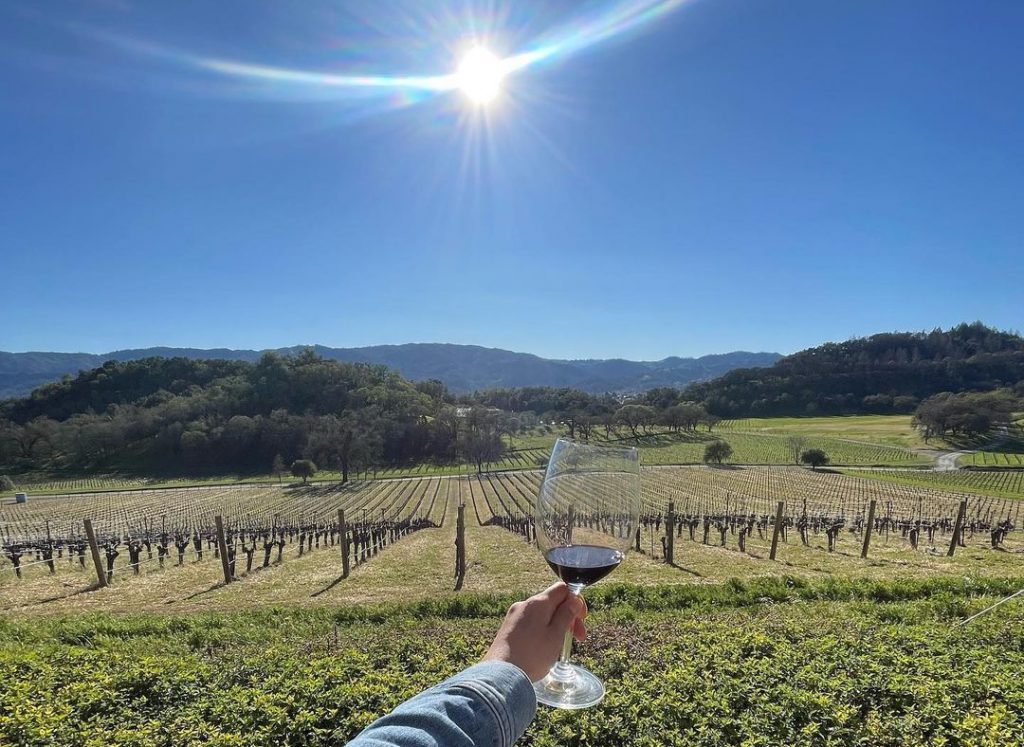
One of the most important developments however, has been the shift to regenerative viticulture at Phelps in recent years.
As Knoth explains, this comes after an exhaustive two years study of the hydrology, ecology, flora and fauna at Home Ranch in St Helena’s, in order to better understand how to integrate into the landscape and create better harmony and balance. Since then, it has embarked on a programme of planting native species and creating a “spine” in between rows and a “membrane” around the blocks of thousands of native trees and plants. “We’re trying to move away from the monoculture that vineyards and farming and agriculture can be to more of a polyculture that balances the soil,” he explained, the ultimate aim being to replace the need for replanting every 15-20 years and created vines that last 50-100 years.
The team will be planting vines this winter, both Cabernet Sauvignon as well as Cabernet Franc, using new rootstocks that have a deeper, broader root structure.
Related news
Château Cheval Blanc CFO appointed estate director at Domaine Beauséjour
Napa Valley's Bouchaine Vineyards appoints new DTC director
Alcohol cancer labels: public health measure or scare tactic?


