



Wine List of the Week: Jul’s
Douglas Blyde explores Jul’s, the lavish new St James’s restaurant marrying Aegean glamour with serious drinks credentials, and asks whether style can keep pace with substance.
Jul’s was founded in 2018 on Ibiza’s road to Sa Caleta by Executive Chef, Christos Fotos, with Jem Akyuz overseeing business development, and his son, Ilhan Akyuz, serving as GM. The group expanded to Athens with Humain and established a two-hectare organic farm in Ibiza. In March, it reached what its website calls “the unavoidable St James district”, occupying the former National Bank of Egypt.
Harden’s welcomed a “vogueish Greek/Mediterranean-inspired venture” as another “shot in the arm” for “stuffy old St James’s”. Athens-based ArcSet filled the former banking hall with scorched beams, clay plaster, golden snails on corners, bees caught in wire-net curtains, stone-collage tables, bespoke ceramics, and a 6.5-metre wine wall. ArcSet also designed Onima, the now-closed Mayfair pleasure palace where resident DJs and upper-floor nightlife nudged food towards supporting act. The family resemblance is obvious: Aegean luxury translated through shadow, craft and Instagram-ready mythology, with the meal treated as one component in a broader lifestyle sale.
Jul’s is intricate and over-designed, yet curiously inattentive where fabric meets flesh. Against the stone and glass, staff uniforms appeared conspicuously ill-fitting. The soundtrack bumps rather than seduces. Even the loos announce themselves, their visible flushes resembling giant Voss water bottles. Before coats were taken, we were toured through the house before it was ready to be shown, albeit with an owner present; enthusiasm was touching, nerves visible. A frond of purple cress had reached my chair before we had, while one member of the team perspired beneath the demands of the room.
Drinks
Bottles climb from beside the loos in sparkling form to ground floor and mezzanine. The bespoke cellar holds around 2,200 bottles, though the huge windows raise one practical concern: daylight and fine wine are poor companions.
Given Jul’s sits within sprinting distance of 67 Pall Mall, its wine offer needed to be more than interior bravado. Without Klearhos Kanellakis, ably assisted by Senior Sommelier, Haoyi (Eva) Chen, the wine wall might remain an architectural boast. Kleo, as he is known, is a Greek-born Decanter judge, formerly part of the opening team at 67, then Trivet and Ekstedt at The Yard. He has the useful gift of making obscure wine sound necessary.
Kanellakis joined the project in January and watched the mosaics being laid. His aim was not simply to avoid another Mayfair list, but to build one capable of resisting the room around it. Around 70% of opening stock came from Jul’s Ibiza. Palmer is the house champagne, chosen for its lighter frame. At Ekstedt, Kanellakis says, Niklas Ekstedt’s cooking demanded something richer; Jul’s calls for greater agility. At the other extreme, visits to Blandy’s and Henriques & Henriques, with another Madeira trip planned through an educator’s course, suggest fortified wine may deepen as a strand.
Producers including Prieuré Roch, Gut Hermannsberg and Giacomo Fenocchio have already personally passed through the room. Jul’s also hosted the launch of Bollinger PNAYC21, and a salon with the founders of Mezcal Reina, led by the FT’s Alice Lascelles. It wants makers present, not simply their bottles. Correspondingly, mark-ups, Kanellakis says, may fall as low as 40%, while producer corkage is waived to animate the mezzanine.
By the glass, his thinking moves from Palmer in three forms through Etna, Macedonia, Puligny-Montrachet, Nemea, Orcia, Rioja Alavesa, Châteauneuf-du-Pape, and Ribera del Duero. By the bottle, Mayfair’s expected monuments are present, while the more interesting routes lead through Turkey, Tinos, Santorini, Ribeira Sacra, Dão, and California. This is not a radical list dressed as luxury: it is an inventory intended to educate its audience.
Kanellakis is the hero of a film which occasionally appears to have cast him in the wrong genre. Around him: golden snails, glossy tables, and guests who may never stray beyond the familiar. Before him: retsina, single-village Rioja, volcanic Assyrtiko, and Madeira in three-litre formats. However, many may devote more time to cocktails than his more demanding wines.
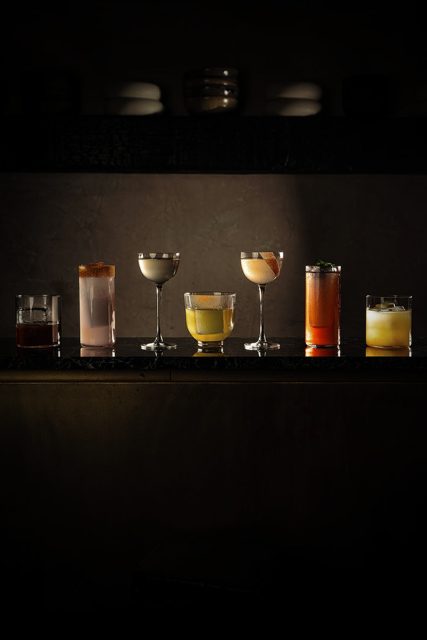
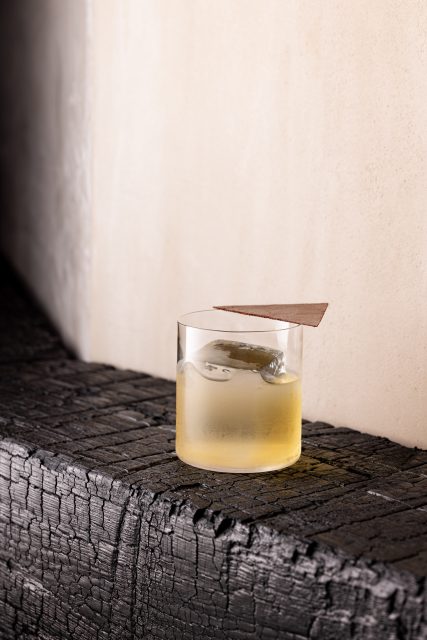
Indeed, downstairs, No. 11 is a serious attraction in its own right. Bar Directors Vasilis Sgouromallis and Dimitris Karapanos work with lab-grade equipment fully visible. Aguacate makes gin, Noilly Prat and guacamole unexpectedly persuasive; Monolith collides potato vodka, tomato, mustard, shochu, mushrooms and even kimchi. A 2am licence has become precious in London.
Kanellakis is both Jul’s greatest asset and its vulnerability. His conversations turn difficult wines into appetite; his pairings often rescue food from its formidable sauces. While Chen provides capable support, a programme this personal should not depend so heavily upon one man permanently standing beneath the golden snails.
Dishes
Palmer Rosé Solera opened lunch with warm Kalamata olives in bergamot vinegar, coriander and fennel – among the best things served – followed by wafer-thin crab and avocado tacos from the bar. Aguacate and a balanced tomato-water Negroni accompanied bluefin tuna tartare with blood orange ponzu and a raspberry-beetroot sorbet presumably added to distinguish yet another Mayfair tuna tartare from the herd. Instead, it nudged the dish towards pudding, while the dish still lacked texture. The cocktails did the rescuing.
Partner Content
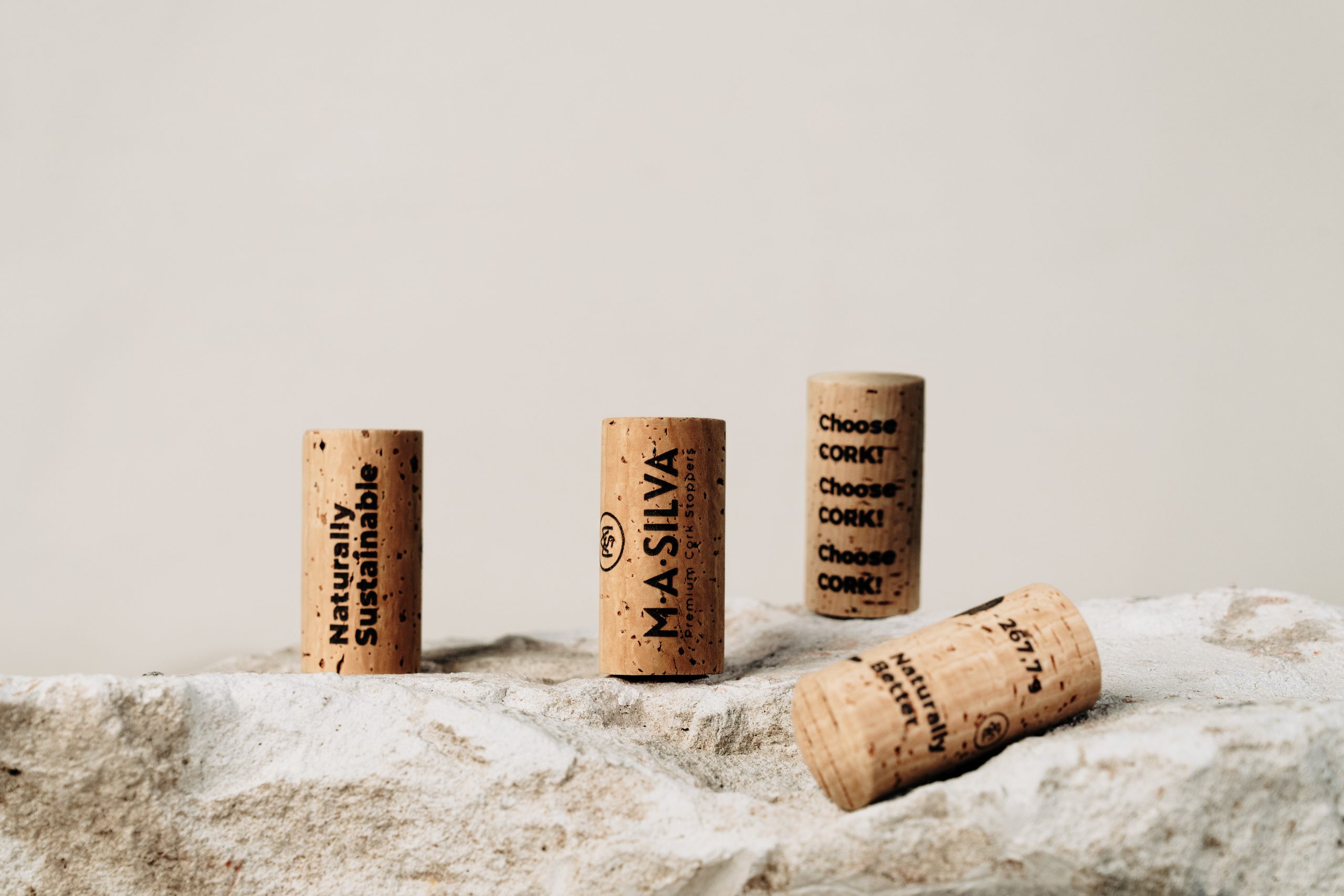
Then came Kallos Phos from 1979 Wines, retsina only in the legal sense. Based on Assyrtiko, it belongs to Eleni Kechri’s effort to treat resin with the seriousness usually reserved for vineyards. Sustainable Aleppo pine resin enters during fermentation, followed by maturation in French oak. Unable to carry a vintage on the label, 2020 is stamped instead on the tip of the cork. Ample and distinctive, with iodine, lifted pine and a breadth which briefly recalled Corton, it was the most sophisticated retsina we have encountered.
It arrived with what the menu insisted on calling grilled calamari, buried beneath XO beurre blanc and guanciale. The wine made its case, pine and resin cutting through richness. The squid did not. It felt translated into Mayfair anxieties – sauced, rearranged and exhausted by its own reinvention.
The Greek salad, by contrast, trusted the thing itself: peeled beef tomato, feta, capers and crushed carob rusks. Kanellakis said it recalled his mother’s village in Crete. Carob brought malt and texture; the tomato tasted concentrated and alive. Resin in the glass, carob on the plate: two trees, one convincing thought. It was the dish of lunch, and a rebuke to everything around it trying too hard.
Grilled carabineros followed, with an orzo chilli and prawn butter Kanellakis described as the Greek equivalent of a Sunday roast. Michel Mallard’s Ladoix Les Buis 2022, recommended by Svetoslav Manolev MS, brought a clean Burgundy line which suited the shellfish.
Manolev’s appearance in the story felt emblematic. Once a sommelier, now Portfolio Director at Armit Wines, he belongs to a growing procession of talented floor staff who moved to importers. Jul’s catches the wider hospitality fault neatly: money remains available for sculptural tables, PR campaigns, and six-metre wine walls, while those capable of animating such expenditure become harder to retain, and even harder to tempt to tastings. Better hours, better money, fewer Saturday nights. At this rate, one wonders whether, in a decade, there will be more trained sommeliers selling wine from spreadsheets than pouring it.
Podere Forte’s Rocca d’Orcia Villaggio 2021 arrived with Kanellakis’s account of founder Pasquale Forte, who solved an engineering problem for Ferrari during the Schumacher years before buying a hill in Orcia. Kanellakis visited the estate in January and spoke of Forte’s closeness to the family of Domaine de la Romanée-Conti, and daughters sent to Burgundy to learn. The wine was delicate, graceful and unexpectedly Pinot-like.
Then came Australian wagyu tagliata with fermented king oyster mushroom, potato terrine and aged Reggiano sauce. The wine, Bideona V1BN4 2021 from Rioja Alavesa, involved two Masters of Wine, six villages, and more than 300 micro-vinifications. Restrictions kept Villabuena from the label, hence the private numberplate-like code. In the glass: limestone freshness, restrained fruit and a direct translation of origin.
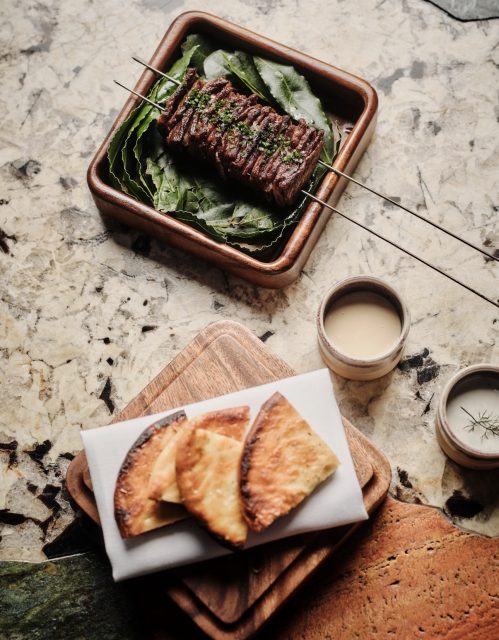
The beef translated little beyond purchasing power. Wagyu has become the edible marble countertop of modern restaurants: expensive, heavily veined and selected less for character than for its ability to signal money from across the room. Fat supplies immediate gratification, though not necessarily flavour, structure or any persuasive account of the animal.
There is also the absurd mileage. Jul’s speaks earnestly of its certified organic farm, villages, growers and provenance, then flies beef from Australia so it can disappear beneath mushroom, potato, cheese and sauce. Britain produces cattle with breed, landscape, age and muscle to discuss. Bideona spoke more clearly of where it came from than the meat beside it.
Dessert recovered matters: baklava ice cream, pistachio crémeux, and caramelised filo, albeit already beginning to pool, with Henriques & Henriques 10 Year Old Verdelho from a three-litre bottle and Aether, combining Rémy Martin, Branca Menta, Axia Mastiha and palo santo. Despite the melt, the pudding stood up.
Last sip
What, now, is a restaurant? Somewhere to eat, certainly, though increasingly also a bar, nightclub, content studio, design portfolio, brand showroom and financial wager with a kitchen attached. Why do restaurants matter? Because at their best they gather talent, appetite, conversation and human attention into one room. Jul’s possesses all the expensive components. Its strongest moments, however, come when those components recede: a Greek salad which trusts tomato, feta and carob; a retsina explained with intelligence; a cocktail with a reason to exist; a sommelier able to turn obscurity into appetite.
Your reviewer is not the natural audience for a loud, brash restaurant upholstered in sauce and nightlife cues. Yet Jul’s has achieved two things of consequence: one of London’s most original cocktail programmes, and a cellar authored by Klearhos Kanellakis, and co-performed by rising talent, Chen. This makes the publicity campaign especially baffling. Money appears to have been poured into promoting the room without adequately explaining why its drinks programme matters. Stone, brass, lighting and imported beef can all be bought. Judgement cannot. A man who can make retsina feel necessary is harder to replace than any table, wall or light fitting…
Best for:
- Klearhos Kanellakis
- Cocktail programme
- Greek salad
Value: 94, Size: 95, Range: 96, Originality: 97, Experience: 90; Total: 94.4
Jul’s London – 11 Waterloo Pl, London SW1Y 4AU; 020 3750 8890; julslondon.com
Related news
Wine List of the Week: Willett's at Belmond Cadogan
Wine List of the Week: Cooper’s Cut, Four Seasons Hotel London at Tower Bridge


