



Could craft beer be seeing the start of a second wave?
In the US, craft brewing trends have held steady, declines in operating breweries have slightly increased and consumer engagement has strengthened. Jessica Mason asks: are we seeing craft beer’s resurgence?
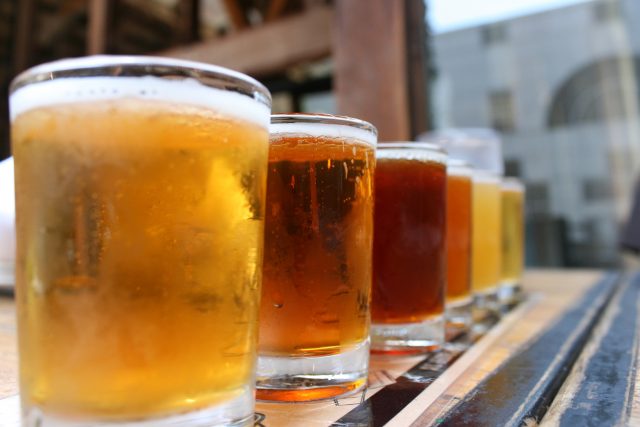
The Brewers Association (BA) released results from its midyear survey, presenting an updated look at the independent beer sector in the US. Despite the findings still pointing to continued pressure, there are however several indicators to suggest the contraction may be moderating.
Among the analysis, the BA estimates craft volume declined 4% in the first six months of 2026, compared to the same period in 2025. But the overall decline of craft volume is not the only story in the data, because, looking more closely, it was identified that among survey respondents, 54% reported growth, 43% reported declines, and 3% remained flat.
Seeing a shift
In fact, every craft brewery type had a greater share reporting growth than decline, with taprooms (57% growing) and regional breweries (56% growing) leading the charge. Among breweries producing more than 10,000 barrels, 59% reported growth and just 40% reported declines. While the BA admitted that there’s likely positive-leaning sample bias since breweries are more likely to report when things are going well, this is still an overall bump from 49% reporting growth in the same survey last year.
Speaking to the drinks business, Brewers Association staff economist Matt Gacioch said: “It’s too early to say craft beer has definitively turned a corner, but trends tend to steady out before they shift direction. The data suggests that this may be where the industry finds itself today.”
Craft consumers offered another encouraging signal. In the 2026 BA and Harris Poll Consumer Survey of more than 2,000 adults, monthly craft consumption among craft drinkers reached 85%, up 10 percentage points year-over-year and up to its highest level since 2019–2020. Craft drinkers also visited breweries 5.5 times on average over the past year, up from 5.1 in 2025.
‘Cautious optimism’
Within the report, the BA remained cautious when approaching the possibility of a turnaround with too much hope, but the initial signs are looking positive. Instead of giving a completely optimistic view, Gacioch tentatively said that “in spite of these bright spots, it is too soon to say whether craft has reached the bottom of the valley for trends in production volume or number of breweries”.
Partner Content

But the data should give brewers a lift, especially since there are many out there who have been battered by the onslaught of headwinds the sector has faced. As Gacioch explained: “Still, after several years of figures moving in the wrong direction, that moderation may catalyse some cautious optimism for an industry of perseverant brewers.”
Gacioch admitted that “the world in which craft brewers operate hasn’t gotten any easier or more predictable in 2026, but perhaps the breweries that have weathered the storm so far are the ones that have best positioned themselves for storm weathering into the future”.
Granted, the number of operating breweries also continued to decline. For instance, there were 9,344 breweries operating in June 2026, down 1.8% from 9,515 a year earlier in June 2025. This represents a slight uptick in the rate of decline, from -1% in the first half of 2025. The number of regional breweries and microbreweries each declined 3%, followed by taprooms at 2% and brewpubs at 1%. However, because taprooms and brewpubs are far more numerous, the BA pointed out that those smaller percentage changes still represent meaningful absolute numbers of closures.
Breweries with taprooms were best-performing
For the first half of 2026, taprooms were the best-performing brewery type by volume change, outpacing other models. Additionally, when assessing by channel, distributed draught beat distributed packaged products and onsite sales. The BA noted that this suggests craft brewers are finding opportunities to meet consumer needs in draught amid wholesaler consolidation and portfolio rationalisation.
Even though retail scan data showed steeper declines than the BA estimate, for instance, off-trade data from NielsenIQ (NIQ) has shown BA-defined craft down 5.2% in the first half of 2026. By comparison, NIQ-defined craft was down 5.6% for the same period, and beer plus non-alcohol beer was down 4%.
Looking at the bigger picture, there is still a long journey ahead. After all, beer continues to experience declines alongside other beverage alcohol categories. This can be seen from Wine & Spirits Wholesalers of America (WSWA) SipSource data which showed spirits volume down 5.3% and wine down 9.2% for the 12 months ending May 2026. As the report flagged, even though that period does not align perfectly with the first-half craft beer figures, it does offer the most recent comparison available.
Related news
Have you tried the world's first high fibre beer?
Carlsberg emerges as World Cup winner despite smaller than expected beer boost
Sober raves, booze-free beer: why South Koreans are shunning alcohol


