



Raising labour standard in the wine industry ‘unsexy, but important’
The wine industry needs to have use both a “carrot and a stick” in order to raise labour standard in viticulture and the supply chain – which may be an “unsexy” topic, but one of increasing importance. Arabella Mileham reports.
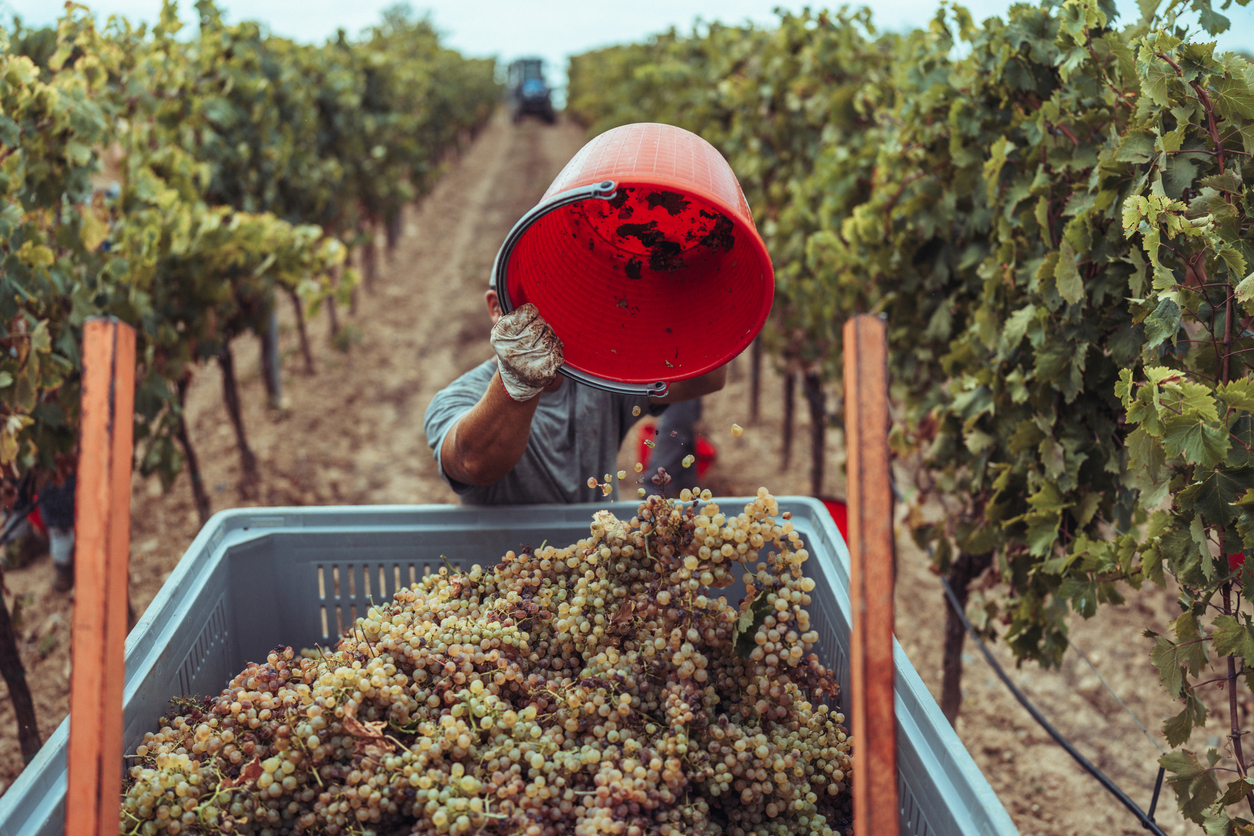
The wine industry needs to have use both a “carrot and a stick” in order to raise labour standard in viticulture and the supply chain – which may be an “unsexy” topic, but one of increasing importance.
Speaking after a panel session at last month’s London Wine Fair, wine sustainability consultant Ann Jones, who has previously served on the board of the global sustainable wine and as category manager for BWS at Waitrose for more than 13 years, told db that one of the most important ways to bring retailers on board was to prove that “it makes really good business sense” from a continuity, retention and efficiency perspective, reducing costs, as well as adding “premiumisation potential”.
“When we’re moving to this potentially lower volume, but trying to drive value and values, how are we then turning that into something that adds premimuisation potential, adds loyalty from a consumer base, adds the ability to increase distribution, or to make this something that adds, it becomes part of quality,” she said. “It needs to be become part of quality, whether that’s through an operational perspective or whether it’s through consistency in the quality of the product and value in the brand.”
Aligning a retail or a brand with the values that customers value would also appeal to consumers, she said, both in terms of sustainability and ethical sources.
“It’s about doing the right thing,” she said. “The consumer doesn’t need to know that at the beginning – they may not ask about it, but it becomes part of them buying from businesses that they feel represent their values.
“They don’t necessarily need every single last bit of messaging about what exactly that means, but it’s about creating a brand, whether that’s a retail brand or a production brand, or even a regional brand, that they feel reflects their values.”
A second hugely important issue is in ensuring that certifications include social and labour elements. As Jones pointed out, having been involved in a few different certifications, “you started off with the board saying ‘we don’t do social’,” but in order to be recognised by some of the monopolies, notably Systembolaget, it now needs to include social elements.
“If we’re going to do it, we’ve got to do it properly, and that then impacts whole regional supply base, and it’s a huge impact.”
The Wine Society’s five step plan
The Wine Society has created a step-by-step guide for wine businesses to start to tackle the problem of labour … across the supply chain. The Wine Society’s director of sustainability and social impact Dom de Ville pointed out that while there are lots of tools available for other sectors, “no tools exist in the wine industry to help producers do those things.”
Partner Content


He outlined the challenge. “If you are a small to medium-sized producer in Beaune, making 400,000 bottles a year, you hire 50 seasonal workers, but also buy in grapes from two or three other growers who also hire seasonal workers. But there’s no kind of step-by-step guide for you to help you through that process.”
As a result, the Wine Society has come up with a five-step plan to identify and approach these issues. This involves
- Making a commitment to tackling exploitation and assigning the person in the business who is responsible for that.
- Assess where the risks exist to workers both in your business – and possibly more importantly – in your supply chain. So where are people employed and what kind of issues might they face? Are they working in 40 degree heat during the hottest part of the day? Have they been taken on by a labour provider and if so, where have they come from? How’s that labour provider paying them? Are there any issues around accommodation, sanitation, services or disease? In asking the questions, you can identify where the high are and order them into a list of priorities.
- Make a plan. Once you’ve identified the most urgent risks, what will you address first? Set goals and a timeline.
- Get suppliers to share their own documentation (having gone though the first three steps themselves) with you to provide an overview and a plan across the supply chain
- What about continuous improvement. You’ve got my plan, but how are you getting on in implementing that plan? Where are my challenges? What is working, what isn’t working? What do you need to change? What needs to be done differently?
“This is a standard human rights due diligence approach,” he said, “It’s nothing new… but actually, it will really help people look at where those key risks are to seasonal workers.”
Available for all
The wine society plan, which has been translated into French, Spanish, Italian and Portuguese, is freely available on the Wine Society website “for everybody to use” Dom says. The idea is to make it easier to know what a public commitment or risk assessment looks like, and what kind of questions to ask.
“What kind of risks do I look for if I’m talking to my labour agency?” Dom said. “What kind of questions might I ask my labour agents?”
There is also an action plan template, with examples that can be tailored to suit the business and can be shared with suppliers and customers.
The process started to be rolled out within the Wine Society in February, and by mid-May, around 15-20 suppliers had been trained and at stage four already. The short-term goal is to get all 160 of its own label and key suppliers to have completed the first four steps by the end of the year, following training, with the longer-term goal of extending this to its full supplier list of around 800 suppliers next year.
According Jones, benchmarking different certifications to see where the similarities and difference lie will also make it easier for retailers, she said, while moves by the Wine Society to open the conversation will help exert influence on retailers in the UK to adopt this more readily, having previously seen the wine department as a “slightly lower risk”.
“Once they’ve created a process, it becomes much easier for us to have those conversations with the Tesco’s and everyone else in this world, and I think that, you know, increasingly they will be regulated on it, and the joy of scope three, which no one has ever said before as a phrase. The joy of scope three with carbon is that they are now starting to get used to looking the whole way down their supply chain and acknowledging that that they have risks and opportunities and responsibilities all the way through, and that includes every category. So, it may be slower than we like, but yes, absolutely, part of bringing them along as part of that,” she said.
Related news
Felix Hart turns 'visual sommelier' in Peter Stafford-Bow's new wine novel
Old Vine photography shortlist unveiled at heritage showcase


