



Why travel retail is the smart route for drinks hoping to crack Asia
Drinks brand owners looking at gaining traction across Asia are seeing the global travel retail (GTR) sector’s potential. Not only is GTR the ideal space to capture attention, it is also deft at accruing affluent Asian consumers keen to see brands resurface in the domestic market. Jessica Mason reports.
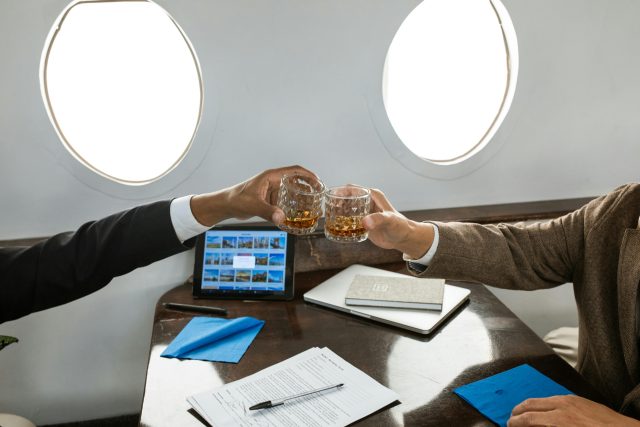
Travel retail, which spans airports, airlines, border stores and cruise ships, has historically been set aside as a parallel course to global expansion. The sector now represents not just the luxury drinks market, but also in many instances the unique, rare and somewhat out-of-reach variants. But it also offers enormous opportunities too, particularly for drinks companies looking for their next foothold in Asia.
While a great deal of potential was positioned for brand owners looking to tap into the Indian middle class consumer, the platform has also held great promise in having the ability to reach new audiences, whether holidaying locally or travelling for business.
Examples of this can be seen by there being a lot of intent from King of Reach by drinks company B&S which was reflected in how busy the team were with meetings during this year’s recent TFWA show in Singapore.
The business, which partners with brands such as White Claw Vodka and Glendalough among others, told the drinks business that there are many reasons for drinks companies to use GTR as a window to gaining greater presence across Asia Pacific. Primarily, to stay in constant contact with visiting eastern buyers but also because it is important for any drinks brand to solidify relationships within the channel.
King of Reach by B&S global sales director duty free and travel retail Luke Maga said: “Asia is now one of the main pillars that we’re focused on.”
Opportunities
Describing the opportunity that GTR holds for drinks, Maga admitted that, although he sees promise in markets like India, he is also eyeing other markets more broadly across the rest of Asia Pacific.
Maga told db: “I think India is certainly a growth engine for us and we are seeing opportunities there with some brand partners, but also Southeast Asia and Australia as they are two key market areas that we believe we can make an impact on.”
According to a recent report from consultancy firm Kearney, the Chinese luxury buyer is still very much in the market, but with a more deliberate approach to where each yuan is spent.
Lately, the story for GTR sales in China has been one of stagnation rather than collapse. Kearney’s findings also identified how high end drinks-buying consumers that the channel can help attract are actually the same middle-aged, high-income shoppers who continue to boost the premiumisation trend.
Adventure-seeker mindset
Additionally, Kearney had highlighted how younger consumers have continued to search for new experiences and this shift for Gen Z and Millennials has also led to a recalibration in spending having taken place. Against a backdrop of macroeconomic and geopolitical uncertainty, every opportunity to sell in a drinks brand has become more precious.
This has shown how brands that stand out, but also hint at travel and discovery are also tapping into an adventure-seeking mindset, showing other parts of the world and genuinely investing in people’s sense of discovery.
Partner Content



For instance, Gold Bar Whiskey is attracting attention to its distillery, making its home a destination in its own right, boosting the joys of travel while also taking note of who is travelling and the tourism routes that lead people to discover new brands.
Gold Bar Whiskey director Ellen Torvi told db that setting a goal for the business has felt like a way of measuring its achievements and explained: “This year, we’re anticipating 75,000 visitors to the distillery. So on this trajectory, we will be in the top 10 most visited distilleries globally.”
The move is a savvy one since, as Torvi pointed out, grabbing attention via travel retail means you capture the right consumer groups, but also have an awareness of how consumers travel and look for new experiences while away.
Encouraging discovery and experiences
She revealed: “We are using the visitor centre as a platform for discovery. We know 60% of travellers out of Californian airports are going to Asian destinations, so we’re inviting people to our distillery to experience the brand. There is the World Cup this summer. We have the Super Bowl in San Francisco, global events and a concert series with headline artists, we’ll definitely reach 75,000.”
The collaborative nature of GTR is also something that is seen as a plus point. Examples of this can be seen from the Family Brands Alliance which has also united independents in travel retail, giving each lesser-known brand some amplification from other brands recognised in other markets.
For instance, Family Brands Alliance, which was formed by Waldemar Behn, features a line-up of brands like Danzka Vodka, Pallini Limoncello, Bache-Gabrielsen Cognac, and G’Vine Gin. Describing the alliance, Waldemar Behn international business development manager Claas Eyler described how alliances like this, built in travel retail, help to open doors with operators elsewhere.
Building relationships
Eyler told db: “We are a group of businesses who have joined forces in travel retail. Each brand is family-owned by small companies, and so we give them a platform in travel retail.”
Eyer explained: “All of the owners are very committed” and noted that “they all share a connection” and yet added that each sits in a different drinks category and so this makes the grouping completely “non-competitive”. Owing a lot to this union, Eyler noted that Waldemar Behn works with operators such as Lotte, Heinemann and Dufry and that the alliance has become key to building these relationships.
Turning heads in GTR with Tequila, female-owned business Casa Maestri which is based in Mexico said that despite the category’s popularity there is still a lot of room to grow and has its sights set on Asia.
Getting noticed
Casa Maestri Tequila project manager Evelyn Vela told db: “Although we export to 84 countries, and we supply bulk private label, we would still love to conquer more countries, more regions and new horizons. We’re looking forward to expanding in Asia and this is a good way to show up and get noticed.”
Travel retail continues to act as a global showcase for drinks brands also looking at treading this path to the Asian marketplace. Not only does it offer a premium environment, but it also circumnavigates varied domestic distribution laws while securing interest from consumers.
In many ways drinks brand owners are continuing to show how it acts as an entry point to Asia, allowing brands to test out their regional appeal without fully committing to one region immediately. With this in mind, more high end drinks brands are anticipated to follow suit.
Related news
Château Petit-Village unveils its new relationship with La Place de Bordeaux
The Italian region selling rosé to the French
China is rebuilding its on-trade around a new kind of drinker


