



Where are they now? Neville Abraham
From a Baghdadi Jewish childhood in Calcutta to shaping London’s modern restaurant and wine scene, Neville Abraham has led a life driven by curiosity, resilience and an appetite for excellence. His memoir, Each and Every Highway, reflects on decades spent building businesses, championing wine and navigating personal triumphs and setbacks.

Neville Abraham was born in Calcutta in 1937 into a large Baghdadi Jewish household presided over by a formidable grandfather, Nissim. A self-made man who had arrived from Baghdad and risen to run a bone factory, Nissim taught himself to calculate without pen or paper and shopped for fifty mangoes at a time, interrogating each vendor personally, insisting on perfection. The instinct to source well, to pay attention to quality and provenance, was absorbed by Abraham Young. What followed was a life of startling breadth, punctuated by wine and food, and built around a recurring fascination with what makes people, businesses and institutions exceptional.
Abraham was given his grandfather’s name, Nissim, but his mother swiftly changed it to Neville. Amid the fading certainties of the British Raj, the Baghdadi Jewish community were outsiders to the British occupiers and to the Indian population. Abraham has retained that feeling of not belonging throughout his life. Close-knit family life consisted of Sabbath feasts and blistering Bombay summers. Approaching his teens, he started to think that there must be more to life and soon, the opportunity arose to do something about it. His mother had always wanted a British education for her sons and sent Abraham and his brother Stan to England.
A British education and early independence
His parents’ marriage was not a happy one, and the prospect of England was an adventure into the unknown that, at the age of 13, Abraham relished. The two boys were deposited in an English public school with a pound a term for pocket money, unable to afford the tuck shop, surviving on porridge “Dickensian enough to be called gruel.” Yet, asked by his mother whether they should return to India, he replied simply: “I’d rather stay here.” His brother Stan, younger by two years, chimed in: “If Neville stays, I stay.”
He first discovered wine in Paris in the summer of 1962, while working the night shift at the Les Halles meat market on an exchange organised by the Association Internationale des Étudiants des Sciences et Commerces. A colleague named Paul, discovering that Abraham was cooking a meal for friends, took him on a lightning tour of the market, buying vegetables and a plump chicken, then led him to a wine merchant’s stall where a bottle of Alsace Riesling was thrust into his bag. Reflecting his experience at his grandfather’s knee, he took on board the notion of sourcing the best ingredients as an essential prerequisite to preparing a tasty meal.
Fine wine and first growths
As a senior civil servant in the late 1960s, browsing the wine department of the Civil Service Stores opposite his office on the Strand one lunchtime, he noticed bottles of 1961 Château Latour and Château Margaux 1961 that he could barely afford. He knew the names as first growths and asked the attendant what stock they held. There were two cases and seven bottles of the Latour, three cases and nine of the Margaux. “I was going through that phase where aspiration overtakes reality. I had to find £300 to £400 to settle the bill, and I found myself saying: I’ll take the lot.” Selling them at auction a few years later, he used the proceeds to pay for his younger brother Ralph’s education.
A more consequential encounter came a decade later, during a management consultancy assignment at P&O Ferries, one of whose 22 subsidiary companies handled the shipment of wine in barrels from Bordeaux châteaux to English shippers. Abraham was intrigued by the romance of barrels rolling off the boats at Shoreham and began asking questions. One name kept appearing: Steven Spurrier, the Englishman running a wine school and shop near the Rue Saint-Honoré in Paris. When Abraham visited him, Spurrier was generous with his advice. A passion for fine French wine was ignited.
Building Les Amis du Vin
By the early 1970s, Abraham had left the civil service, worked briefly as a management consultant, and wrote Big Business and Government, The New Disorder in 1974. He began hosting informal wine tastings for friends in his Battersea flat. Les Amis du Vin, which began as a mail order operation, a small shop in Chiltern Street and a warehouse near White City, grew at over 20% a year and was profitable from the start, with the profits ploughed back into the stock. A young Delia Smith came in regularly to buy a bottle. A journalist in red specs arrived to interview him: Jancis Robinson. Another customer, the young Australian Michael Hill-Smith, was studying to become, in due course, Australia’s first Master of Wine.
Peter Allan Sichel of Château Palmer gave him advice he never forgot: there are over 2,000 châteaux in Bordeaux making wine every year, but real demand exists for only about 100 of them. He is candid about the missed opportunities. He arrived at Charles Rousseau’s cellar in Gevrey-Chambertin one hot summer’s day, tasting nectar from every barrel until he could hardly stand. Rousseau procured a bottle from an off year, and they had a picnic lunch with baguettes and charcuterie, then said the wine was too warm, got another grand cru and plunged it into an ice bucket. “If it had occurred to me that Rousseau’s wines would soon become world famous, I would surely have placed a very big order that day.”
Partnership with Geoffrey Roberts
The most important wine partnership was with the charismatic Geoffrey Roberts, who specialised in California wine and stored his entire stock duty paid in a Chelsea garage. Roberts was persuasive and well-connected; Abraham was the businessman. Their merger combined Roberts’ wine-buying instincts with Abraham’s commercial discipline. They visited Robert Mondavi together in California and launched the first vintage of Opus One in Hedges & Butler’s wine cellars in Regent Street. Clive Coates MW joined from British Transport Hotels as buying director, but Abraham eventually had to let him go when the cellar stocks grew dangerously large.
Partner Content
The wine business led to restaurants. Le Café des Amis du Vin opened in a banana warehouse off Long Acre in Covent Garden in the late 1970s in partnership with Laurence Isaacson and Michael Likierman. Offering a genuine French bistro at reasonable prices in the West End, with an interesting wine list, it was, Abraham only half realised at the time, “in the vanguard of a gastronomic revolution in London.” Within months, there were queues at the door. He ran Les Amis du Vin and the Café des Amis du Vin side by side, Roberts dealing with the wine and Isaacson the marketing.
In 1984, Kennedy Brookes made an offer of £2.5 million, unheard of at the time, that he could not refuse. Soon, he was buying £3 million worth of wines for over 50 restaurants, divided between the Wheelers, Mario & Franco, and Café des Amis groups, but he did not like the devious Kennedy Brookes ethos and decided to leave. He bought Café Fish and Bertorelli’s, the germination of Groupe Chez Gérard, and subsequently the three Chez Gérards, with a loan at three per cent above base rate from Hill Samuel. Within 18 months, the economic storm triggered by Britain’s exit from the ERM saw base rates soar. The crisis lasted over a year, during which they were paying interest of 22%. To survive, they cut costs, incentivised staff and rejigged menus.
Growing Groupe Chez Gérard
While entrepreneurs such as Conran, Bob Payton, Jeremy King and Chris Corbin were reinventing what a London restaurant could be, Abraham and Isaacson built Groupe Chez Gérard into a plc which floated on the Stock Exchange in 1994. The business grew from six restaurants turning over £13 million in 1995 to 27 restaurants turning over £37 million in 1999 with 1,000 employees. Abraham’s research showed that 95% of customers did not come primarily for the food but to have a good time with friends and family. “I have a huge admiration for chefs,” he says, “but I have met only a few who would agree with our thinking.”
Now a tax exile in Brussels “to avoid having to give Gordon Brown 65% of my savings”, Abraham realised that he had made a disastrous decision when appointing the person to run the company in his place. He returned to London, fired the manager and took the overdraft down from £13 million to £3 million. When the stock market crashed following the Iraq war, his shareholders accepted a derisory offer for the company. “I had to follow on the Friday and was out of a job by Monday.”
Liberty Wines and later success
In the early 1990s, at a Barolo tasting at Winecellars in Wandsworth, Abraham had met David Gleave MW. “This is someone who really knows what he’s talking about,” he thought. Approached by Gleave and Michael Hill-Smith MW after the sale of Groupe Chez Gérard in 2003, Abraham took a 10% stake in Gleave and his wife Luciann’s Liberty Wines, becoming non-executive chairman. While he admired Gleave for his “deep knowledge” and “strong commercial intelligence”, he felt that what was missing was organisational structure and experience of growing a company, which he was able to bring. They moved from the old Covent Garden fruit market to a purpose-built warehouse in Clapham, large enough to guarantee next-day delivery and designed to accommodate growth.
Liberty grew through the financial crash of 2008 without a blip. By the time Abraham left, the company employed 240 people, represented 400 producers from twenty-five countries, and serviced a high proportion of the UK’s best restaurants, hotels and independent wine merchants. John Ratcliffe had been consulting for Sogrape, and the idea came up of them buying a slice of Liberty. The eventual sale to Sogrape was completed in stages and transformed the landscape for both companies. Gleave took over as chairman, and Abraham left in 2022 at the age of 84, expressing a characteristic concern that a traditional family business such as Sogrape had yet to fully harness the unique abilities of Gleave and his colleagues.
Personal life and philanthropy
Abraham’s relationships with women reflect his footloose approach to life. “I never had any difficulty with girls; the difficulty came when the relationship had developed, and the old problem surfaced. She often had an agenda, marriage and two children, and I didn’t share that, so I was always ducking and diving.” Nonetheless, he married his long-term partner, Nicola, in 2005, at the age of 67, and together they built their dream home, Orchard Farm, in Sussex. In 2018, Abraham was struck down with a mystery illness, and his wife Nicola was diagnosed with lung cancer that had metastasised to the brain and needed radiotherapy.
“For more than 30 years,” says Abraham, “Nicola has brought laughter into my life and a deep sense of the meaning of love.” Abraham’s determination to keep building and giving, despite his wife Nicola’s diagnosis, treatment and gradual decline, is affecting. They have moved from Orchard Farm, their award-winning new house, to a serviced apartment in Chelsea that is five minutes from the oncologist. Their philanthropic foundation is backing female cricket coaches and music teachers and university scholarships for girls in Nepal, investing in music for youth and supporting charities such as Skillsbuilder and U-Go as well as the LSE and Brighton College.
A memoir and a life well lived
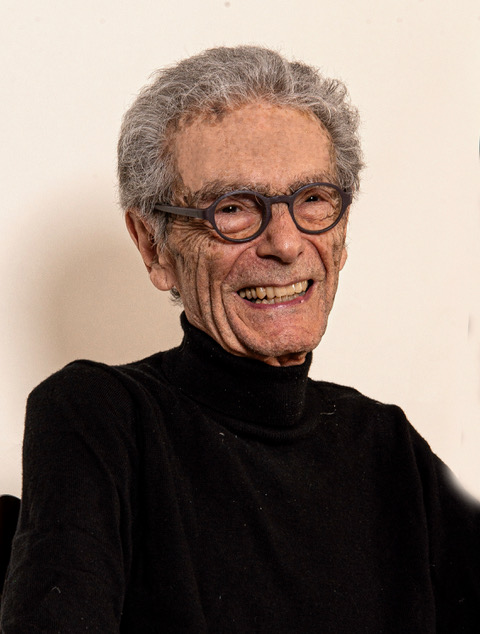
As the cellar of fine Burgundy and Barolo has been pleasurably dwindling, Abraham has been writing Each and Every Highway (£20, DoHo Press), a memoir published this year, as a way, as he puts it, of trying to make sense of the life of “a meandering minstrel”. He talks of paying attention: to people, to talent, to ingredients, to quality, to the things that make life pleasurable and worthwhile. He is honest about his failures and missed opportunities. He is also honest about his limitations as a manager of his own emotions; restless, reluctant to commit and always looking for the next challenge. The book is a fascinating window on London’s food and wine scene in the late 20th and early 21st century, and celebrates, in its own self-effacing way, a life well lived.
Related news
Château Galoupet puts sustainability at the heart of rosé
The winery betting on the ‘next chapter’ for cool-climate Australian wine
Goedhuis Waddesdon: ‘there is appetite for fine wine among the younger generation’


