



The wine industry’s Gen Z problem isn’t what you think
Benjamin Jack, son of Bruce Jack, has spent the past year moving between industry tastings, festivals and wine events. What he found was not a generation turning away from wine, but a trade increasingly out of step with how people discover and enjoy culture.

I have spent the last year between a variety of different wine events, the kind of event where everyone in the room has spent thirty years learning to taste wine and approximately no time learning how to talk to people who haven’t.
More than once in these settings, the prevailing conversation about Gen Z has reared its head. Often the consensus reached with the grave authority of people who have a lot of opinions and not quite enough data, was that younger drinkers had simply decided wine wasn’t for them. They’re sober-curious. They’re wellness-obsessed. They’re drinking seltzers and smoking cannabis and spending their disposable income on experiences rather than bottles. They are, depending on who you ask, either the industry’s greatest existential threat or simply a generation that hasn’t grown up yet.
I have been thinking about these conversations ever since. Not because they were wrong, exactly. But because it was asking entirely the wrong question. I’d like to suggest something more uncomfortable: the industry is using Gen Z as an excuse. The wine industry does not have a Gen Z problem. It has a courage problem. Gen Z is merely the mirror in which that problem is currently most clearly visible.
Wine is complicated. That has always been true. What is different now is that we live in an age where every other consumer category has responded to complexity by removing friction. Spotify didn’t make music simpler, it made finding music effortless. Monzo didn’t change banking, it changed how banking feels to use. The seltzer category didn’t invent a new drink, it gave people permission to choose without thinking.
Wine has not done this. Wine has, by and large, doubled down. Like your drunk uncle playing poker with you at Christmas time.
Walk into a wine shop or scan most supermarket shelves, and you are still confronted with the same hierarchy of knowledge that has defined the category for decades. Appellations. Vintages. Critics’ scores. Region-specific labelling laws that require a university module to decode. The implicit message to anyone who doesn’t already know what they’re doing is clear: “this space is not for you yet.”
I am, I should say, as guilty as anyone of finding wine’s opacity rather wonderful. I grew up around it. I have never once stood in front of a wine wall and felt anything other than delight at the proliferation of choices. I have a guilty pleasure in being the one person my friends hand the wine list to when we sit down at dinner. Despite how flattering that is to my ego, a rather
important point is that most people in this country do not share that disposition, and the industry continues to design itself almost exclusively for people who do.
The success of New Zealand Sauvignon Blanc in the UK market wasn’t accidental. It told you exactly what it was, where it was from, and approximately how it would taste. No homework required. That clarity drove one of the most significant shifts in UK wine consumption in a generation, and the industry largely shrugged, filed it under “accessible wines,” and carried on building temples to complexity.
Here’s what makes this frustrating rather than simply sad: there are people in this industry getting it right.
Initiatives like Clarity are directly targeting the intimidation problem, with their mission statement to fix the narrative the industry seems to collectively hold over Gen Z, giving younger consumers a way into wine that doesn’t require fluency in French appellation law.
The natural wine movement, for all the easy jokes about East London small plates and dubious cloudy orange wines, proved something important: Younger drinkers will engage deeply with wine when it comes with a story they can connect to, a producer they can believe in, and an experience that feels more like discovery than examination.
Partner Content
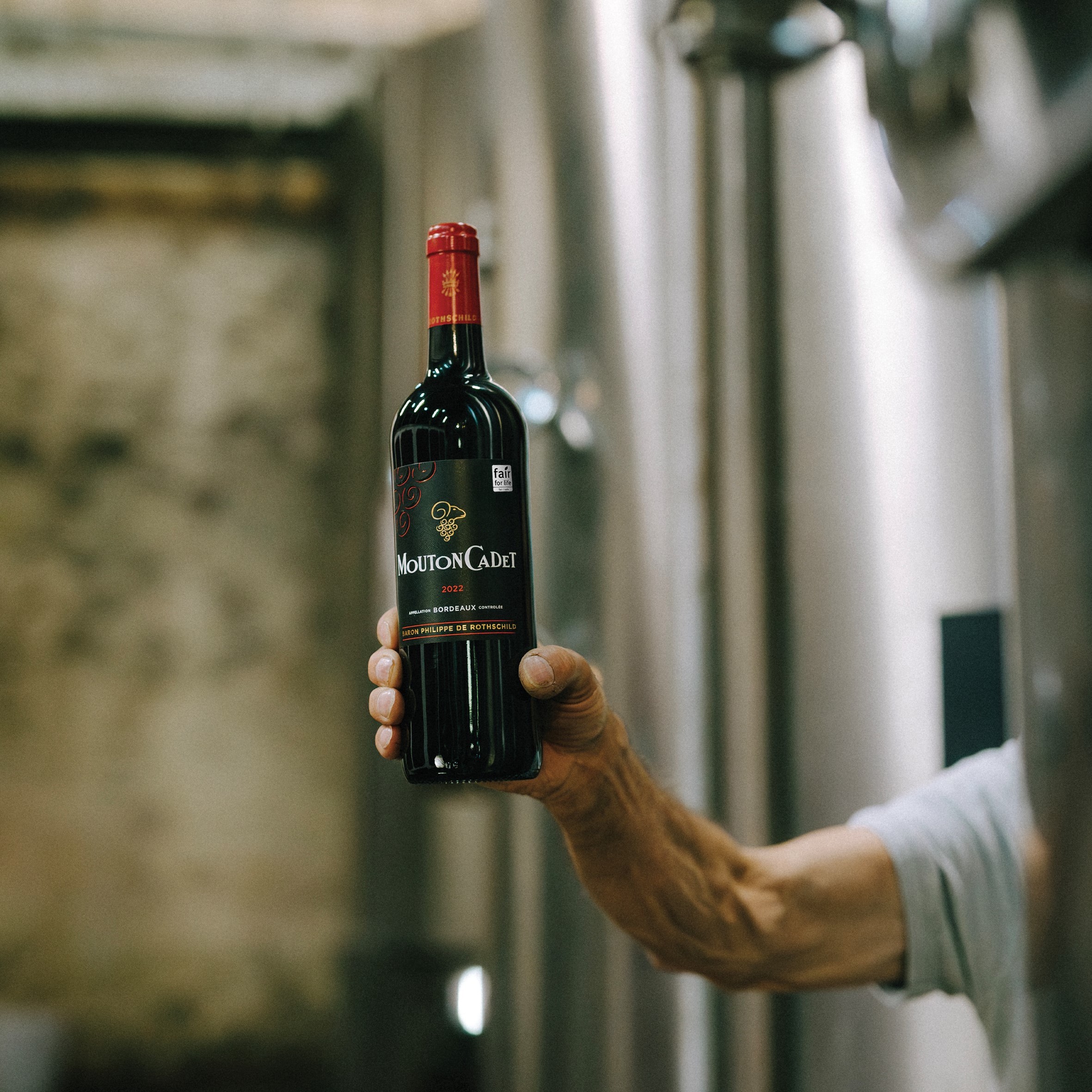


These aren’t fringe anomalies. They are proof of concept. They demonstrate, with real commercial evidence, that the engagement problem is solvable. What they are not is systemic.
The wine industry has watched these successes, nodded approvingly at the innovation, and largely continued doing exactly what it has always done. Because the existing model still works, for now. The Boomers are still buying. The Millennials who got into wine a decade ago are still buying. The spreadsheets still add up. Why change an expensive, complicated thing when the current thing still functions?
For most the question is not cynical. It is, in fact, a rational business calculation — and that is precisely the problem.
The industry is currently optimising for a customer base that is, with great respect, ageing out of it. Wine’s core consumer in the UK and the western world by large is getting older. The frequency of consumption among 55-plus drinkers drives the category’s headline numbers in most Western markets. Brands that chase that demographic are making a sensible short-term decision. But short-term sensibility and long-term survival are not the same thing.
The wine industry is, in other words, doing what any sensible business does when faced with an expensive, uncertain, long-horizon investment in a new consumer cohort while an existing cohort is still buying: it is milking the existing cohort, deferring the investment, and telling itself the deferred generation will come around eventually. It is not cynical. It is not even wrong, on a spreadsheet. It is a slow puncture that most are choosing to ignore, at least until they get stranded two hours from the service station.
The UK government has not helped. When the entry-level bottle is taxed to the point at which genuine quality becomes commercially impossible to deliver, you are not merely making cheap wine worse. You are removing the step on which an entire generation would have learned to climb.
A drinker who never has a decent first experience does not trade up, they get out. The industry has been saying this to the government, correctly, for years. It needs to say it louder, together, and with the kind of coordinated force that it currently reserves for arguing with itself about natural wine.
The fragmentation of the wine trade: brands, importers, retailers, growers, agencies all pulling in directions that serve their immediate interests and frequently no one else’s, is not an accident of the market. It is a choice. A choice that, in the current environment, is becoming progressively more expensive.
The wine industry is not short of intelligence, passion or knowledge. Lord knows it is not short of opinions, I’ve just added another 2000 thousand words to the pile. What it is short of is the collective pull in the same direction.
The brands, importers, retailers, educators, and communicators who make up this trade need to agree on something they have so far avoided agreeing on: that reaching the next generation is not a niche interest or a marketing exercise. It is an existential commercial priority.
That means investing in experience over education. It means meeting people where they are in Pubs, at festivals, on the platforms where cultural conversation actually happens, rather than expecting them to come to the category on its own terms. It means treating accessibility not as a threat to wine’s prestige, but as the mechanism by which prestige is eventually earned.
The industry has the roadmap. It just hasn’t decided to follow it.
Gen Z isn’t the problem. The question is whether the wine trade has the courage to admit that.
Related news
Patrick Schmitt MW: Don't dilute rosé's success
Relighting a passion: wine and America on a milestone anniversary
Alcohol cancer labels: public health measure or scare tactic?



Great read and I couldn’t agree more. I particularly liked the Spotify and Monzo comparison along with the lack of help from the UK governments tax.