



Provence: queen of rosé
Provence’s global reputation as the benchmark for rosé is often summarised in a single, familiar image: pale wines, enjoyed in the sun, defined by freshness and ease. Yet this shorthand obscures a far more complex reality. Sophie Arundel investigates.
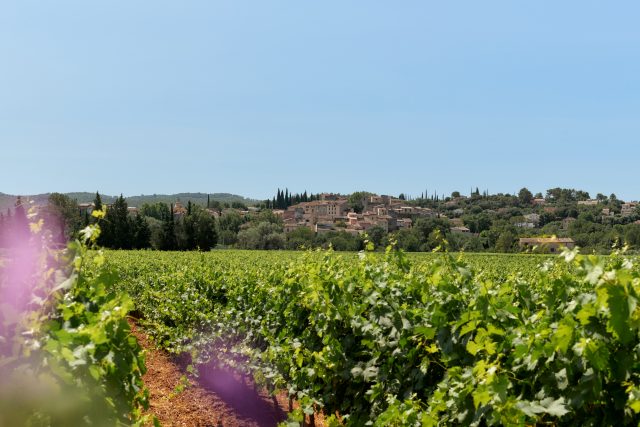
Stretching from France’s south coast to inland hills and higher-altitude plateaux, Provence is a mosaic of terroirs, where differences in soil, elevation and climate translate into a remarkably broad spectrum of styles. Increasingly, producers want to emphasise that behind the region’s aesthetic lies a category defined as much by precision, structure and gastronomy as by drinkability.
For many winemakers, terroir remains the starting point. At Château Barbebelle, situated at about 400 metres above sea level on clay-limestone soils, altitude plays a decisive role. “This creates a constant balance between ripeness and freshness,” explains Madeleine Herbeau, owner and director of the estate. The moderating influence of the Mistral wind further helps regulate conditions in the vineyard, allowing grapes to reach full phenolic maturity while retaining acidity. The result, she says, is rosé with “natural tension, but also depth and structure”. This interplay between ripeness and freshness is a recurring theme across the region, though its expression varies significantly depending on location.
At Château de Berne and Ultimate Provence, Alexis Cornu, director of cellars, wineries and wines, points to the influence of inland conditions. “Our estate is surrounded by forests and hills, at about 300m altitude, which brings some freshness,” he says. Limestone soils contribute a distinct mineral character, while the presence of natural water sources supports balanced vine growth. Cornu is keen to challenge the perception that rosé is driven primarily by technique rather than place. “Some people think that direct pressing doesn’t reflect the terroir, but they are wrong – our wines are the best evidence of that.” Differences become even more apparent when comparing sites. Inland vineyards, Cornu notes, tend to deliver “tingling acidity”, while coastal sites often show greater roundness, and other areas can reveal “a delicious and smooth bitterness”. It is this diversity that defines the appeal of the region: “The great joy of winemaking is exploring the differences between areas and the taste it gives birth to,” Cornu says.
A similar dynamic is evident at Château L’Escarelle, located in the heart of Provence Verte. Here, an elevated terroir combined with significant diurnal temperature variation allows for slow, even ripening. Director Valérie Maquet emphasises that this helps preserve “aromatic freshness and natural balance”, resulting in wines with “elegant, precise profiles”. Being removed from direct maritime influence further contributes to “vibrant acidity, moderate alcohol levels and refined aromatic expression”, reinforcing the stylistic distinction between inland and coastal Provence.
Across Provence, rosé is not treated as a by-product, but as a category requiring dedicated expertise at every stage. “We think ‘rosé’ from the very beginning of the whole process, from the vineyard to the bottle,” says Cornu. “It is never seen as a by-product.” Herbeau highlights the importance of picking at exactly the right moment, often harvesting at night “to keep the grapes cool, preserve their aromatic finesse and achieve very pale colours”.
At Château L’Escarelle, similar attention is paid to “careful harvest timing, yield management and preserving natural acidity” in order to obtain balanced fruit. building texture In the cellar, the emphasis shifts to preserving freshness while building texture and complexity. Parcel selection and blending are central tools. At Barbebelle, Herbeau works with more than 20 individual parcels, using blending to create “balanced and harmonious wines”. Cornu echoes this, noting that even a small proportion of a particular lot can “completely change the profile of the final blend”. At Château L’Escarelle, blending is described simply as “essential”, allowing the team to balance “freshness, structure and aromatic expression” while maintaining a consistent house style. These techniques underpin a growing shift in how Provence rosé is positioned.
While the category’s success has been built in part on its accessibility, producers are increasingly focused on its gastronomic potential. “Rosé is no longer just a summer wine, but increasingly a true gastronomic wine,” says Herbeau. This evolution is evident at Château de Berne, where Cornu has developed cuvées designed to pair with the cuisine of a Michelin-starred restaurant. “To create a rosé for gastronomy, you must go through the whole process of a great winemaking process,” he explains, comparing the approach directly to that of premium white wine.
Partner Content


In these wines, “attention to the colour is less important, and palate is key”. This is reflected at Château L’Escarelle, where Maquet describes rosé as “increasingly recognised as a gastronomic wine”, with the versatility to pair with everything from Mediterranean cuisine to more structured dishes.
Despite this progress, producers acknowledge that perceptions are still catching up with reality. “What consumers often underestimate is the importance of terroir,” says Herbeau, noting that Provence’s scale and diversity are frequently overlooked. Maquet echoes this sentiment, explaining: “Provence rosé is not a single style – it ranges from light, fruit-driven wines to more complex, structured cuvées with ageing potential.”
The framework that underpins this diversity, while maintaining quality, is the region’s AOP system. For producers, the distinction between AOP and IGP is clear. AOP wines are governed by strict regulations covering grape varieties, yields and production methods, ensuring a consistent expression of origin. As Cornu puts it, they tend to be “more complex and richer… longer on the palate”, while IGP wines offer greater flexibility, but less connection to terroir. This structure is seen as essential to Provence’s global reputation. “It preserves consistency, identity and international recognition,” says Herbeau, while Maquet adds that it “guarantees a level of quality recognised internationally”. That reputation brings with it a sense of responsibility. “We are the very first and best promoter of the rosé category,” says Cornu. “History, know-how, viticulture… and the most important part: an authentic passion for rosé.”
Maintaining this leadership position, however, depends on how producers respond to future challenges, particularly climate change. Sustainability is no longer an afterthought. At Château Barbebelle, organic farming practices are used to preserve soils and biodiversity. The MDCV group has taken a similarly comprehensive approach, from organic certification and cover crops to innovations such as biochar production and lighter glass bottles. At Château L’Escarelle, sustainability is described as “central”, encompassing biodiversity preservation, responsible resource management and a long-term commitment to protecting the estate’s natural environment. The hurdles ahead are clear. “Climate change is the main challenge,” says Herbeau, a view acknowledged across all three estates, with concerns ranging from water management to maintaining balance in warmer vintages.
Yet there is also a sense that Provence is well positioned to adapt. With a long history of innovation and a collective focus on quality, the region continues to evolve, ensuring that its wines remain both relevant and distinctive. If Provence is the global benchmark for rosé, it is not simply because of style, but because of the depth that lies beneath it. From delicate aperitif wines to age-worthy cuvées, the region offers a level of diversity that challenges any notion of simplicity. As these producers make clear, Provence rosé is not defined by a single expression, but by the interplay of terroir, craftsmanship and ambition.
Learn more at: vinsdeprovence.com
Related news
The medal-winning wines from The Global Rosé Masters 2026


