



Beer Hour: Luke White
Damm UK’s managing director Luke White speaks to Jessica Mason about the elements that have shaped his career, his perspective and also encouraged him to raise other people up along the way.
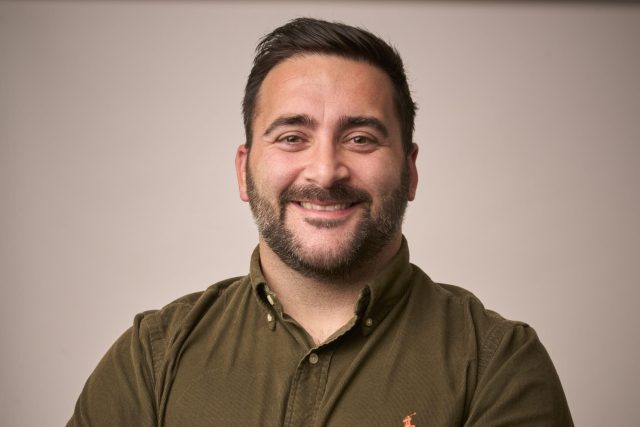
Looking back at his earliest days of visiting the pub with his grandparents, White describes how he has always been keenly aware that pubs are a community hub and a place for people to get together. He started out aged 16 collecting glasses at his local nightclub in North Devon in a little town called Bideford. By the time he was 18 his affable nature led to him being asked to work in security. Being a bouncer, he had recognised, was a good job to continue throughout university and even for a short while afterwards while he started working for a couple of other companies elsewhere.
Marketing prowess
“Prior to going to university, I was working in marketing on the side, and then after university, I went back into marketing,” he explains, noting that is what he specialised in for his degree too and he always saw the opportunity in things he did. Whether it was a marketing agency representing a tourism company which owned self catering cottages, or an experiential activity at festivals, he’s taken it on. White has travelled around the UK with a giant inflatable crystal maze type ball and encouraged people to collect tokens, he’s done bits for Cosmopolitan magazine with a Morrison’s graduate scheme and also led a campaign for Virgin Media. “Everything I did was super diverse and it wasn’t necessarily just marketing, it was more experiential.”
During this time he became integral to building a sales team for Virgin Media with students and created student brand ambassadors that would go and sell Virgin services to their friends in return for commission.
“That was my first stint of dipping my toe in sales. No one goes to university to learn sales and you tell yourself at the time you’ll never go into it. But it just happened,” he laughs and notes how he then went on to sell rugby kit “for a company which, at the time, were the equivalent to the Adidas of the rugby world”.
Career acceleration
Around the same time, White had a friend that was working at AB InBev who had said they were just about to create a new field sales team, and the idea of being able to move into the beer sector, and sell beer seemed like something he knew he should look into. “It felt like an opportunity,” he says and admitted that “having worked in pretty much every bar in Leeds, I thought I had a little bit of a competitive advantage. By January 2015, I had joined Budweiser and had a very good 10 year career there selling.”
According to White, it was in the early days, when he was crossing the doors of pubs and selling Stella, Boddingtons, Bass and Corona that his career in beer kicked off.
“I spent 10 wonderful years with Budweiser and worked with some amazing people on some amazing projects, including San Miguel and Camden Hells, also working with some brilliant customers,” he grins. But adds that he felt ready to move on. There were also other signs that the sector was right for him that he couldn’t ignore.
“In Barcelona, I had the opportunity to come to Damm and I had always wanted a role like this. It was too good of an opportunity to turn down. The Estrella brand I’d known for a long time because I had looked after Marston’s when they took it over from Charles Wells and took over the Eagle Brewery. Plus, those days with AB InBev looking after Marston’s were where my career really accelerated. It meant that being back in the Eagle Brewery was almost a home away from home, because I’d such a close affinity with the Marston’s team when I had worked with them.”
A solid understanding of pubs
White freely admits that his love of beer and pubs has also played a big part in his decision-making. He explains: “To this day, beer and pubs are still a very important part of who I am and what I do. I still believe the LP pub is intertwined in the British DNA and social fabric of this country. It is the best industry in the world to work within.”
Additionally, he’s dedicated. “I’ve been in it now for 22 years. Hopefully, I’ve got another 22 years left in me within the sector,” he adds.
When it comes to beer, White agrees that he never just sticks to one thing. Instead, he has a few favourites and says that, despite not being a Yorkshireman “I’m close enough to being an honorary Yorkshireman, because I’ve been here nearly half my life, so I don’t think you can fault the quality in the execution of a pint of Timothy Taylor’s Landlord”. He believes “we are very spoiled for choice when it comes to cask” but also assesses that you “can’t fault a well-poured pint of Guinness” and in the same way “can’t fault Damn Lemon or an Estrella Damm on a hot, sunny day”.
Philosophical
White also has a few philosophies and general pieces of advice he lives by and explains: “I come from a very humble, working-class background, and never expected to even get to do this sort of role because I always had imposter syndrome. But I think it is actually quite healthy, because it means that you feel uncomfortable.”
With this point in mind, he remembers having a conversation with somebody about a role once and reveals that they gave him some career advice, which he says he has lived by ever since and has even actually gone on and given to people too.
Staying ambitious
The advice? “‘Don’t do something unless it’s going to make you feel uncomfortably excited’.”
White says that he has used it many times. In moments when he has been offered a job role, which he might have loved and “would have done very comfortably”, but this is where he shows his ambitious side, when he admits: “I don’t know whether or not I would have learned anything personally out of that role.”
Carrying this piece of advice through to his own career, he describes scenarios where he has been offered different roles where instead he would learn an awful lot. Roles that “would test me and stretch me and I found that by actually taking the harder role, it would make me more uncomfortable but very excited” these were the roles that he believes have “accelerated my career”.
The rugby guidance
Another rule that White lives by one that the New Zealand rugby team the All Blacks use quite a lot. “Very simply: ‘Don’t be a dickhead’”. And White laughs at this, but still manages to give it both a business and life affirmation spin when he says: “Life is hard enough with what’s going on around the world, but I think people need to walk in another person’s shoes before making assumptions. And I suppose I think that ‘don’t be a dickhead’ is just generally a way of just saying: ‘Let’s be nice to everybody and seek to understand or be understood.”
This is how White navigates challenges, in business, on the pitch and within life. He assesses what is happening and seeks to understand, then works around it with others. This he says is something that the British pub sector might need to acquiesce while the going gets tough.
Navigating challenges
“We have, I would say, arguably the greatest hospitality sector in the world. You know, you can’t copy and paste the British pub. A lot of people have tried, but you just can’t, it’s a very hard thing to do. In Britain, the pub was always the cornerstone of the community, like the public church, even if you go back hundreds of years,” he explains.
But, he agrees that “for various reasons, it’s becoming a harder and harder sector to work within”. Not helped by the fact that “the UK is one of the most legislative countries in the world for alcohol and with constant taxation and penalisation it has become really hard – not only for brewers, but also pub companies, operators, landlords and. ultimately, the consumer,” he laments.
With this at the front of his mind, White believes people will need to remain resilient because “prices are obviously skyrocketing through costs of raw materials and labour. Some of those, nobody can do anything about – such as things like the war in Iran and what’s going on in Russia and Ukraine. But it’s also a very tough sector to work in and, I think, it’s probably going to get a little bit tougher as well, given some of the further economic challenges we’ve seen. You then add in things like DRS and EPR and PRN that have also come in. It’s becoming very difficult to do business from a legislative perspective”.
Recognising opportunities
But, he serves up the reminder that “at the same time, there are some green shoots” and says that one thing he has been following is the broadening of the soft drinks category and says he recognises that “it is a category that sits there and has been innovating for ages, but no one’s really taken any notice of soft drinks innovation.”
Delving deeper, he says it’s clear that “95% of it is your standard Coke and Pepsi that sit great on the shelf and sell loads. But I think if you look at 2015 when there was sort of a craft boom, I think we’re now seeing that within soft drinks” and then he adds something else shrewd and identifies that “the innovation that we’re seeing on flavour, functional, health and wellbeing, well, some of that could make its way into the alcohol space, especially in beer”.
White points out that the categories are blurring and he’s seeing it first hand and calls it “an opportunity”. One that not just brand owners should recognise, not just breweries, but also publicans.
Partner Content


“We’re already seeing people put things like magnesium into the likes of beer no and low. We’re actually seeing no and low categories being put into soft drinks categories, so they’re merging buying teams, which, five or six years ago, everyone would be super uncomfortable about because it’s not a soft drink, but in effect, it’s a non-alcoholic product. Is it beer or not? Whilst there are huge legislative challenges and economic ones, actually there is opportunity for brewers and pubs to grab hold of innovation and offer something different.”
Staying relevant
By his own confession, these are trends that shouldn’t be ignored. He states: “We know that health and wellbeing is a trend, and is here to stay, and things like protein and supplements are now becoming more of a priority on shopping lists, and I don’t think that’s something that we can ignore. So, rather than fight it, we need to see how we can still remain relevant next to those products, or become part of those products.”
Understanding experiences matter
White says that truly, thinking of selling drinks is about thinking of occasions and assesses that “if you look back to the best moments with a beer, it is easy to see how beers are products that bring people together, either in celebration or commiseration, but it’s all about experience. It’s just finding out how we can be a part of that experience in a consumer demographic that is constantly changing in terms of drinking habits and engagement”.
Staying relevant in an ever-changing, ever-innovating marketplace is no easy task, but retaining the importance of the pub and the drinking occasions we enjoy together as people are really key to boosting sales and progress in general when it comes the beer and hospitality sector.
A fast-paced sector
White believes that “Innovation and portfolio is going to continue to be important” and highlights how “there has been more innovation in the last five years than has been in the last 25 years in the industry. It has been bonkers.”
Due to this rapid innovative stage, he explains that “staying relevant is done partly through portfolio” via “innovation into flavour or no and low” or through tapping into “different consumption occasions”. He indicates that Damm focuses a lot on gastronomy as well as also looking at how the business can “double down on those occasions and stay more relevant”.
Working together
He adds: “I think the real winners of the industry will be the ones that champion the pub, because they are so important to what we do.” With this, he insists that “we, as an industry, need to be working with local and national governments looking at how we make sure we protect the pub”.
Another way of staying relevant, White believes is “not just as a brand, but also as a business locally”. For instance, he reiterates about how in Barcelona there is The Damm Foundation and yet says that with a similar perspective “we are looking at how we become a real part of the community within Bedford and making sure we show up and look after the best interests of the Bedford community”
How might that work? White says: “We ask: ‘how do we become a recognised employer’ or ‘how do we also show we care about what’s going on in the county?’ I think there are multiple ways of showing up and staying relevant, and that’s probably how I would like to focus on things.” Because, as he attests “For Damm, being an independent business and family owned, allows us to be a bit more dynamic in being able to do that”.
In considering the lessons he has learned along the way, White reveals how pragmatic he is in his approach to moving forwards.
Always learning
He says: “In this business, it’s two steps forward and one step back. And, actually, I think if you look at any greatest business success, it’s not just down to the successes of why people have won, instead, it’s about learning from mistakes. Those mistakes allow you to make sure that you don’t do it again.”
White admits: “One of the things that I say to my team is: ‘Don’t be scared about failing, but do it quickly and learn from it’. If you look at the greatest people that do succeed and do win, it’s those that have been able to take the problem, own it, and work and plan on how to turn it around and learn from it and move forwards.”
Does he follow this rule himself? Absolutely, he remarks: “I 100% have no fear of failure, just so long as people can fail fast and move on and learn from it. It also goes back to my point of ‘don’t be a dickhead’. I think if you can accept failure, it’s also humbleness. It’s a good humbleness to have to accept that you’ve messed up and it’s okay.”
Seeing the bigger picture
There may be things that White does feel could be better understood. For instance, the fact that still “there is a massive misunderstanding around the authenticity of brands and why certain brands have different ABVs in certain markets”. And he admits that “one thing that gets talked about a lot is ‘why is a brand that’s in Spain or in China or Belgium or America might have a different ABV compared to how things are in the UK?’” and says: “I think it’s quite a misunderstood point.”
Here, he explains that “there are, essentially, people that would rather drink the original product because it is classically made. But, people need to remember that the UK has a very different culture. We’re the only country in the world to drink pints of beer whilst everyone else is drinking small measures and schooners. Naturally, we’re a very big drinking population, so consumers moderate. Then this, he says “leads to why brewers have some of the same recipes, but slightly different formulated liquids for local markets. It’s also far more sustainable to be locally brewing and allows breweries to employ people locally within the United Kingdom.”
Admitting that it can be a frustrating thing to always respond to, he points out how “there is a lot of research that has been done on it, but still consumers don’t necessarily care unless there’s an authentic story behind their brand”. Luckily, at Damm the team is “very fortunate that we have that authentic story”. But, he observes that “people also forget about the thousands of people that are employed behind the scenes to make sure we get these things right”.
A people-first leader
In terms of what makes White tick as a person, it really comes down to how he views success. Not as a one-man show, but a personal privilege to play a part in raising others up.
“I really get a kick out of people’s development and seeing people succeed. I’ve always naturally been a ‘people first’ leader,” he says. If he looks back over his career highlights, he knows that even though he says he has “loved every role” the reality is that when he was “leading a dynamic sales team in London selling beer” that was the one that developed his perspective the most. His achievements he counts come in the form of watching people grow to become the best versions of themselves. “Seeing how all of those people within the team actually went on to be promoted, and some going on to become far more senior” delighted him.
Gratification
“When I left ABI, I was a senior director within the company and there was a very humbling moment where I got to sit back and look at some of the people shining and think: ‘I had a very small part to play in their career’,” he says, wistfully. ”For me, the personal satisfaction and gratification you get from that is second to none.”
White explains that he has two young boys – a two year old and a five year old, and, until recently, his youngest son couldn’t pronounce his own name. This week, he started saying it. White has that wistful look again and describes that moment where you get to sit back and go “wow, they did it!” He continues: “It’s almost as good as that. But that’s the sort of personal gratification I really get from seeing people develop. The reality is, if you’re seeing people develop and grow around you in your company, then it’s not only good for the business, it’s a privilege”.
Driving growth
Does he have any future plans or aspirations? White says: “I want to very much enjoy my time at Damm, and I think we still have a lot of work to do here. We’ve got a job to do to grow the UK business, and I’m still learning so much, but at the same time, I want to be able to provide value to the team here in the UK and Spain. So my priorities are first and foremost, make sure I’m giving the best that is possible, because that’s job number one. But job number two is making sure that we continue to drive the growth in the UK. Our goal is to be the number one independent UK brewer and beverage company.”
Looking at the statistics, White says he believes that already, “technically, we are now already the biggest independent brewer because of the Tilray acquisition of Brewdog. But we’re not taking it lightly”. And adds: “We still want to fill Bedford. So the plan is to fill Bedford with 2 million hectolitres of volume by 2030”.
A positive force for the industry
But, he also says: “if I can continue to help mentor people and keep supporting what we do, then I think it’s only going to be positive for this industry”.
One description of himself that White will say that his mates would agree with is the fact that he is “a family man with a really strong work ethic that does very much enjoy a pint and will make time for anyone”. And he laughs here. Not just because he knows it to be true enough, but because he recognises that there is more. He guesses that his friends might have more things they could say about him, given that he has spent “the best part of 25 years playing rugby” but adds: “I don’t think they’re necessarily good for printing”.
Related news
Bar serves cocktails disguised as pints for football fans
Is Iron Maiden releasing a West Coast IPA with Lagunitas an ‘evolution’ for Trooper?


