



Wetherspoons faces margin pressure despite steady sales
Sales continue to tick along at JD Wetherspoon, though profits remain under strain as costs mount. Analysts suggest that while expansion may draw attention, it is margins that will continue to dictate the share price.
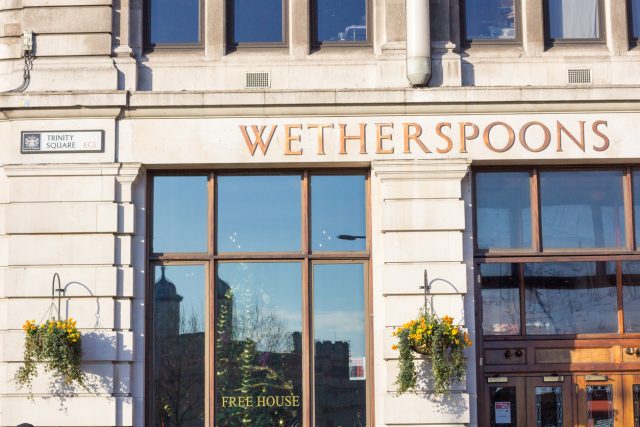
A forthcoming third-quarter update from J D Wetherspoon is expected to centre on trading performance and estate development. However, the brokerage argues that investors are likely to remain more concerned with profitability than with top-line momentum.
Like-for-like sales rose by 4.8% over the 26 weeks to January 2026, with drinks increasing by 7.0%, food by 1.3% and machine income by 8.9%, while accommodation slipped by 0.6%.
The figures suggest that demand has held up, even as wider consumer spending has weakened.
The company’s pricing remains comparatively restrained, with beer prices estimated to have risen by around 2.5%, as per Peel Hunt. This continues to position the business as a value operator within the on-trade, with drinks priced at an average discount of around 35%.
Profit forecasts revised lower
Despite steady sales, Peel Hunt has reduced its 2026 estimated profit before tax forecast by 12%, citing weaker gross profit in the first half and higher repair costs in particular.
Adjusted profit before tax fell by 32% to £22.4 million in the first half, as reported previously by the drinks business, while EBIT margins declined by 144 basis points. Net debt increased by £49 million to £773 million following £16 million in share buybacks.
The brokerage maintains that while sales will likely feature prominently in the 6 May update, the share price has tended to move in line with margin performance rather than revenue growth.
Estate investment shapes value proposition
Peel Hunt points to Wetherspoon’s heavily invested estate as a key differentiator. The scale and quality of its pubs allow the group to sustain a value for money proposition that extends beyond pricing alone.
The company opened six new pubs and disposed of six sites during the period, with 16 pubs currently under construction and eight already opened this financial year.
This continued expansion reflects a long-term strategy built on volume, though it also brings added cost pressures at a time when margins are already under scrutiny.
Partner Content




Cost pressures show little sign of easing
According to Julie Palmer, managing partner at BTG, the results illustrate both durability and fragility within the model.
“Despite incredibly challenging market conditions, JD Wetherspoon has still managed to serve up the resilient sales performance it has developed a taste for, though the hit to its profits is a sign that even the biggest chains aren’t immune to the drop in spending and soaring costs,” she said.
Palmer added that the business had already cautioned on profit pressure earlier in the year due to rising wages, energy bills, repairs and business rates, as reported by the drinks business.
“The pub giant had already warned profits would be lower back in January due to increasing wages, energy bills, repairs and business rates, but with these cost burdens likely to continue to increase in the face of uncertainty across the supply chain, it may be left with no choice but to increase prices,” she said.
Value positioning faces growing strain
Wetherspoon’s long-standing appeal has rested on its ability to offer low prices across a large estate. That advantage, however, may be eroding as household finances tighten.
“Wetherspoon has always been able to provide the value that entices customers through the doors of its vast pub empire, though its immunity to the decline in people eating and drinking out to save money seems to be fading,” Palmer said.
“If spending and confidence with customers continues to dry up, it could begin to lose share in a shrinking market, particularly if the supermarkets sweep up the business of those opting to stay at home to save money.”
Limited scope to rebuild margins
The challenge now lies in balancing cost pressures with customer expectations on price. The group’s reliance on high volumes and low pricing leaves limited room for manoeuvre.
“The chain will be under more pressure than ever to keep prices low from its customer base, but there may not be many avenues left to explore to improve margins that don’t involve more drastic cost saving measures like closures and job cuts,” Palmer said.
Peel Hunt, for its part, retains a price target of 750p, assuming the company maintains its 7.7 times EV to EBITDA rating over the coming year. Following recent share price weakness, the broker has upgraded its recommendation from hold to add.
Related news
JD Wetherspoon cuts profit forecasts as rising costs erode sales gains


