



How to be green and premium with rosé wine from Provence
A Provence rosé producer is showing that premium wine packaging doesn’t have to come at the expense of the environment – by taking a new and successful approach to the appearance and weight of its bottle.
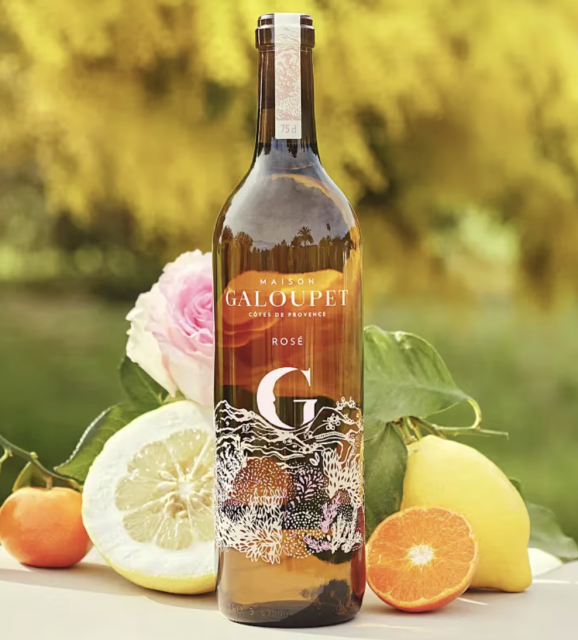
Château Galoupet, the estate behind G de Galoupet, has launched one of the lightest wine bottles on the market, weighing just 300g – less than half the weight of a typical Provence rosé bottle. Made from 85% recycled glass, the bottle also has a distinctive amber tint, a by-product of using recycled materials rather than virgin, clear glass.
While the darker colour initially surprises consumers, especially those used to the transparent appearance of pink wine bottles from Provence, the producer says it serves a dual purpose: reducing environmental impact while also protecting the wine.
“People ask why the bottle isn’t transparent,” Château Galoupet managing director Nadine Fau explained in a podcast with the drinks business. “But darker glass actually protects the wine from light. It’s the same reason most Champagne is bottled this way — to preserve quality.”
Cutting carbon without cutting corners
The environmental benefits are significant. By reducing the amount of glass used and increasing recycled content, the bottle delivers around a 50% lower carbon footprint compared to a standard rosé bottle.
That matters because glass is the single biggest contributor to a wine’s carbon footprint — accounting for roughly 40% of total emissions from production to the shelf.
“Less glass means less material, less energy to produce it, and less fuel needed to transport it,” said Fau. “It’s one of the most effective changes we can make.”
The lightweight design is achieved in part by removing the thick, heavy base often associated with premium wines – a feature long used to signal quality, but which adds weight without improving the wine itself.
Rethinking every component
Beyond the bottle, the brand has eliminated plastic and aluminium from its packaging.
There is no traditional capsule. Instead, the wine is sealed with a natural cork and finished with a paper neck wrap made from recycled materials. Labels are also produced using 100% recycled paper.
The decision reflects a broader push to improve recyclability. Mixed materials – such as plastic capsules attached to glass bottles – can complicate recycling processes and reduce the likelihood that bottles are fully recycled.
“If you don’t use plastic, you don’t have to worry about recycling it,” the producer notes. “And you avoid contaminating the glass recycling stream.”
Balancing sustainability and perception
Despite growing interest in alternative packaging formats such as plastic or cartons, Fau believes glass remains essential for premium wine – both for quality and consumer perception.
Glass is chemically inert, meaning it won’t affect the taste of the wine, and it can be recycled indefinitely without degrading. By contrast, plastic has limitations in both recyclability and long-term environmental impact.
Partner Content

“There may be more radical solutions in the future,” she told db, “but for now, consumers still expect high-quality wine to come in glass – especially at higher price points.”
A shift in the industry?
The bottle has already attracted attention within the wine trade, including the ‘Eco-Design Laureate’ from last year’s Adelphe Competition, and before that, best launch in the db awards.
Notably, it has prompted discussion among other producers in Provence, where traditional heavy glass bottles remain the norm.
Early commercial results are also encouraging. The wine sold out in its first year, with consumers responding positively to both the design and the sustainability message, according to Fau.
“There’s a growing appetite for understanding what people are consuming,” she said. “If you can show that a wine is made more responsibly – without compromising on quality – people are interested.”
Changing the definition of ‘premium’
For decades, weight and appearance have been closely tied to perceptions of quality in wine packaging. Heavier bottles, deep punts and glossy capsules have all been used to signal luxury.
But this launch suggests that definition may be shifting.
By combining lower-impact materials with high-end design and strong product quality, wine producers may be able to redefine what premium looks like – moving to packaging that’s lighter and therefore cleaner in its environmental impact.
“We’re not going to change the world on our own,” said Fau. “But if we can show that you can do things differently – and still deliver a great wine – then maybe others will follow.”
About Château Galoupet
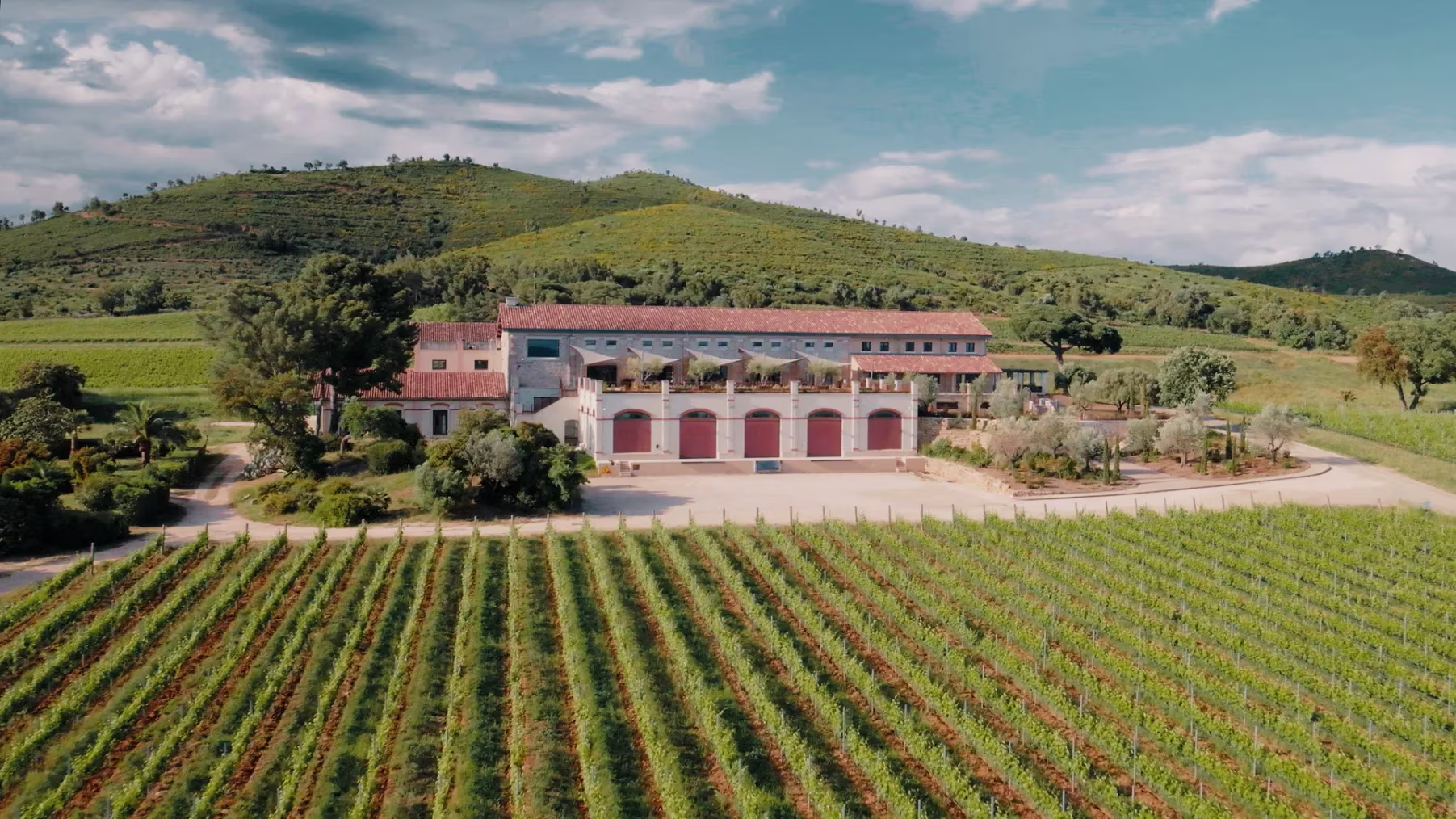
Château Galoupet is one of only 18 Cru Classé within the Côtes de Provence appellation, made up of 77 hectares of protected woodland and 69 hectares of vineyard, now certified organic, as well as regenerative (ROC).
The estate was was acquired by Moët-Hennessy in 2019, and since that time has been working towards becoming “a lighthouse of sustainability for local growers” in its native Provence.
The extent of the work required to be a truly green wine estate is immense, taking in all aspects of production, from the grape growing to handling, as well as packaging, and more recently, the visitor centre too.
To find out more about how Château Galoupet has become a sustainable beacon for wine production, listen to the db podcast by clicking here.
Related news
Château Galoupet puts sustainability at the heart of rosé
Château Galoupet unveils organic ‘G’ rosé in one of world’s lightest bottles
Château Galoupet: 'We are obsessed with preserving the diversity of the plot wines'


