



Cono Sur: ‘We aim to put Chilean Pinot Noir at the highest level’
In promoting cool sites and working with Burgundy experts, Cono Sur has been a key ambassador for Chilean Pinot Noir. Now, with a wider portfolio and a focus on sustainability, winemaker Matías Ríos is making that case on a global level.

The rise of Chile from budget-friendly winemaking powerhouse to a serious force in the fine wine market is perhaps one of the wine world’s greatest transformations. In a little over three decades, advances in viticulture and winemaking have seen the country go from strength to strength, with its wines now competing at the highest levels, smashing any preconceptions about what Chile might be capable of.
Its exploration of cooler coastal valleys has been crucial to this transformation, and has also enabled Chile to emerge as a New World leader of cool-climate Pinot Noir. No producer has played a more central role in this shift than Cono Sur – Chile’s biggest Pinot producer and one of its most dedicated advocates.
While the first documented plantings of Pinot Noir were in the Colchagua Valley in the 1960s, it wasn’t until the 1990s that producers began expanding into coastal areas and focusing on cool climate Pinot, first in the Casablanca Valley. Later, around 2000, vineyards started to be planted in the San Antonio Valley, followed by Limarí and other coastal regions, and slowly global perceptions of Chilean Pinot Noir began to change.
“In my view, this marked a turning point in the quality of Chilean Pinot Noir,” says Matías Ríos, Cono Sur’s winemaking director. “The cool climate influenced by the Humboldt Current, combined with high luminosity and granitic soils, gives our Pinot Noir a very distinctive character. These coastal conditions allow us to produce wines with intensity, concentration and delicacy at the same time, with vibrant acidity and soft tannins that lead to a long finish.”
Early adopters
Cono Sur, founded in 1993, made an early commitment to the variety, which began in 1999 with the start of its Pinot Noir project. Under the guidance of Martin Prieur from Burgundy’s Domaine Jacques Prieur, the project’s aim was to produce a wine that could compete with the world’s greatest Pinot Noir producers.
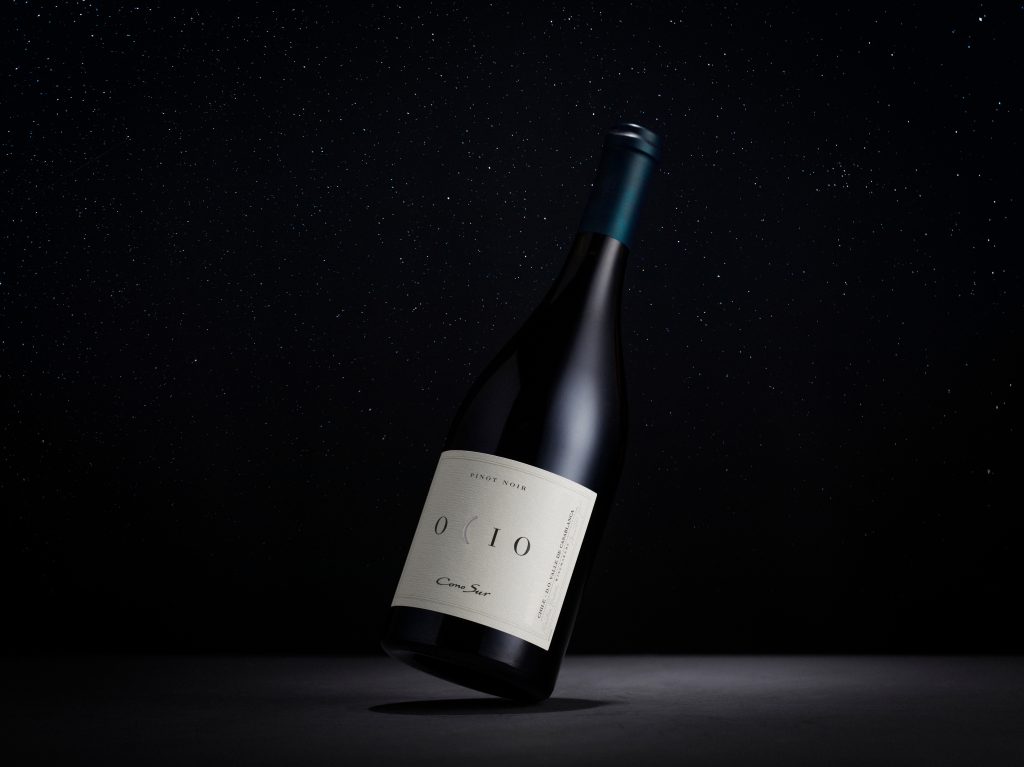
Soon after came the release of its 20 Barrels label, and in 2003 the launch of Ocio, its flagship Pinot Noir, which two decades on remains “an ambassador for Chilean Pinot Noir”, says Ríos.
“The project began at a time when few people believed in the potential quality of Chilean Pinot Noir,” he says. “It was a very innovative project that aimed to show another side of Chilean wines: those from cool-climate regions. In Chile’s cool coastal valleys, lower temperatures allow for a unique expression of Pinot Noir. This allows us to ripen tannins while preserving natural acidity and the fresh, juicy fruit that define the variety. Ocio was the first Pinot Noir to follow this path: a wine that is both highly complex and delicate.”
Matías Ríos joined Cono Sur in 2003, becoming winemaking director in 2018, and has played a key role not only in Cono Sur’s own success, but in gaining recognition for Chilean Pinot Noir worldwide.
What has driven this success? “A deep passion for this very demanding and capricious variety, which is always a great challenge both in the vineyard and in the winery,” he says. “Secondly, the opportunity to be part of the Cono Sur project, where Pinot Noir gradually became our flagship variety. The chance to work with Martin Prieur from Domaine Jacques Prieur – Pinot Noir personified – has been fundamental in helping us understand the variety and adapt it to Chile’s conditions. With everything I have learned and the great opportunities life has given me, my goal is to contribute to positioning Chilean Pinot Noir at the highest level.”
Sustainably growing
Sustainability and organic viticulture remain a priority. Initiatives include drip irrigation, solar energy and the use of animals – notably Cono Sur’s famed flocks of geese – to manage vineyards, alongside cover crops that improve soil health and reduce the need for synthetic fertilisers. It began cultivating organic grapes in 1999 and today manages 314 hectares of certified organic vineyards.
As global demand continues to shift towards fresher, cooler-climate expressions of Pinot Noir, and demand for more sustainable wines grows, there is an opportunity for Chile. “We have seen this trend accelerating in the past five years,” adds Ríos. “The versatility of our Pinot Noir is a clear advantage and having many different Pinot Noir wines to offer allows us to fulfil export markets like Europe or USA, but emerging markets in Asia too.”
Cono Sur’s Pinot Noir portfolio ranges from the entry-level Bicicleta line, to its Reserva, Organic, Single Vineyard, 20 Barrels and Ocio label, with RSPs ranging from £7 to £60.
“This is a tremendous advantage in tackling different channels: from retailers to top on-trade group and restaurants,” says Ríos. “Asia is a focus on our Pinot Noir development at the moment without forgetting our traditional European markets,” he adds. Demand for Pinot Noir in Asian markets has been growing, according to the IWSR, with Japan, South Korea and China key markets, with Taiwan also showing potential.
Chile is already a leader of New World Pinot Noir, but is gradually proving its worth among Old World producers too, says Ríos. “Little by little, through tastings and events where they are compared with the great global references of Pinot Noir, Chilean Pinot Noir is beginning to stand out and establish itself in the minds of high-end Pinot Noir consumers.”
Related news
Château Galoupet puts sustainability at the heart of rosé
The winery betting on the ‘next chapter’ for cool-climate Australian wine
Goedhuis Waddesdon: ‘there is appetite for fine wine among the younger generation’


