



A journey through the world of modern rosé
Rosé wine is certainly in vogue, but its diversity is often undervalued. db held a masterclass at Wine Paris to demonstrate how a variety of producers are showcasing the category’s quality credentials.
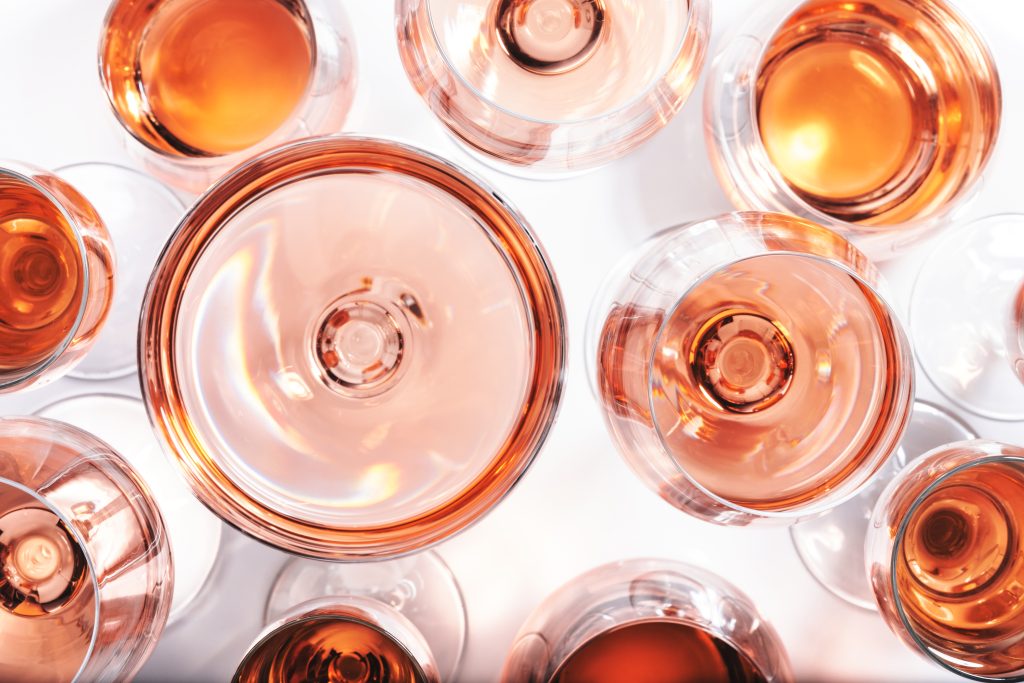
“The real question is: what are we talking about?” It is, perhaps, not the informative lecture that the audience might expect, as Ben Bernheim opened a masterclass on rosé wines at Wine Paris.
Yet he had a point. Running through potential definitions of rosé – for instance, using red grapes to make white wine or a spectrum of pink shades – the rosé expert refuted each one. When he invited the audience to suggest a watertight definition, no-one could respond.
This was, in fact, a prelude to the theme of the masterclass. As Bernheim namechecked the various terms under which rosé is produced, he did not concern himself with a definitive theory of rosé wine. “It’s a family, a category of wines,” he explained.
Instead, he guided attendees through eight wines to illustrate the category’s sheer diversity (with assistance from the drinks business editor-in-chief Patrick Schmitt MW). Each wine shed further light on the quality, potential and commercial opportunities of the rosé family.
Domaine Royal de Jarras Pink Flamingo
To start, Bernheim focused on one branch of the rosé family tree. Pink Flamingo, made at Domaine Royal de Jarras in Sable de Camargue AOC, could as easily be termed a vin gris as a rosé.
The Grenache Gris grapes used for the wine have a pale pink skin that can lend an appealing colour, even with slightly longer contact with the skins. This means that the grapes can be pressed gently to extract only the first and finest juice – the tête de cuvée – but this base will be both pale and full of elegant fruit and mineral aromas.
It is unusual as well in its provenance. The sandy vineyards, sitting among small islands and tidal lagoons next to the Mediterranean, are a treasury of old vines. Phylloxera simply cannot survive in this rare terroir, and so the ungrafted vines can create intense, characterful wines.
Fleur de l’Amaurigue Rosé
Perhaps inevitably – it is, after all, the best-known regional brand for rosé – Bernheim then turned to the world of Provence. This first wine, made at Domaine de l’Amaurigue, demonstrated some of the quality hallmarks that have turned it into a global force.
In particular, Bernheim highlighted the two grapes behind the wine, emblematic of both Provence’s tradition of blending and the varieties best suited to its terroirs. Grenache Noir makes up 60% of the blend, its generous, ripe fruit aromas lending easy-drinking charm. The grape is also highly resistant to climate change, an increasingly vital attribute as vineyard temperatures rise.
The second variety, Cinsault, is the one that Bernheim said he would “crown as the best grape for rosé”. When its yields are controlled, as at Domaine de l’Amaurigue, it brings finesse and freshness, a perfect counterbalance to the weight of Grenache.

Mirabeau Pure Rosé
“Blending really is the word with this wine,” Bernheim said of Maison Mirabeau’s Pure Rosé, providing a neat segue from the previous Provençal bottle. While Grenache is still predominant – around two-thirds of the blend – the wine also features Syrah, Cinsault, Mourvèdre, Carignan and more.
Yet the wine is also remarkable for its sustainability credentials, Although branding and flavour profile still drive much of the rosé category, consumers turning to premium wines also value eco credentials. At Maison Mirabeau, that is central to the winemaking, as owners Stephen and Jeany Cronk are regenerative viticulture pioneers.
The farming approach, which prioritises biodiversity and soil health, is now in full effect at the domaine’s own vineyards, while the team is encouraging its partners to adopt the practice. Stephen Cronk, speaking at the masterclass, told attendees: “We are hoping that there will be no more monocultures in Provence.”
Aix rosé
The third Provence wine presented, the namesake of Maison Saint Aix, demonstrated that – in addition to differences of varieties and vineyard practices – there is significant variation in terroir across the region. Though there is much to connect the rosés of Provence, you are in fact dealing with a range of sites and styles.
Situated in the north of the Coteaux d’Aix-en-Provence appellation, the vineyards sit pretty much as far from the sea as is possible in Provence. That separates them from the Mediterranean’s moderating influence and places them within Provence’s hilliest zones.
Elevations rise to around 400m – very high for the South of France. Surrounded by lavender-carpeted hills, the vines enjoy cooler temperatures that slow down ripening. The harvest, Bernheim explained, can be three weeks later than on the coast. That extra time ripening contributes to Aix Rosé’s profile: fruity and ripe without losing elegance.
Partner Content


Pata Negra Ribera del Duero Rosado
France, however, does not have a monopoly on rosé. Nor, indeed, does it have the stylistic blueprint that all other regions must follow. The session’s fourth wine, Pata Negra’s Ribera del Duero Rosado, proved that deeper-hued wines have a place in the rosé family tree.
“I think it’s very important that Spain doesn’t try to make Provence wines,” Bernheim commented. “Texture, tannin, fruit: these aren’t necessarily words we want to banish from rosé.”
The 100% Tempranillo wine is produced by macerating the must with the skins, lending a greater intensity and concentration than an equivalent direct-pressed rosé. With its fuller structure and round mouthfeel, it is both a classic Spanish style and an effort to create a food-friendly rosado.
It also demonstrated that rosé is not solely confined to the premium end of the market, being the least expensive wine on show at the masterclass.
Balfour Nannette’s Rosé
From these two nations, both of which have long histories of rosé production, Bernheim then turned to one of the wine world’s new kids on the block. English winemakers are only just hitting the mainstream with their flagship sparkling wines, so English rosé is an exciting new horizon.
In Nannette’s Rosé by Kent-based Balfour Winery, the two styles are, in fact, related. The wine is produced using the three main grape varieties of English sparkling wine: Chardonnay, Pinot Noir and Pinot Meunier. In fact, this rosé was initially simply a by-product of sparkling production.
It has, however, earned its place as a fixture in the range, not least thanks to the winemakers’ fondness for Pinot Meunier and Kent’s favourable dry climate. It also, as Bernheim highlighted, brings something different to the rosé market, with a crisp profile led by ripe red fruits and bright acidity.

Les Vignerons Grimaud Les Aumarets Rosé
For his penultimate wine, Bernheim returned to Provence, this time focusing on the coastal vineyards located close to the resort of Saint-Tropez. The local cooperative, Les Vignerons de Grimaud, has nearly 100 years of experience making wines in these terroirs, and Les Amaurets is a prime example of its expertise.
In particular, Bernheim showed how the wine rebuts accusations that rosés are just simple wines for sipping by the pool. Although just a short journey from some of France’s most famous beaches, the wine makes use of the sunshine to promote complexity. The ripe stone fruit flavours and fuller texture speak of a more serious wine.
Moreover, it has a clear affinity with gastronomy in its richer structure and complex flavours. That profile is supplemented by subtle oak: 10% of the blend is aged in 500-litre barrels. For the average consumer, it is a reminder that rosé need not be light and simple.
Gérard Bertrand Clos du Temple
The final wine of the masterclass, it is fair to say, is not for the average consumer. Clos du Temple by Gérard Bertrand is a contender for the crown of most expensive still rosé in the world (although, as Bernheim highlighted, the rosé rankings are stuffed with Champagnes if you include sparkling pinks).
What may surprise the uninitiated is that this wine does not hail from Provence. Bertrand is a great champion of the Languedoc, rooting the wine in his hilly, schist-limestone terroir. Yet the cuvée also has care lavished on it at every stage: biodynamic viticulture, nighttime harvesting, ageing in old oak and bâtonnage.
It amounts to a highly impressive wine, priced accordingly. Clos du Temple has the finesse and elegance most would associate with rosé, but complemented by intensity and complexity that would take many by surprise, and that places it among the world’s top fine wines.
Ultimately, as Bernheim concluded, if you silo rosé wines and ignore their potential, you are denying a category that is rich, varied and high in quality.
“If this were a red or a white, would you like it?” he asked the audience. “Does it matter that it’s a rosé?” The question may have been posed in relation to Clos du Temple, but it stood neatly as a closing thought for the session. In a market that readily garlands iconic red and white wines, rosés can deserve just as much attention.
Related news
Cru World Wine sees huge demand for its 'community-ownership' share offer
'Fantastic time to be a whisky drinker’ as Hedonism launches own-label range
Aldi launches rosé colour swatch as shoppers reject the ‘wrong’ shade


