



Why Billecart-Salmon waited 208 years to make a Ratafia
As Maison Billecart-Salmon gears up to launch its inaugural Ratafia Champenois in Asia this autumn, seventh generation owner Mathieu Roland-Billecart explains how the project embodies the maison’s long-term commitment to sustainability, terroir and innovation. Rebecca Lo reports.
At a spring Maison Billecart-Salmon Champagne pairing dinner held at Tébo in Hong Kong, the hottest topic around the table quickly became what was not on the menu.
Regional sales manager Thibault Casoli could barely contain his excitement that the maison will launch its Ratafia Champenois in Asia – a completely new product for the centuries-old family business.
After making its global debut at Rosewood Amsterdam in the spring, Billecart-Salmon’s interpretation of Ratafia will grace key Asia-Pacific on-trade partner venues in autumn 2026. These include Rosewood Hong Kong, Agnes in Brisbane, and still to be confirmed leading hospitality establishments in Singapore and Shanghai.
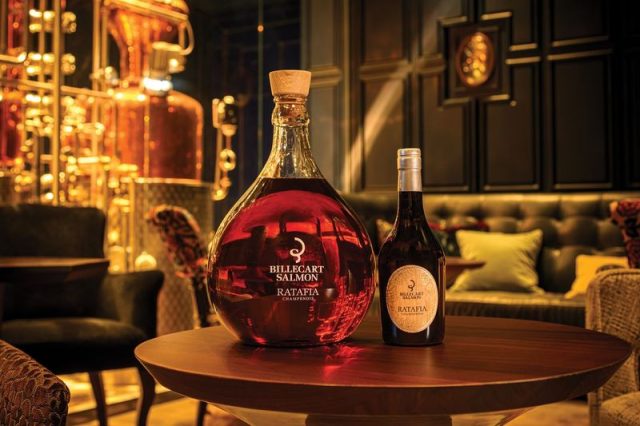
At 18% ABV, the Ratafia contains four Champagne vintages from 2019 through 2022, produced by mutage of Pinot Noir grape must with Fine de Champagne. It was aged in mature Burgundy oak casks before being evenly divided between 500mL and 5L Dame Jeanne bottles. The 500mL is priced in France at €58 (£49.50), with prices in Asia-Pacific still to be set.
The Dame Jeannes were designed for select hospitality venues including Domaine Les Crayères and Arbane in Reims, Alléno in Paris, The Connaught Hotel in London, and the Waterside Inn in Bray. The 500mL bottles will be distributed across independent retail outlets, top restaurants, and 5-star hotels in key Billecart-Salmon markets starting early in 2027.
Maximising terroir, minimising waste
For seventh generation owner and Maison Billecart-Salmon head Mathieu Roland-Billecart, Ratafia aligned with Look Beyond, the company’s CSR vision of maximising terroir while minimising waste. As the maison only uses juice from its first press for all its Champagnes (dubbed its cuvées), the discussion about what to do with second and third presses came up at a round table committee discussion.
“We concluded that the best use of these presses was Ratafia, as it needs more richness in the juice to balance the alcohol needed for the mutage,” recalled Roland-Billecart.
Rather than rely on focus groups and consumer surveys, Billecart-Salmon’s decision to produce Ratafia was instinctive: it was about crafting another unique taste experience from its Champagne terroir.
“The inaugural production is only two barrels, so it is mainly offered to loyal partners,” explained Roland-Billecart. “We don’t expect to advertise outside our own social media platforms. This may be very different to market-driven producers and kind of old school, but it works for us.
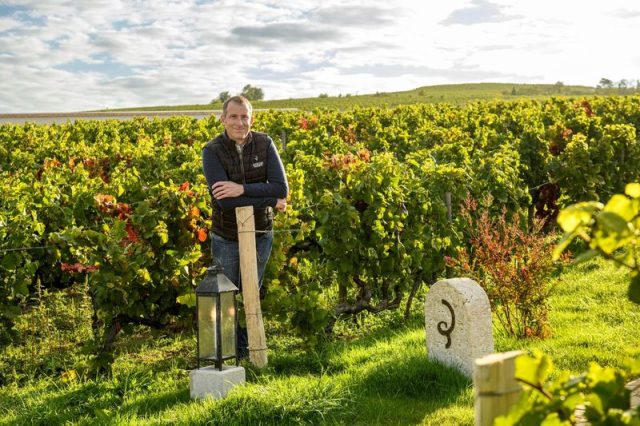
“We started the experiment from the 2019 harvest – my second harvest in charge – with fruit from Clos Saint Hilaire where traditionally our best experiments began. The fully biodynamically farmed grape is 100% Pinot Noir, the king grape varietal in our village of Mareuil-sur-Aÿ.”
Partner Content

Production process
Pinot Noir must from a single vineyard parcel was blended with Fine de Champagne at 60% ABV, raising the alcohol content of the wine and naturally halting the fermentation of sugars in the must.
“When we carried out our first blending trials at the end of 2025, each vintage brought its own distinctive contribution: 2019 for its richness and depth; 2020 for its maturity; 2021 for its freshness; and 2022 for its length,” noted chief winemaker Florent Nys.
“The oldest component had benefited from six years of ageing, while the youngest had three years in oak. Together, these four vintages created the most harmonious and expressive blend, revealing the signature balance and elegance of our maison.”
Nys felt that the Ratafia is a faithful reflection of Billecart-Salmon’s origin. In the glass, it offers aromas of orange peel, dark chocolate, ripe yellow fruit, and delicate smoky sweetness notes – all expressions of the character and identity commonly associated with Clos Saint-Hilaire.
For Nys, being part of Ratafia’s creation has been inspiring: “My biggest reward was to witness the birth of the first Billecart-Salmon Ratafia and see that it really appealed to our customers.”
Second edition of Ratafia in the works
Billecart-Salmon Ratafia exists in its own category separate from the maison’s traditional Brut Réserve, Brut Rosé, Brut Le Blanc de Blancs and Barrel-vinified cuvées. It was designed to be enjoyed after a meal, with food pairings or in a cocktail.
The love story and 1818 marriage between Nicolas François Billecart and Elisabeth Salmon continue to resonate in Mareuil-sur-Aÿ with Billecart-Salmon’s efforts towards responsible winemaking. As it prepares for the eighth generation of owners, its Ratafia is a step towards maintaining the estate at its peak.
“We are already working on the second edition of Ratafia, with bottling scheduled for the end of 2026,” revealed Nys. “Our ambition is to craft an exceptional Ratafia every year, while remaining true to the identity of Billecart-Salmon and allowing each edition to reflect its unique character.”
“As with all our wines, we simply released our first Ratafia when we feel we have created a great wine that’s ready to be shared,” said Roland-Billecart. “We make the most of being a family owned and operated maison for more than 208 years. We have the luxury of time.”


