



Why electrolytes have become wine’s newest additive
Joel Gott Wines has released Sauvy B, a canned Sauvignon Blanc spritz with electrolytes from pink Himalayan salt – the latest sign that ‘functional’ hydration ingredients, long confined to sports drinks and hangover cures, are moving into wine.
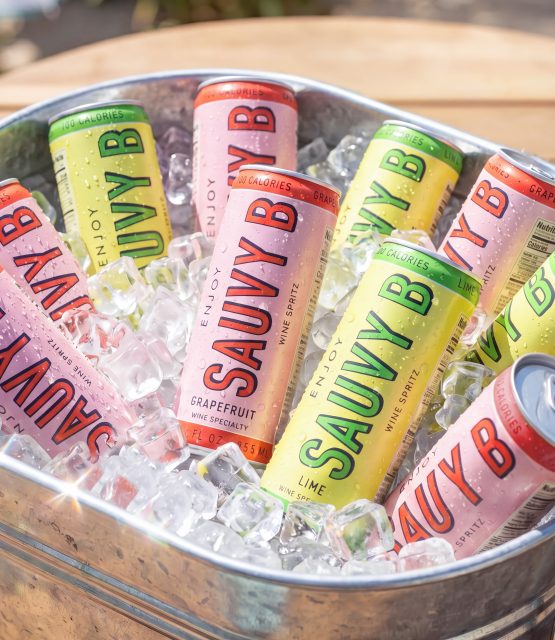
The 4.5% ABV product launched on 15 July in Lime and Grapefruit flavours, priced at US$13.99 for a four-pack, with initial distribution through Target, Walmart and Total Wine & More.
Each 12 fluid ounce (355ml) can blends sparkling water, citrus flavouring and a small proportion of California Sauvignon Blanc – roughly 9%, according to the brand – with the remainder made up of sparkling water, a formulation designed to keep the drink light, at around 100 calories per can, while still trading on the ‘wine’ name.
Sauvy B is a Joel Gott Wines release, but the company behind it is Trinchero Family Wine and Spirits, the third-largest wine supplier in the US, whose portfolio also includes Three Thieves.
Founder Joel Gott, working with his wife and winemaking partner Sarah Gott, has described the launch as a recruitment tool for younger drinkers rather than a product for existing wine consumers, telling VinePair that getting the word “wine” into younger consumers’ everyday vocabulary is central to building the next generation of wine drinkers.
Why electrolytes, why now
The addition of electrolytes taps a hydration-drinks boom that has, until now, run largely parallel to the wine and RTD alcohol categories rather than as part of them.
Fortune Business Insights puts the global electrolyte drinks market at roughly $43 billion in 2026, forecasting annual growth of around 8.4% through 2034, with ready-to-drink formats accounting for the dominant share. That growth has been driven by younger, “wellness-oriented” consumers already primed to look for hydration and “clean label” cues on brands.
Partner Content


Sauvy B is not the first alcoholic drink to draw from that world, but it is among the most prominent wine-based entrants.
Trinchero’s move follows other low-ABV, electrolyte-branded launches this year, including Stateside Brands’ vodka-based Super Lyte and Svedka’s Vodka Water, both also formulated at 4.5% ABV — suggesting a standard is forming around that strength for “functional” RTDs.
A wine RTD problem the format is trying to solve
The launch also arrives at a pointed moment for wine-based RTDs specifically. Spirit-based ready-to-drinks have continued to take share from wine- and malt-based formats in recent years, and wine has struggled to establish the same foothold in canned formats that seltzers and spirit RTDs have secured with younger drinkers.
Sauvy B’s pitch – a recognisable varietal name, a hydration angle and a price point pitched at mainstream grocery – is a direct attempt to close that gap rather than compete on wine credentials alone.
For the trade, the bigger story may be less about one brand than about ingredient positioning: electrolytes joining “low sugar,” “gluten-free” and “low calorie” as a standard functional claim on wine-adjacent packaging.
Whether that proves durable – or fades the way flavoured hard seltzer’s early wave did – will depend on whether retailers see repeat purchase once the novelty wears off. National rollout is scheduled to continue through January 2027, alongside planned pineapple and watermelon flavour extensions.
Related news


