



Are we about to see a ‘Super El Niño’?
The arrival of El Niño is expected to be declared ‘imminently’, with meteorologists warning there is a 40% chance the storm could escalate into a rare “Super El Niño”.
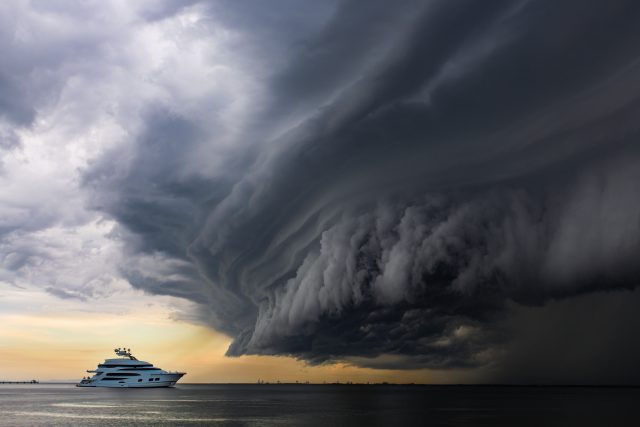
“Quickly rising” oceanic temperatures are the predominant sign that tropical storm El Niño is brewing, say meteorologists.
Weather experts are expecting the Climate Prediction Center, overseen by America’s National Oceanic and Atmospheric Administration, to declare an El Niño “imminently”, with AccuWeather’s chief meteorologist Jonathan Porter saying that an official announcement could be made “on Thursday 11 June”.
What is El Niño?
An El Niño is declared when sea temperatures in the tropical eastern Pacific rise to 0.5 °C above the long-term average, leading to high wind shear across the Atlantic Basin, and increasing the risk of heavy rain in some parts of the world, and conversely, drier conditions and drought in others.
“The sea surface temperatures are quickly rising in the equatorial Pacific. The latest weekly numbers are averaging out just over 0.5 degrees Celsius, compared to the long-term historic average, which is the primary criteria for El Niño,” said AccuWeather on Friday 5 June.
“Most El Niños and La Niñas begin in the fall [autumn]. This El Niño will most likely begin soon and strengthen quickly.”
Early starter
The early arrival of El Niño this year means that fewer storms are expected to occur off the US coast, with meteorologists now predicting 11 storms in the Atlantic instead of the 16 storms previously thought. This is because the ferocious wind caused by El Niño prevents localised tropical storms from “organising and intensifying” in the area, said Accuweather.
“This El Niño will likely reduce Atlantic tropical activity. With its arrival early in the hurricane season, we are now leaning closer to 11 named storms rather than 16,” confirmed AccuWeather hurricane expert Alex DaSilva.
However, the climatic event is likely to increase storm activity in the eastern and central Pacific “by fuelling systems in the region,” DaSilva added. This means that countries such as Peru, Chile, Mexico and Costa Rica are likely to feel the impact, as well as some US and Canadian regions.
She cautioned the US not to be complacent due to the fewer predicted storms.
What she calls “homegrown hurricanes” that develop close to the US coastline “pose a heightened risk because they leave little time for preparation… It takes only one storm to cause catastrophic damage.”
Super El Niño
Experts believe there is a 30-40% chance that we could see a rare “Super El Niño” this year, meaning that extreme conditions could last through 2026 and even into 2027.
There have only been a handful of these events since 1950, and they only occur when oceanic temperatures rise more than 2°C two degrees above the long-term average. Forecasts suggest a Super El Niño in 2026 could match past peaks – or even surpass them.
“The warmth of these waters “rival[s] some of the strongest El Niño events we have seen”, Michelle L’Heureux, a physical scientist at NOAA’s Climate Prediction Center, told the BBC.
Partner Content


One country that is seeing its sea temperatures creep up at a world-beating rate is New Zealand, with data showing that its coastal waters are warming two or three times higher than the global average. A study found that since 1982, oceanic sea-surface temperatures around New Zealand have increased on average between 0.19–0.34C in coastal waters every 10 years.
Winegrower fears
As the drinks business has reported, El Niño can have a severe impact on the world’s winegrowers.
In 2023, Chilean vineyards experienced serious flooding at the hands of the storm with some regions receiving over 350mm of rain (more than the annual average) in less than a week. One Chilean producer – Viña Gonzalez Bastías in Maule – was completely destroyed: “We have had extreme damage, with the complete loss of our winery,” explained owner Daniela Lorenzo. “The roof collapsed and we’ve lost the adobe walls of our winery and all our supplies. It is like a tsunami.”
Then in 2024 a southern oscillation of El Niño set record-breaking surface air temperatures across the globe, bringing wildfires, cyclones and heatwaves to many winemaking regions.
Extreme temperatures are increasingly becoming part and parcel of viticulture management. Canadian wine producers are hotly debating the best and most sustainable methods of fighting deep frosts, while California Sustainable Winegrowing Alliance told db that “any time we are not in a drought is positive”.
However, dry conditions have not always topped California’s list of concerns, with a so-called ‘atmospheric river’ threatening the region’s vineyards with disease a few years ago, forcing wineries to frantically pick their white grapes before the extraordinary precipitation could cause botrytis, mildew and bunch rot.
Innovative solutions
Disaster, though, can breed innovation, which has certainly been the case in Oregon after producers there suffered terrible wildfires due to soaring air temperatures in 2020.
Indeed, wineries took their smoke-tainted Pinot Noir, and used it to create BBQ sauce and blended spirits as savvy brand extensions.
The BBQ sauce made by Durant Vineyards highlighted the fruit-forward notes of the Pinot Noir, as well as the subtle smoky undertones from the wildfires, and featured “hints of allspice and clove with the slow burn of smoked chipotle chilis and black pepper”.
“It was intentionally developed to be tangy and savoury,” Paul Durant, owner and CEO of Durant Vineyards, told db. “We didn’t want it to be overly spicy, so that it can be paired with a broader variety of foods like grilled salmon and veggies as well as ribs or pulled pork sliders.”
“It’s our way of making the most out of a challenging situation.”
Related news
NZ in 'state of emergency' following record-breaking storm
How heatwaves to hailstorms are threatening the world’s finest wines


