



Ways brewers can improve taproom margins
Advice on how to boost taproom profit margins has been revealed in a new report which offers guidance for brewers looking to improve beer sales.
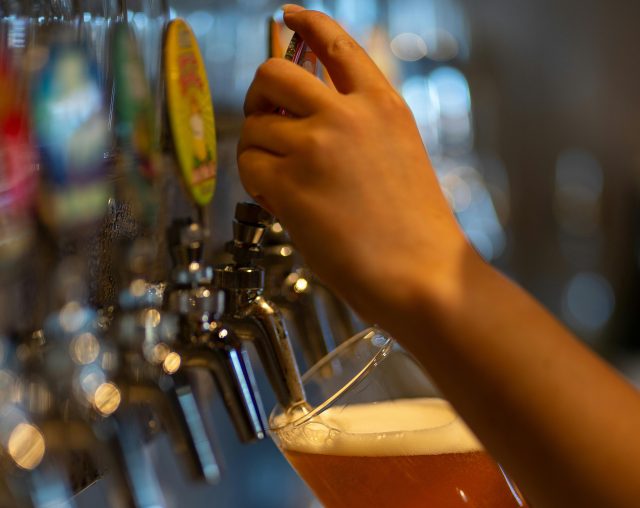
The findings, which outlined ways of using the brewery’s bestselling beers to unlock profits, were detailed via the advice-led US beer platform Brewer. The tips revealed that often “the highest-margin beer you sell is usually poured in your own taproom, not distributed” and noted that “for many breweries, the challenge isn’t just increasing sales, it’s deciding where those sales should happen to maximise profit”.
Staying margin focused
According to the report guidance, “the most profitable taprooms don’t just sell more beer, they sell the right beer” and “balancing customer demand with margin-focused offerings is what separates high-performing taprooms from those just maintaining volume”.
Despite growing consumer demand for independent beer, gaining space in pubs and bars continues to remain restricted. Now, breweries are selling more beer directly to drinkers to adapt to global brewers’ market domination.
The Society of Independent Brewers and Associates (SIBA) recently published an in-depth report that revealed that while 82% of small breweries can sell some beer to local pubs and bars they still report being ostracised from the marketplace and admit being unable to sell on average to 62% of the pubs in their local area due to the dominance of the larger global brewers. Added to these challenges, SIBA pointed out that the independent brewing industry has remained nimble and to navigate these challenges around half (51%) of independent breweries now have a shop and 46% have a taproom on their brewery sites with a third (33%) now selling beer through market stalls and events.
In the Brewer guidance there were also tips on how to make the most of the taproom as a selling space. For instance there was the suggestion that seasonal beers that return each year — and meet customer expectations — create predictable demand and reduce risk. Focusing on this, one taproom manager observed that “repeatable seasonal offerings and customer-driven products consistently outperform one-off experiments”.
Assessing demand for returning styles
Describing what worked best, Colorado-based Goat Patch Brewing’s taproom manager Sam Chirichiello said: “Seasonal specials that are made well, repeated yearly and consistently flavoured work really well for us, as does following customer suggestions that turn into demand.”
Chirichiello explained: “We began making our hard seltzer, which became a big seller for those wanting a lighter feel and a variety of flavours” and added that “listening to what your consumer wants and enjoys is a good way to guarantee they return”.
The report findings adhered to this and echoed how customer feedback directly impacts profitability and suggested that “listening to customers isn’t just about satisfaction, it’s about margin optimisation”. The advice outlined how, with this perspective “customer feedback becomes a revenue tool, not just a marketing tool”.
Partner Content


Other points made included the realisation that when breweries align production with proven demand “waste decreases” and “sell-through increases” plus “repeat visits grow”.
The brewery guidance also noted that draught beer sales generate the highest margins and identified that the reasons behind this were due to the fact that “selling beer through your taproom eliminates distribution costs and middlemen, making it your most profitable sales channel”.
Draught pours and the option of growlers
This is why, it suggested that many breweries should look to prioritise “keeping kegs stocked” and “pushing draught over packaged when possible” as well as recognising that “offering multiple formats increases per-customer revenue”.
The report flagged how “profitability isn’t just about what you sell, it’s how you sell it” and revealed that successful taprooms offer “draught pours” and “take-home options like growlers and packaged beer” which helps “customers to spend more per visit while keeping margins strong”.
In terms of other tips, the inference that staff upselling increases taproom margins was also hinted at with the advice having pointed out that “staff plays a direct role in profitability”.
To make the most of the upselling opportunities within the taproom environment, simple tactics could be used such as “suggesting seasonal or higher-margin beers” and “tailoring recommendations to weather or time of day” as well as “engaging customers in short conversations” which were suggested “can significantly increase average ticket size”.
Track customer preferences
The advice also stated that brewers should consider marketing their “highest-margin beers inside the taproom” and reminded that “promoting the right products isn’t just external. It happens in-house”. For instance, the guidance noted that effective breweries often “train staff on product positioning” and “use signage and menus strategically” and additionally “align marketing with what’s most profitable”.
The last piece of guidance focused on how to balance customer demand with profitability and highlighted how “customer demand should guide decisions, but not control them entirely. With this in mind, it suggested that the most effective approach combines “customer preferences” with “internal sales data” and “cost analysis”. In essence, tracking daily performance helps identify “which beers drive revenue” and “which ones dilute margins”.
The report noted that the simplest way to improve taproom margins right now and to increase profitability quickly was for brewers to focus on four key areas. Essentially, to “prioritise draught sales” and “double down on proven bestsellers” and “train staff to guide purchasing decisions” while also going so far as to “track what actually sells and not just what’s brewed”.
Related news


