



Scientists to brew beer with yeast from mummified remains
Researchers have said they plan to brew beer from the yeast strains collected from the corpse of Ötzi, the man whose body was preserved in the frozen Alps of northern Italy during the Copper Age.
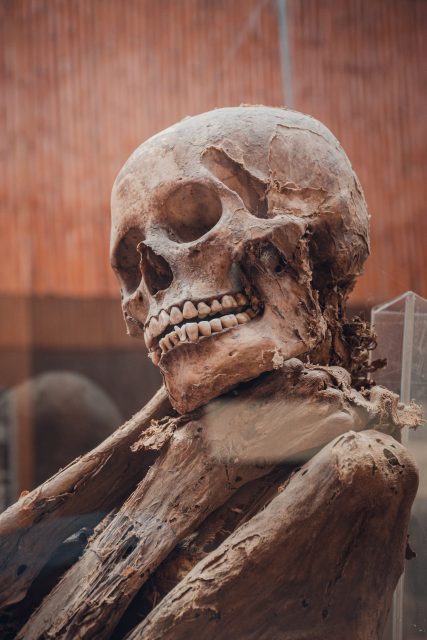
The scientists have already baked a “very good” sourdough bread from the remains after they collected four yeast strains from the skin and guts of the body of Ötzi who was naturally mummified in the ice since circa 3200 B.C.E.
Ötzi the Iceman, who was shot in the back with an arrow before his body froze in the ice has been predicted to have been in his 40s when he died 5,300 years ago.
The yeast can now be used
His corpse was discovered by two German hikers in 1991 and a study of the microbes in his body in 2019, a team from Eurac Research Institute for Mummy Studies has revealed a range of bacteria and yeast that can now be used.
Lead study author Mohamed Sarhan told the Agence France-Presse (AFP) that “what we didn’t expect to find was yeast”.
Speaking in a statement released by the Eurac Research Institute, study co-author Frank Maixner also insisted: “We see continuity here”.
Maixner also explained: “These yeasts have accompanied Ötzi on his long journey through the millennia.”
According to the researchers, the discovery of yeast in the body has since also raised queries over the products that can be cultivated from the strains. Sarhan told the AFP that: “If you tell anyone you have yeast, they immediately ask: can we use it for bread?”
To begin, the scientists said in a Eurac statement that they initially “tried to make a sourdough starter with it and. Although they admitted that “at first, the yeast hadn’t yet adapted to the flour environment” and “nothing happened at all”.
Afterwards, they revealed that “eventually, we obtained a completely normal dough that rose within 24 hours — basically just like ordinary yeast” and so the team “made some really good dough with it”.
Sarhan admitted: “I’ve never baked bread before and it showed. So the result definitely had room for improvement.”
Prehistoric microbes
Next, the team has revealed that it hopes to make beer from the prehistoric microbes and have now applied a chemical called phenol to stop fungus from growing and tainting the strains. Following this, the scientists have stated that three of the yeast strains found in Ötzi’s corpse have since been seen to be eating the phenol, indicating they could, in future, potentially be used to break down phenol in environmental spills.
An additional analysis of the gut microbiome found in the mummy has also offered up similarities within the guts of humans who once lived in remote societies, like the Hadza people of Tanzania and northern Madagascar and indicated that their diets possibly shared similarities.
A complex ecosystem
Study findings have also found that Ötzi’s last meal consisted of ibex, deer, and an ancient wheat named einkorn and that his diet consisted of whole grains. These nuances have been revealing for the researchers who have reported that the mummy’s body “is not a biologically ‘frozen’ time-capsule but rather a complex ecosystem”.
Findings published in the Microbiome journal this week revealed that scientists found that “disentangling the mummy’s endogenous microbiome from modern environmental contaminants introduced during three decades of conservation remains a significant challenge”.
The researchers revealed that “the co-existence of ancient, endogenous gut microbes and modern, psychrophilic colonisers highlights the potential for ongoing microbial activity even at sub-zero temperatures”.
Related news
Sober raves, booze-free beer: why South Koreans are shunning alcohol
US beer sales skyrocket during the World Cup
Osaka scientists develop wild yeast that boosts ornithine in craft beer


