



Inside Perrier-Jouët’s regenerative push
Maison Perrier-Jouët is betting on regenerative viticulture to strengthen vineyard resilience in the face of climate change. On a recent visit to the Champagne house, db explored how data, biodiversity and soil health are shaping its long-term strategy.
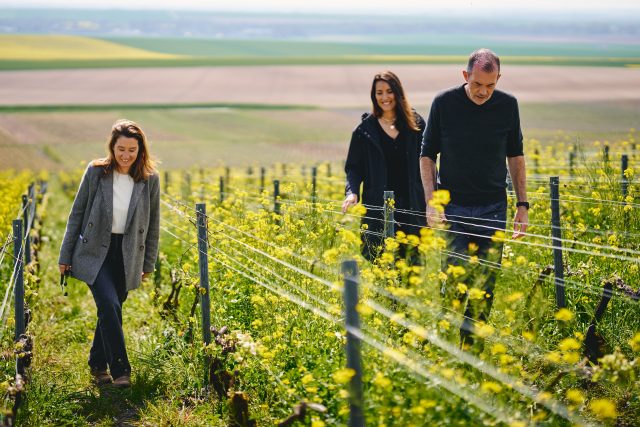
Walking through Maison Perrier-Jouët’s vineyards in Champagne, the message was clear: soil health is no longer a niche sustainability talking point, but a business-critical issue.
Hosted by sustainability & responsibility director Sonia Le Masne, vineyard transformation manager Jessica Jazeron-Schneider and viticulture expert and Perrier-Jouët Ambassador Jamie Goode, a recent trip to the House centred on one key theme — how regenerative viticulture can help future-proof vineyards as climate pressures intensify.
Champagne’s growers are already feeling the effects. According to Le Masne, yields across the region are down 25% over the past 15 years, underlining the urgency for producers to adapt.
“Our goal is to rebuild soil health, adapt, and remain resilient in the face of climate change,” she explained during the vineyard tour.
Maison Perrier-Jouët currently has 66 hectares under vine, with 33 hectares — or 50% of its vineyard — now under regenerative viticulture, with the ambition to reach 100% by 2030. The House launched its experimental regenerative viticulture programme in 2021 after studies showed its soils were compacted and impoverished.
Rebuilding from the ground up
For Perrier-Jouët, regenerative viticulture starts below the surface.
The House has introduced biomass and floral plant covers, vitiforestry and green corridors across its vineyards, all designed to restore soil structure, improve biodiversity and help vines better withstand climate stress.
As Jazeron-Schneider explained, the transition has not been entirely straightforward.
“When we stopped using herbicides, the vines became less healthy, so we had to find alternatives and new techniques,” she said.
Perrier-Jouët eliminated herbicides in 2020, replacing them with mechanical soil preparation methods and plant cover across the vineyard. The House also uses an electric robot, Bakus, for under-vine weed removal to support its zero-herbicide policy while reducing soil compaction.
Biological fertility is central to the programme. Plant covers are used to restore life underground, with legumes playing a particularly important role by capturing nitrogen from the air and returning it to the soil.
Early signs suggest the strategy is working. According to Perrier-Jouët, regenerative parcels have shown improved soil structure, reduced compaction and increased populations of earthworms and beneficial insects including hoverflies, ladybirds and green lacewings.
Jazeron-Schneider noted that proving those results has been essential, particularly when encouraging others to follow suit.
Winning hearts with hard data
Regenerative viticulture has not been universally embraced locally.
Jazeron-Schneider acknowledged that Perrier-Jouët has faced resistance from some growers and neighbours, making data collection and monitoring critical to building credibility.
“We have to acquire a lot of data and sampling to convince people that it works,” she said, pointing to biodiversity monitoring efforts including earthworm tracking and insect observation.
To make that data more accessible, the House has also introduced QR codes in the vineyard, allowing local growers, residents and visitors to access information directly and better understand the impact of regenerative practices.
This scientific approach is supported by external partners including Biosphères, the Centre de Développement d’Agroécologie and Pour une Agriculture du Vivant, as well as expertise from parent company Pernod Ricard.
Le Masne said collaboration has been essential to the programme’s development, with the House working closely with ecological experts to ensure decisions are backed by science.
The broader ambition extends beyond Perrier-Jouët’s own vineyards. The House is also supporting partner winegrowers through sustainable viticulture certification and trialling more regenerative techniques across the wider Champagne region.
Biodiversity by design
The regenerative message is not limited to vineyard rows.
One stop on the visit highlighted an art-meets-biodiversity installation in what was once a former car park, now intentionally left to grow wild. The area has been transformed into a biodiversity island, featuring a sculptural totem installation designed to encourage wildlife habitation.
The project forms part of Cohabitare, an ecological installation by design studio Formafantasma. Located within the vineyard, the biodiversity island spans 285sqm and includes 74 posts fitted with terracotta modules designed to host insects including solitary bees, arachnids and other species.
The idea is both symbolic and practical: using design to create habitats while reinforcing the House’s wider biodiversity goals.
Nearby, the vineyards themselves also reflect this thinking. In 2023, Perrier-Jouët planted 1,200 trees and shrubs in Cramant as part of its vitiforestry programme, creating hedges, islands and copses intended to improve ecological continuity and provide shelter for auxiliary species.
An ultimate impact on flavour
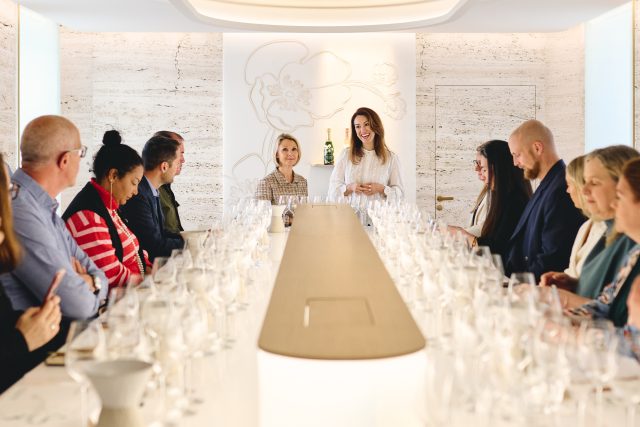
After a day in the vines, the focus shifted from farming to flavour.
Chief winemaker Séverine Frerson led a tasting exploring wines produced from regenerative parcels, showing how different soils and plant covers can influence the final wines.
For example, she explained how wines from parcels with biomass plant covers delivered “tension and freshness” aligned with Perrier-Jouët’s house style, while floral plant covers brought added complexity and elegance.
These wines are vinified separately in a dedicated cellar space, allowing the House to better understand how regenerative farming influences the aromatic profile of its wines.
For Perrier-Jouët, the project remains a long-term one, but the direction is firmly set.
As climate volatility continues to reshape Champagne, the House is making the case that resilience will not come from a single intervention, but from rebuilding vineyard ecosystems from the soil upwards.
Related news
Maison Pommery's shares rise on back of Henkell merger talks
New leader for Champagne Pol Roger as Laurent d’Harcourt retires
Laurent-Perrier returns to growth despite Champagne headwinds


