



Brown-Forman warns of flat year despite sales beat
Brown-Forman exceeded sales expectations in its fourth quarter, but the Jack Daniel’s owner has warned that challenging market conditions will keep revenue growth subdued in the year ahead. The spirits group continues to face pressure from weaker consumer spending, tariff disputes and declining demand for whiskey.
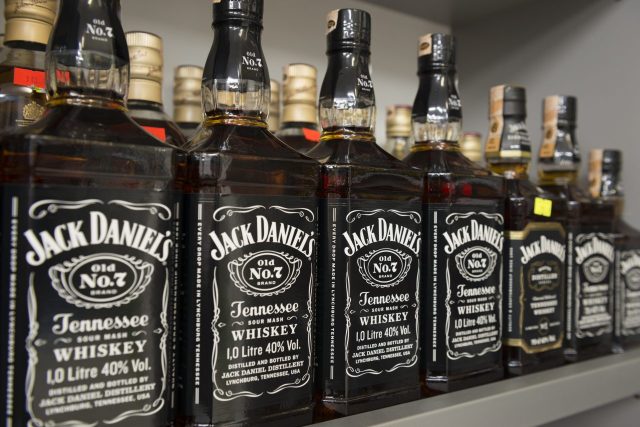
Brown-Forman reported fourth quarter net sales of US$912 million for the three months to the end of April, up 2% year-on-year and ahead of analyst forecasts of US$879.9m.
However, profit fell sharply to US$54m, or 12 cents per share, compared with US$146m in the same period a year earlier.
The result fell short of analysts’ expectations of 33 cents per share, although the company said comparisons were affected by one-off factors including the ongoing restructuring of its US distribution network.
Chief executive Lawson Whiting said consumer spending remained under pressure across many of the company’s key markets.
“Macroeconomic uncertainty continued to pressure discretionary spending in the U.S. and many developed international markets,” he told analysts.
Flat sales outlook
Despite the stronger-than-expected revenue performance, Brown-Forman struck a cautious tone for the year ahead.
The company expects organic net sales to be broadly flat during its new fiscal year, while operating income is forecast to decline by between 3% and 5%.
That outlook is more conservative than analyst expectations, which had anticipated revenue growth of around 1%.
Whiting said market volatility and rising costs were likely to remain headwinds but expressed confidence in the group’s ability to navigate the challenging environment.
Impairment charges hit earnings
The company recorded non-cash impairment charges totalling US$132m during the quarter relating to its Gin Mare and Diplomático rum brands.
Chief financial officer Jim Peters said the write-downs reflected weaker-than-expected performance since the acquisitions were completed in 2023.
“The brands had a slower start than we planned, and the operating environment has become more challenging since we acquired the brands in 2023,” Peters said.
The group also reported lower sales of used bourbon barrels, a secondary revenue stream that has been affected by softer demand across the global whiskey sector.
Partner Content


Cost-cutting continues
Brown-Forman has spent the past year taking significant steps to reduce costs as the bourbon category faces one of its most challenging trading periods in recent memory.
The company has been affected by tariffs in key export markets and the effective removal of American whiskey from parts of the Canadian market following retaliatory measures linked to US trade policies.
Last year Brown-Forman cut approximately 12% of its global workforce and sold its cooperage operations.
More recently, it paused production at its Glenglassaugh distillery in Scotland and moved to a shared production model with neighbouring Benriach.
This month the company also confirmed it had halted production at its Slane Irish whiskey distillery in County Meath, although it has not specified when operations may resume.
Questions remain over future direction
The latest results come after a turbulent period of corporate activity for the Kentucky-based spirits group.
Earlier this year Brown-Forman ended merger discussions with Pernod Ricard, a deal that would have created one of the world’s largest premium spirits companies.
Shortly afterwards, the company reportedly rejected a US$15 billion takeover approach from American rival Sazerac.
Brown-Forman offered little additional detail on either development.
“We evaluate every opportunity against the standard of long-term shareholder value, and in this case, we were unable to reach mutually agreeable terms,” Peters said of the Pernod Ricard talks.
Industry observers continue to speculate that the Brown family, which has controlled the company for five generations, was reluctant to relinquish a meaningful degree of influence over the business.
Shareholders seek signs of recovery
Brown-Forman shares have fallen from around US$80 five years ago to approximately US$25 today as investors have become increasingly concerned about slowing growth and category weakness.
Despite the cautious outlook, the market responded positively to the latest results, with shares rising around 2% following the announcement.
Investors will now be looking for evidence that Brown-Forman’s restructuring efforts can stabilise performance as the global spirits industry continues to grapple with weaker demand and changing consumer habits.
Related news
Brown-Forman is under pressure as Slane production pauses


