



Spy documentary revisits Peter Sichel’s CIA past
A new documentary on Peter Sichel, the former CIA operative who later transformed Blue Nun into a global wine phenomenon, revisits his warnings over US intelligence failures. The Last Spy also casts fresh light on the German-born wine merchant’s journey from wartime espionage to one of the most recognisable bottles of the 1970s and 1980s.
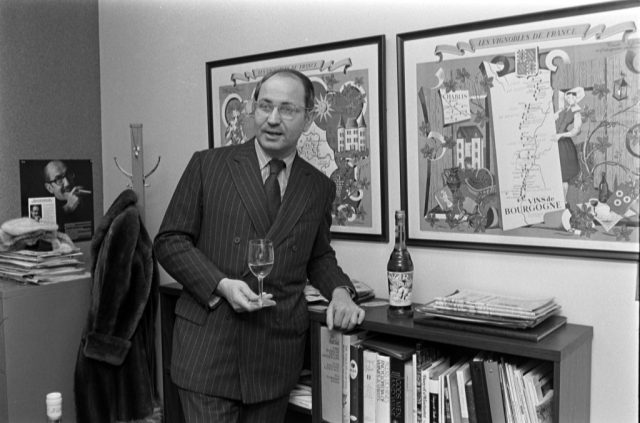
Peter Sichel, who died in February 2025 aged 102, remains one of the wine trade’s more improbable figures.
Born in Mainz in 1922 to a Jewish family, Sichel grew up close to wine through his grandfather’s H. Sichel Söhne winery, founded in 1857. He was educated in England at St Cyprian’s Preparatory School and Stowe School before beginning an apprenticeship in Bordeaux.
The Sichel family fled Germany after Hitler came to power, first to Bordeaux, then eventually to New York after France fell to the Nazis.
The spy before the wine merchant
Sichel joined the Office of Strategic Services, the wartime precursor to the CIA, after reaching the US. His language skills helped lead him into intelligence work, including running agents in Germany and using prisoners of war to infiltrate the German western front.
Sichel later became the CIA’s first station chief in Berlin, filing early warnings about Soviet activity. In The Last Spy, Sichel recalls: “It was the beginning of the Cold War.”
The film also includes Sichel’s blunt assessment of general George S Patton, whom he called “a bad general… a very stupid man”.
A warning over intervention
The documentary, directed by Katharina Otto-Bernstein, presents Sichel as a critic of some CIA operations, particularly the 1953 Iran coup.
On the coup, Sichel says: “I thought it was not only illegal but also ill-advised.”
Sichel also says: “We don’t think it through until the end, that an action we take today might in the long run be against our interest.”
Blue Nun
After leaving the CIA in 1960, Sichel exchanged secrets for screwcaps, returning to the wine trade to take over his family business in Germany while remaining largely based in the US.
Partner Content



His shrewdest move was appointing the Schieffelin Company to import and distribute the family portfolio, Blue Nun included. Sichel positioned it, with confidence, as a “wine that could be drunk throughout an entire meal”.
Blue Nun, later shorthand for retro dinner-party sweetness and forever haunted by its Alan Partridge associations, became the sort of commercial success that makes purists wince and accountants purr. Radio adverts in the 1970s featuring Stiller and Meara lifted US sales by 500%.
At its 1980s peak, more than 1.25 million cases of Blue Nun were sold annually in the US, with another 300,000 in the UK, 200,000 in Canada and 50,000 in Australia.
Sichel’s later wine career included planting his own vineyard in Cucugnan in the Languedoc-Roussillon in 1988, receiving the Wine Spectator Distinguished Service Award in 1989 and becoming president of the International Wine and Spirit Competition in 1991.
He sold his company, including the rights to Blue Nun, to Langguth-Erban in 1995, he remained principal shareholder of Château Forcas-Hosten in Listrac until selling it to members of the Hermès family in 2006.
The Sichel name today
Sichel’s daughters Alex and Sylvia went into filmmaking and screenwriting, while Bettina became a partner in California’s Laurel Glen Vineyard.
The extended Sichel family owns Château Palmer, Château Angludet, Château Argadens and Château Daviaud. Domaine Peter Sichel is now run by his grandson Alexander Sichel, who converted the estate to organic and biodynamic viticulture.
The Last Spy is in select UK cinemas and on demand from 24 April.
Related news
Pierpaolo Petrassi MW stepping down from BWS role at Waitrose
What’s driving the surge in fine white wine trading?
Shepherd Neame: ‘We saw an opportunity’ for Whitstable Bay 0.5%


