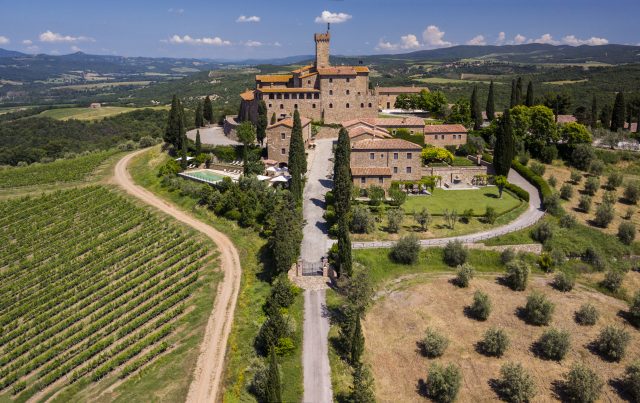
Sustainability is no longer a supporting pillar at Banfi – it is shaping every new addition to its portfolio. Under the leadership of Cristina Mariani-May, the company has formalised a strategy that places environmental and ethical standards at the centre of its expansion plans from 2025 onwards.
Speaking to the drinks business, Mariani-May made clear that sustainability sits alongside quality and authenticity as a core decision-making tool. “Sustainability is an important part of a broader consideration set that reflects how a producer thinks about stewardship, long-term value, and continuous improvement,” she said.
A filter, not a feature
Rather than applying a rigid checklist, Banfi looks for intent, transparency, and measurable progress across its partners.
“As Banfi Wine & Spirits has grown, we’ve been most drawn to partners who share our belief that being better is an ongoing commitment,” Mariani-May explained.
This approach is reflected across the portfolio. Both the company’s Montalcino and Piemonte estates are certified by Equalitas, while Alexander Valley Vineyards holds Sonoma Sustainable certification. Brother’s Bond Bourbon is described as “a pioneer of regenerative agriculture with the first regenerative expression on the market”, while Boatyard Double Gin is certified organic and a B Corp. Meanwhile, Emiliana Organic Vineyards is highlighted as “a global leader in organic and regenerative viticulture — a B Corp and the first Chilean company to achieve Regenerative Organic Certified® status”.
“What matters most is intent, transparency, and progress,” she added.
Mariani-May also stressed that sustainability extends beyond production. “Importantly, we also believe sustainability extends beyond the vineyard and cellar to include people and community,” she said, pointing to Banfi’s scholarship programme and its Jazz & Wine events as examples of social investment.
Beyond marketing claims
With sustainability increasingly used as a marketing tool across the drinks sector, Mariani-May emphasised the need for accountability.
“We’re very aware that sustainability must be grounded in real action,” she said. “For Castello Banfi, that means transparency, accountability, and measurement — which is exactly why we publish a comprehensive sustainability report each year.”
The report documents goals, progress, and future priorities across environmental, social, and governance areas. “That’s also consistent with our ESG process,” she added. “While not a consumer facing credential, our improved ESG rating confirms that sustainability at Banfi is not an aspiration — it’s a structured, measurable part of how we operate and plan for the long term.”
Evolving beyond Tuscany
While Banfi remains closely tied to its Tuscan roots, its portfolio strategy has broadened significantly.
“Banfi will always be deeply rooted in Montalcino,” said Mariani-May. “At the same time, Banfi Wine & Spirits, our U.S. import business has evolved.”
The inclusion of partners such as Emiliana, Alexander Valley Vineyards, Brother’s Bond, and Boatyard reflects what she describes as a strategy of “premiumization and scale built around shared values”.
“These strategic partnerships enable us to show up more meaningfully for our customers, offering a thoughtfully curated portfolio of standout brands that, in turn, helps them grow and differentiate their businesses,” she said.
Credentials as a signal of intent
Mariani-May does not see sustainability certifications as a short-term commercial advantage, but as a marker of credibility.
“I see sustainability credentials less as a short-term commercial advantage and more as a clear signal of intent and accountability,” she explained. “Certifications matter because they demonstrate that a company is willing to go beyond statements and hold itself to measurable standards—they show that we practice what we preach.”
She acknowledged that the market is still evolving, but noted that transparency is becoming essential. “Today’s consumers, retailers, and distributors have unprecedented access to information,” she said. “Sustainability credentials help provide a shared language and a level of trust in a very crowded landscape.”
Looking ahead
As Banfi looks towards 2026 and beyond, the focus remains on like-minded partners rather than filling specific category gaps.
“We’re open to partnering with premium brands that share our core values—family leadership, a commitment to excellence, and a thoughtful approach to sustainability,” Mariani-May said. “Any new partnerships would need to complement, not compete with, our existing portfolio and allow us to be true stewards of the brands we represent.”
In a crowded and increasingly scrutinised market, Banfi’s message is clear: sustainability is no longer an add-on, but a prerequisite for growth.