



Where are they now? María José Sevilla : La Decana of Spanish food and wine in Britain
For decades, María José Sevilla helped reshape British perceptions of Spanish cuisine and wine through her work with Foods & Wines from Spain. From television and books to trade promotion and education, she became one of the most influential ambassadors of Spain’s gastronomy in the UK.
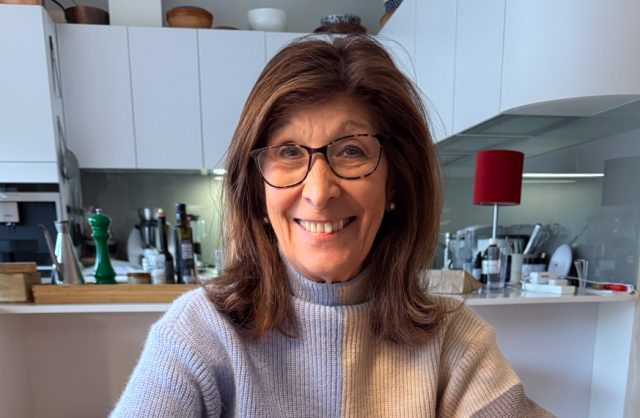
When María José Sevilla was inducted into the Gran Orden de Caballeros del Vino in London in 2017, she was described as the decana, the doyenne, of Spanish food and wine in the UK. The title reflected decades of work promoting Spain’s gastronomy, culminating in her long tenure as director of Foods & Wines from Spain, a role through which she helped transform British perceptions of Spanish cuisine.
María José was born in Madrid to a family with roots in Aragón and Navarra. Her father served as an air force pilot, which meant frequent travel and postings, while her mother’s upbringing was marked by hardship. Orphaned at the age of three, her mother was raised in a family of vegetable growers in Navarra before moving to Zaragoza, where Silvia, her grandmother, found work as a cook for a wealthy household, a job she loved. Silvia would accompany her daughter’s young family when travelling around the country, and it was she who planted the first seeds of Maria José’s lifelong interest in, and passion for, food.
María José’s childhood was shaped by contrasts. Although the family was comfortable in terms of food, thanks largely to her mother’s skill and resilience, money was tight. When she was only one year old, her mother contracted tuberculosis and spent two years in a sanatorium. During that time, her grandmother stepped in to cook and care for the family. The experience reinforced the importance of food, family and endurance in her early life.
María José attended Catholic schools in different parts of the country while her older brother boarded away from home. Her mother, intelligent, well-read and a beauty, encouraged education and independence, while, despite the prestige of his military role, her father favoured a more traditional path for his daughter. His later years were marked by illness following an accident and stroke, with her mother acting as his dutiful carer.
Food and wine were ever-present cultural elements during her upbringing. Although her father didn’t drink and her mother only very occasionally, wine was a natural part of her extended family gatherings. Children were allowed a few diluted drops, instilling in her an early sense of wine as a normal element of life rather than a luxury.
Coming to London and finding a career
After completing her A levels in Madrid, María José began studying economics but soon grew disillusioned with Spain’s political climate during the final years of Francisco Franco’s regime. In 1969, at the age of 20, she travelled to London for what was intended to be a short two-week stay to improve her English. Her mother was in favour of the move, but her father only allowed it under strict conditions. She initially lived in a nunnery, reflecting her conservative upbringing.
Returning to London, she soon found work teaching mathematics to children in Highgate. During this period, she met an Englishman, an engraver, while on holiday in Ibiza and married him in 1971. The following year, she gave birth to her son, Daniel James Taylor. Despite a pleasant domestic life, she felt bored and increasingly isolated from her family, culture and friends in Spain.
In 1974, an opportunity arose through contacts at the Spanish Embassy’s Commercial Office in London. Initially joining for just three weeks in a junior support role, she was soon offered part-time work in the export department, organising information databases for importers and exporters of Spanish food and wine. The job provided both a professional lifeline and a cultural anchor, reconnecting her with Spanish colleagues while she continued improving her English. It marked the beginning of her long career in the sector.
Over the next several years, she took on increasingly responsible roles, including analysing prices and liaising daily with exporters and British authorities to ensure fair trade conditions for Spanish produce entering the UK market in the period before Spain joined the European Economic Community.
By the mid-1980s, she sought new intellectual challenges and decided to return to study. But Spain’s accession to the European Community in 1986 had led to structural changes within the trade offices, and she was offered leadership of a small information centre dedicated to food and wine. Working without computers or email, she built handmade databases linking exporters, importers and journalists, while developing a photographic archive documenting Spain’s evolving wine and food industry.
Working with wine writers and the media
Her growing expertise brought her into contact with leading wine journalists and writers such as Tony Lord, John Radford and Jan Read. Realising she needed formal qualifications to advance in the male-dominated wine trade, she enrolled in the Wine & Spirit Education Trust diploma. Prejudice and scepticism from colleagues acted as a red rag to a bull, as it were. “A challenge for me is a command. I joined the WSET and first of all did a course followed by a two-year diploma, and passed the exam”. It still wasn’t enough to get her a job with Vinos de España. By then, Foods from Spain needed an assistant director, a job she took enthusiastically while still collaborating with Wines from Spain and the Sherry Institute of Spain.
Alongside her professional work, María José deepened her academic engagement with food culture. She attended the Oxford Symposium on Food and wrote a paper on Basque cuisine, which led to her first book, Life and Food in the Basque Country (1989). The project also introduced her to leading chefs such as Pedro Subijana of the restaurant Akelare in San Sebastian.
Partner Content


She convinced Chef Subijana to come to London and create a menu for the press to be cooked by him and his team at The Dorchester. That was the beginning of a really serious affair with the Basque Country. “It was unbelievably successful. There were around 50 people, all of whom could make a difference, among them Philippa Davenport, Michael Bateman, Jill Norman, Jane Grigson and Jeremy Round.”
During this period, she also travelled extensively with wine writers and industry figures, including chauffeuring Tony Lord, a founding partner with Colin Parnell of Decanter, during research for his book The Wines of Spain. This was at a time when Spain had been opening up and chefs who had travelled abroad were bringing back new ideas, new ingredients and recipes that were improving on and updating local traditions. These experiences shaped her holistic approach, insisting that wine could not be fully understood without knowledge of food culture and regional traditions.
Spain on a Plate and international recognition
In 1990 she was promoted to assistant director of Foods from Spain under marketing pioneer Patrick Gooch, a mentor who recognised her abilities and helped elevate Spain’s culinary image in the UK. While advancing professionally, she also became increasingly involved in media work. Early television appearances led to the landmark BBC series Spain on a Plate, broadcast in 1992 to coincide with the Olympic Games in Barcelona and the 500 year anniversary of the discovery of America. In 1993, it was awarded both a Glenfiddich Award for the Television Programme of the Year and a Premio Nacional Alimentos de España of the Ministry of Agriculture in Madrid.
Filmed partly on location and partly in elaborate studio kitchens at Ealing Studios, the series showcased regional food cultures across Spain and was accompanied by a book under the same title. Coincidentally, it was filmed by documentarist David Swan, who was to become her husband.
Spain on a Plate was broadcast internationally and significantly improved global awareness of Spanish gastronomy, though the demanding production schedule and a strong feeling of responsibility placed enormous pressure on María José, who worked simultaneously as presenter, translator and cultural guide.
Following the success of the series, she travelled widely lecturing and cooking in Japan, Australia and the United States, and later became a visiting chef at the Culinary Institute of America in Graystone, California. Her book Mediterranean Flavours followed in 1995.
Championing Spanish food and wine
In 1996 she was appointed director of Foods. Managing significant budgets and marketing campaigns, she worked with chefs, importers and journalists to raise awareness of Spanish produce, olive oil, ham and wines. She collaborated closely with industry leaders, trade organisations and promotional agencies while coordinating tastings, fairs and educational events with Wines from Spain and the Sherry Institute of Spain. All of these reshaped the perception of Spanish cuisine and wine in the UK market.
Around 2007 her responsibilities expanded further when she became director of Foods and Wines from Spain in London (ICEX), overseeing both sectors as a single integrated portfolio. Although budgets declined as exporters began promoting themselves more independently, her work continued to influence the market through education, storytelling and cultural diplomacy.
During these decades she witnessed profound changes: the transformation of Spain’s wine industry, the growing presence of women in the trade and changing attitudes towards women in general. The British taste was also evolving. “Although British imports of Spanish wines have been affected by Brexit, Britain still remains absolutely essential for Spanish wines and it’s wonderful that I can now buy the most delicious Spanish wines here. My contribution was small but I was there when things started and I could watch as the industry changed.”
Scholarship and legacy
In later years María José focused increasingly on scholarship and writing. Her major work Delicioso, A History of Food in Spain, published by Reaktion Books, took seven and a half years to complete. Translated into Chinese, Japanese and Castilian, the book explores Spain’s culinary heritage from ancient influences to modern innovation and regional identity.
Since its publication in 2019 she has written further works including La Cocina de Andalucía and La Cocina Vasca.
Now stepping back from full-time professional commitments, she plans to spend more time sailing with her husband David while continuing to write, including a book on family food with her son Daniel, a talented chef. On 26 February, María José gave a lecture organised by the Instituto Cervantes on Spanish Gastronomy: From Stereotypes of the Past to Globally Renowned Cuisine, reflecting on how Spain overcame long-standing prejudice against its food and wine to become a global gastronomic leader
Related news
Where are they now? Neville Abraham
Where are they now? Peter Stafford-Bow: the wine buyer who survived
Where are they now? Lindsay Hamilton, Farr Vintners’ golden boy


