



Cabernet Sauvignon ‘still remembers its parents’, says UC Davis study
New UC Davis research suggests Cabernet Sauvignon carries molecular traces of its original 17th-century parentage. The finding sheds light on why this grape remains so consistent across centuries of clonal propagation.
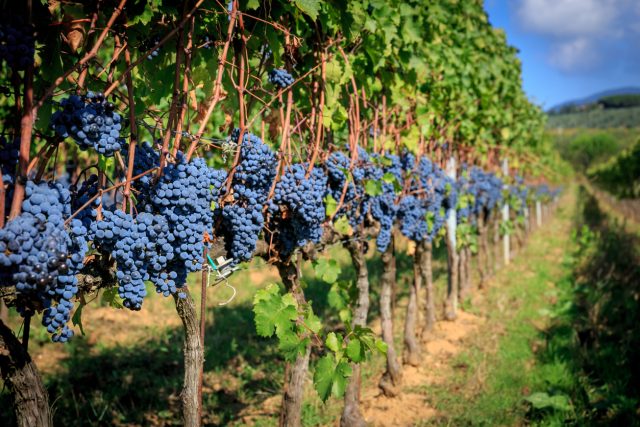
About 400 years ago Cabernet Franc and Sauvignon Blanc produced Cabernet Sauvignon, now the world’s most planted wine grape. According to UC Davis, new research shows the variety still carries a form of molecular memory of its parents. For a plant that reproduces through cuttings rather than seeds, it is an impressive feat of long-term recollection, almost as if the vine has been quietly keeping receipts since the seventeenth century.
Grapevines are propagated clonally, meaning every Cabernet Sauvignon vine today is nearly identical to that original plant. Professor Dario Cantù of the UC Davis Department of Viticulture and Enology said, “We still cultivate plant material selected hundreds of years ago simply because Cabernet Sauvignon is so beloved.” According to UC Davis, the new findings confirm that the grape still holds inherited molecular signatures even after centuries of environmental change.
Stable epigenetic marks across centuries
The study, published in Genome Biology, investigated epigenetic marks, chemical switches that help turn genes on or off. As per UC Davis, scientists have long wondered whether such marks remain stable despite centuries of clonal reproduction. Cantù explained that these modifications “sit on top” of the genetic code and can change with age or environmental stress while still retaining parental signatures.
He compared the discovery to “sequencing identical twins at 90 and still detecting the parental signatures they inherited.” One imagines those twins discussing their memories over a glass of wine, only for the wine itself to have a better grasp of its family history.
Partner Content


Mapping a grape’s ancestral fingerprints
Researchers created high-resolution genome maps of Cabernet Sauvignon and its parents, analysing multiple clones of each variety. Using a phased sequence graph, a model that captures subtle genetic and epigenetic variations more accurately than traditional reference genomes, they traced how molecular marks are inherited.
According to the study, clonal vines do show small differences from one another, but their fundamental epigenetic patterns remain remarkably stable.
Clues for climate resilience
UC Davis reported that this discovery could help reveal which epigenetic responses to heat, drought or disease remain stable over time. Cantù suggested that persistent stress-induced changes could be targeted in breeding without altering the grape’s essential genetic identity. The framework developed in the study can be applied to other perennial crops to guide efforts to enhance resilience and quality.
The finding also links back to earlier UC Davis research. In 1997 Professor Carole Meredith identified Cabernet Franc and Sauvignon Blanc as Cabernet Sauvignon’s parents. Cantù said the new study “connects a UC Davis classic to a UC Davis first,” showing the grape still carries traces of that ancestral pairing.
Related news
All the medallists from The Global Cabernet Sauvignon Masters 2026
Raise a glass to Cabernet excellence: enter The Global Cabernet Sauvignon Masters 2026
All the medallists from the Global Cabernet Sauvignon Masters 2025


