



Where are they now? Paul Boutinot
From peeling potatoes in his family’s Stockport restaurant to building one of the UK’s leading wine distributors, Paul Boutinot has spent more than five decades challenging convention in the wine trade. Now his attention is firmly on South Africa’s Waterkloof, where more than 20 years of work are beginning to fulfil his ambitions for the estate.
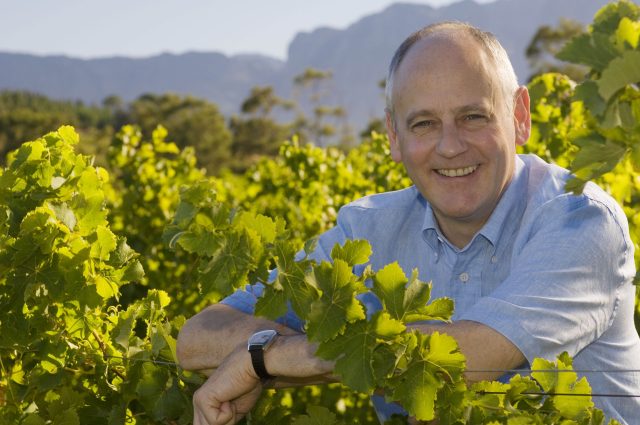
The son of a French father and an English mother, Paul Boutinot was born on 20 December 1952 in Stockport. Perhaps it’s no surprise, then, that his career in wine would bridge the wine cultures of England and France before expanding into the New World and, finally, taking a direction that no one, not least Paul himself, could have predicted.
Paul’s father was working as a pastry chef in St Malo when German forces approached the town in 1940. He and two friends escaped by small boat to Jersey, catching the last British frigate to leave before the island was overrun. He joined the Free French within the British Army, then the SAS. During his parachute training at what is now Manchester Airport he met Paul’s mother, and they married at the end of the war in 1945.
Settling in the north of England, Paul’s father saved enough from his pastry chef wages to open his first restaurant, L’Auberge de France, in Manchester in 1959. His next move was to open La Bonne Auberge in Stockport in 1964, where Paul’s mother worked front of house. There were very few restaurants and it proved popular, says Paul, with classic French menu items such as tête de veau. People were starting to go on holiday to France and Spain, and wine was making an appearance.
Paul would come home from school and go straight to the restaurant, where he was the melon boat specialist and potato peeler. He spent his summers with his French grandmother in the Touraine. When his father cooked at home on Sundays, Paul and his two older sisters were encouraged to analyse and comment on the food. ‘You rarely put anything in your mouth without analysing it, and I think that it was that approach that was to translate later to wine.’
‘Money was tight. I was brought up with the feeling that no matter what you do going forward, you have to make money,’ Paul says. School was not for him: he left at 18 after a less-than-brilliant grammar school career, his reports noting ‘if only he exerted himself’. Not wanting Paul lazing around the house, his father gave him £20 and told him to leave. Paul took a train to London, and after a string of odd jobs ended up as a hod carrier, a bricklayer’s mate, in Chelsea. The glamour of the building trade, however, he decided, was not for him.
Learning the trade
In 1972, Paul took a job at J. Lyons and Co. in Greenford, a tea shop conglomerate with a small wine trade offshoot, where his job was to stick labels on English bottled wine, choosing Fleurie, Châteauneuf-du-Pape or Nuits-St-Georges for red wine in a Burgundy bottle, Pouilly-Fuissé or Puligny-Montrachet for white wine. ‘Until we joined the EEC in 1973, you could label anything as anything,’ he says. ‘After 1973, people would complain that it didn’t taste like Burgundy any more. Why? It no longer had Algerian wine in it.’
Six months later, Paul moved to J.B. Reynier, a respected London wine merchant and agent for, among others, De Vogüé, Marquis de Laguiche and Marquis d’Angerville. ‘I would go with Peter Reynier to France, tasting from barrel and buying wine. Two years later we’d go back to look at the same wines in bottle, and I’d re-analyse them to see if my first impressions had been correct.’ Paul spent four years learning the trade there, though the pay wasn’t great.
When the opportunity arose in 1976 to manage the retail operation at Augustus Barnett on Kensington High Street, he took it. Sales were mostly spirits and beer when he arrived; 18 months later, wine made up 45%. Parcels of good wine were coming onto the market after the oil crisis and the three-day week, and Oddbins was getting going around the same time. ‘I remember selling the 1968 Biondi-Santi Brunello di Montalcino for £4 a bottle.’
Back to Manchester and the birth of Boutinot Wines
By the late 1970s, the question of who would take over the family restaurant had come up, and in 1979 Paul returned to Manchester to join the business. La Bonne Auberge gave him his first platform as something close to a sommelier, overhauling the wine list and sourcing classic wines from a range of suppliers. After two years, though, he realised the restaurant business wasn’t for him. ‘It was doing my head in. You have to be perfect twice a day. For me, this was too stressful.’
In December 1980 he launched Boutinot Wines, headquartered, improbably but defiantly, in Stockport. With good contacts in France, he began importing from core producers such as Gitton in Sancerre, Sauzet and Tollot-Beaut in Burgundy, Jacques Dépagneux in Beaujolais, and Cave de Rasteau and Chante-Cigale in the Rhône. There were still not many wine importers, but wine consumption was growing exponentially, so it was a perfect time to break into the trade. He could work on lower margins, supplying independent restaurants in and around Manchester and then in London, including Robert Carrier, Tante Claire, Le Gavroche and L’Arlequin, at cost-effective prices.
Believing there was room for a wine that simply tasted like good wine, Paul created Cuvée Jean-Paul in 1983, a white blend of Chenin Blanc and Sauvignon Blanc from the Loire, and a red Grenache-Cinsault blend from the southern Rhône. ‘I was told I was mad to make a table wine without added sugar. I was told only three per cent of the market would drink such a wine. “That’ll do me,” I said, and within eight years it was selling a million bottles.’
He took a small stand at the first London Wine Trade Fair, where he met James Rogers, then buying for the Cullens chain, who found the wines good value and helped enormously. Jane Hunt MW then joined Boutinot as sales director and became one of the driving forces of the business. He continued to build out the French range, launching a line of varietal vins de pays in 1986.
As international demand grew, he opened an office in France to oversee production and distribution. On Jane Hunt’s recommendation, he took on Samantha Bailey, who opened Boutinot France in Juliénas in 1987. Some 70% of sales came from wines Boutinot produced itself, made to Paul’s own natural ferment philosophy: no enzymes, no cold soak, no powdered tannins or added acid. ‘We were making wine that we liked to drink… making cheap wines the way fine wines were made.’
Partner Content
From Greenalls to the New World
In 1993, Boutinot Wines was sold to Greenalls, the brewing and leisure group. Paul says the business was profitable but never had enough capital to develop the way he wanted, and Greenalls had approached him to run its wine business, Harvey Prince. The merged business, Boutinot Prince, was a new challenge, and it was through this change that Paul began to take an interest in wines beyond France, the New World.
Broadening the portfolio
He bought the business back in 1996, a buyout that became the foundation of what the company would go on to be. Joined by Dennis Whiteley from Greenalls as managing director, and later Michael Moriarty as commercial director, Paul broadened the portfolio dramatically. He applied the formula he’d developed in France to Australia (Marktree and Soldier’s Block), Chile (Sierra Grande) and South Africa (Paarl Heights), sourcing the grapes himself and asking producers to modify their winemaking to suit his style.
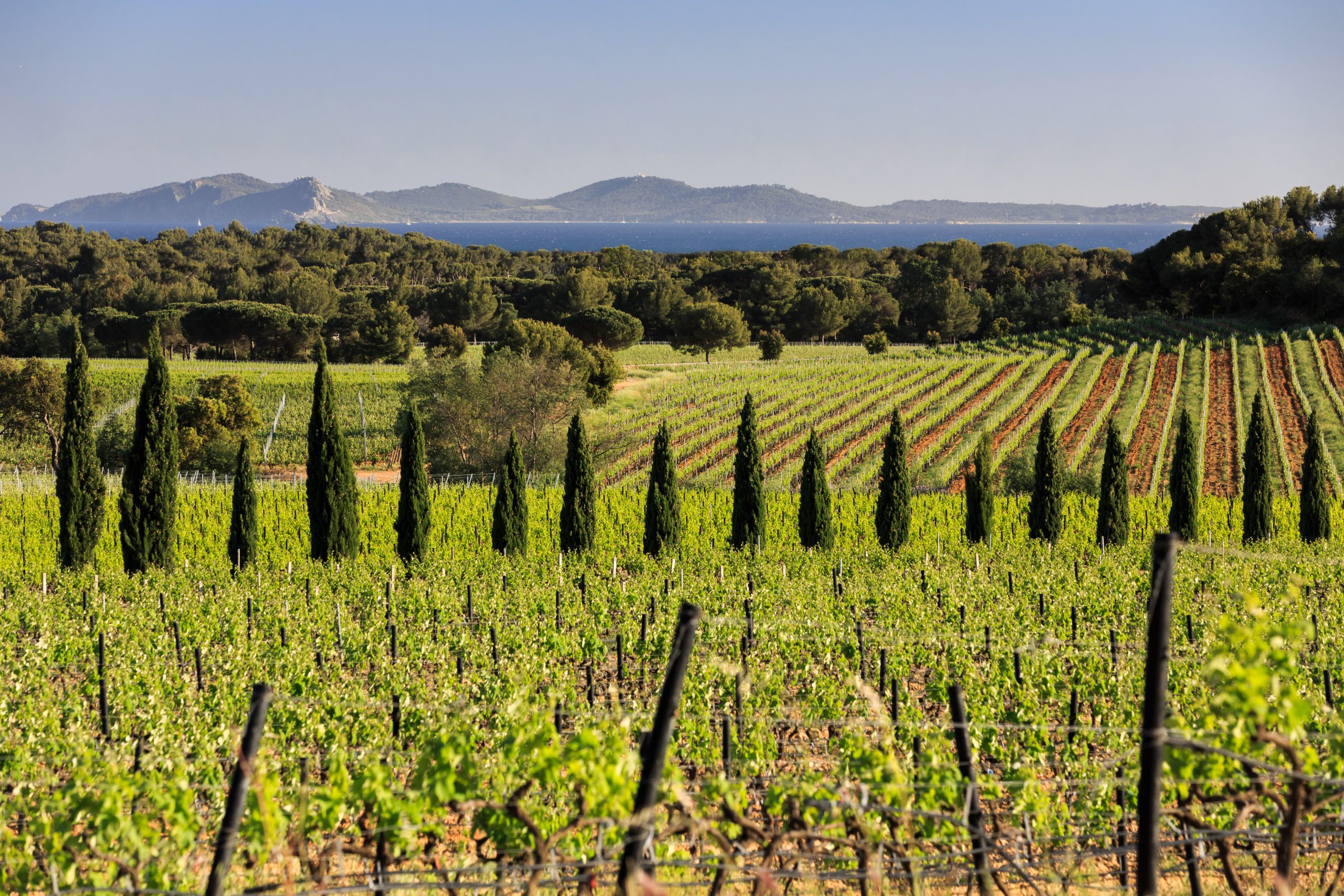
The company then chose to focus on two regions for its top-quality wines: the southern Rhône and South Africa. Boutinot South Africa opened in 1997, sourcing from the Helderberg area around False Bay. In the Rhône, a good estate in Cairanne was purchased, which became the base for Domaine Boutinot.
In 2013, Paul sold Boutinot Wines to its management team, in a buyout led by Dennis Whiteley, Michael Moriarty and Tony Brown MW. ‘It was a clean handover to people who had helped build the business and understood its values. I’d built a business with a structure that no longer needed me, and once I wasn’t required, I realised I might as well leave.’ That team now runs the company, which is the UK agent for Waterkloof.
By the time Paul stepped back, Boutinot had grown from a one-man, van-driving operation in Stockport into one of the UK’s leading wine distributors: a portfolio of over 1,700 wines, selling more than 44 million bottles a year, with dedicated teams in the UK, France, South Africa and the USA, and representation across Canada, China, south-east Asia and Europe.
The Waterkloof story
The change of direction dates back to 1993, when Paul began looking for a vineyard in South Africa capable of producing a top-quality wine. His criteria were exacting: a site defined by its terroir, not by winemaking intervention. ‘It basically comes down to climate, with soil playing a secondary part. You need a long growing period between flowering and picking; whites need high acid, reds need high acid and ripe tannins without high alcohol, so you need cool springs and summers, south-facing slopes, and to be as close as possible to the Atlantic and as high as possible.’
His favourite area was the Schapenberg, an extension of the Helderberg, because of its steep slopes and elevation closer to the ocean. ‘We zoned in on a steep ravine on the Schapenberg and found Waterkloof, on south-facing slopes overlooking False Bay. The cold air coming in from the Atlantic dropped the temperature by five degrees every morning, so the grapes were ideal.’
Paul bought Waterkloof in 2003 and assembled his team, with cellarmaster Werner Engelbrecht and farm manager Christiaan Loots joining early on. Drawing on extensive soil surveys, they determined which varieties, rootstocks and trellis systems would best express the site, and a major replanting programme got underway. Vineyards now cover 88 of the farm’s 100 hectares: Syrah and Bordeaux varieties on decomposed granite, Mourvèdre on Cape sandstone, and Chenin and Sauvignon Blanc higher up the slopes.
The first Waterkloof vintage was bottled from the 2005 harvest. Single varieties that don’t make the top tier are labelled Circumstance. Circle of Life is a co-fermented blend of the whole vineyard. ‘If they’re really good, they’re labelled Waterkloof, whether a single variety or a blend. We don’t make world-class wines very often, but we’re starting to make them more regularly now. Our Sauvignon Blanc is one of the best in the world; our Mourvèdre, from 2005 onwards, is up there too.’
From biodynamics to regenerative farming
The remainder of the estate was set aside to preserve the fynbos, the rare indigenous flora and fauna of the Cape, and in May 2008 Waterkloof was awarded Champion Status by the World Wildlife Fund’s Biodiversity & Wine Initiative.
By 2008, Paul and the team had decided to take the farm into full biodynamic conversion, and horses replaced machines for ploughing. By 2009, a state-of-the-art gravity winery, tasting room and restaurant had been built, and Waterkloof began exporting globally. High wind and low rainfall made ploughing an increasing challenge, however. ‘The problem is that in a dry area with high wind, ploughing reduces the carbon in the soil, and you need high levels of carbon,’ Paul explains. Unable to keep ploughing, they moved to regenerative, no-till farming, ‘so we now have better grapes than we’ve ever had.’ Although he has had to give up biodynamic and organic certification, he is aiming to return to organic status within four years.
The next generation
The work continues. Paul’s son Louis has joined the operation, and Nadia Barnard took over as cellarmaster in 2013, having joined as assistant winemaker in 2009. Paul acknowledges it hasn’t been an easy ride. ‘Since 2003, we’ve had 20 plus years of non-growth, and for the past six years a decline in wine consumption, especially relative to production levels.’
Nonetheless, older but no wiser, as he puts it himself, Paul, a staunch believer in the French classics as the gold standard, remains determined to exert himself in showing that Waterkloof can be the exception that proves the rule.


