



A Napa Valley original returns to the UK
Freemark Abbey’s long story – from a female pioneer to the Judgment of Paris – adds another chapter as the winery reintroduces itself to UK buyers. db tracks the path so far.
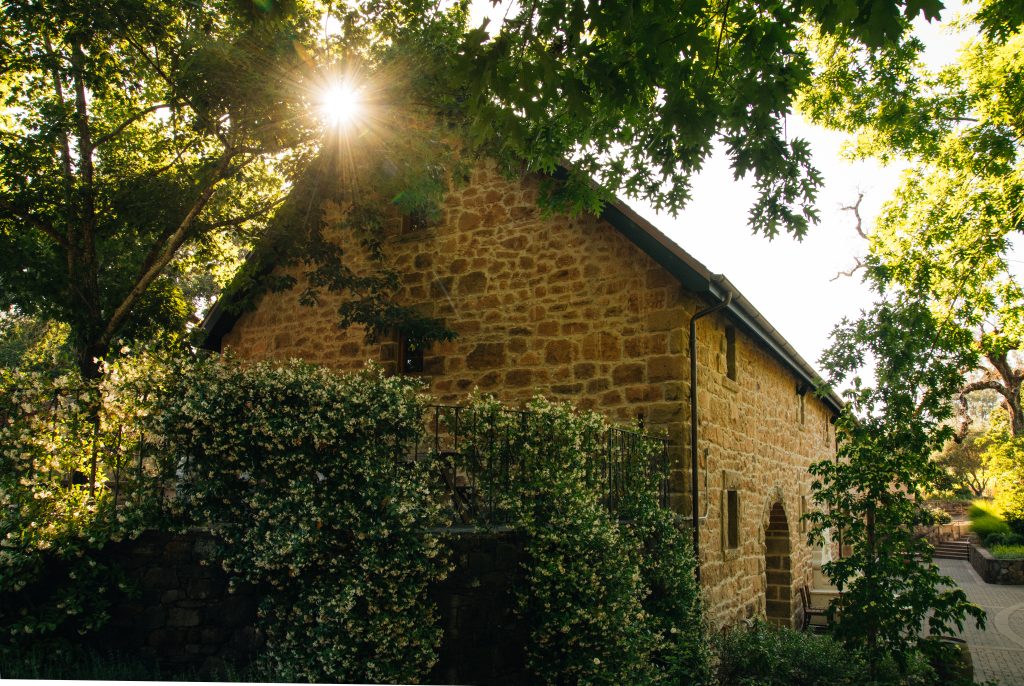
If you put together a history of Californian wine, there are some events that would be impossible to avoid: early pioneers, Prohibition, the Judgment of Paris and international acclaim. They are many of the same events that define Freemark Abbey.
Founded in 1886, it is a quintessential Napa winery. Yet, for all the fame and accolades that the region has attracted, Freemark Abbey’s place in that story has often been overlooked in the UK.
That is now being addressed. With the support of its owners, Jackson Family Wines (who acquired the winery in 2006) and new distributor Hallgarten & Novum Wines, Freemark Abbey is going on a charm offensive across the pond. For instance, Kristy Melton will host a tasting in London on 22 July featuring bottles from its wine library, with vintages spanning four decades.
The renewed focus will give UK wine lovers a chance to explore a piece of Napa history and an iconic product of California. Moreover, it will prove that Freemark Abbey’s remarkable story is not just a quirk of history: it is an inheritance that directly informs its high-quality modern winemaking to this day.
Living through history
Freemark Abbey’s story could easily be taken as a microcosm of the Californian wine scene. As part of the first wave of serious Napa winemaking, it has earned a position as one of its prime ambassadors.
Its story begins with Josephine and John Tychson, Pennsylvanians who journeyed to California with the dream of starting a winery. They purchased a vineyard and, in 1886, launched Tychson Cellars, the project that would eventually become Freemark Abbey.
In its early years, Josephine was the driving force behind the winery. John’s death left her solely in charge as a female winemaker – a rarity for the time – tending to plots of Zinfandel, Riesling, and ‘Burgundy’. She managed this as well as mothering her children, working a large vegetable garden, raising farm animals and starting a company selling spring water. She even oversaw the construction of its first redwood cellar.
The first half of the 20th century, however, proved difficult. After the double-whammy of a grape glut and phylloxera, Josephine sold the winery to her foreman . When Prohibition arrived in 1920, he had to close the operation.
In 1939 it found new ownership, as Charles Freeman, Marquand Foster and Albert “Abbey” Ahern bought the winery. As the owners until 1959, they are now best remembered as the originators of the name Freemark Abbey: it is a portmanteau of their names.
As the start of Freemark Abbey’s modern history, a group of seven partners purchased the winery in 1967. They set the winery on a course for success, with a mission of quality and a particular focus on two emblematic varieties: Cabernet Sauvignon and Chardonnay.
What truly secured Freemark Abbey’s place in the history book was The Judgment of Paris in 1976. The blind tasting pitted the best wines of California against red Bordeaux and white Burgundy, and smashed preconceptions when a US wine topped each category. Freemark Abbey was at the very heart of the event, the only winery to submit both a Cabernet Sauvignon and a Chardonnay.
True to its roots
At Freemark Abbey, history is not simply an interesting record. To this day, its team takes inspiration from the winery’s past. Indeed, a respect for its heritage and an innovative streak are both essential to its continuing quality.
Some of that harks back to Freemark Abbey’s very earliest days. It began as a passion project, led by people who care, and has remained so. With just eight winemakers over its history, Freemark Abbey has never prioritised quick changes and trend-seeking over the sustained work that quality demands.
Josephine’s influence also continues. Most obviously, its eighth winemaker, Kristy Melton, follows in her pioneering footsteps as a female winemaker. Though that is no longer shocking, it is an important achievement in an industry yet to reach gender parity.
The founder’s focus on individual plots still continues as well. While Freemark Abbey sources grapes from many of Napa’s best subregions – the likes of Howell Mountain, Mt. Veeder and St. Helena – it also makes single vineyard wines. These expressions, sourced from Oakville and Rutherford, highlight the care, attention and precision that still defines Freemark Abbey.
Where history is most evident is in the wine library. Instituted in the 1960s it was, in itself, a bold move, as Freemark Abbey was an early adopter when holding back stock for its reserves. Now, it is a fascinating resource, allowing today’s winemakers to converse with their predecessors. For the wine lover, meanwhile, it offers a rare chance to taste decades-old wines and see how Freemark Abbey has evolved.
That evolution is, in fact, the key idea. Though Freemark Abbey has existed through some of the most tumultuous events in the history of wine, its identity and purpose remain recognisable. No winery can afford to stay still, but as a statement of Napa Valley’s quality potential, Freemark Abbey has remained constant.
Members of the UK wine trade can register their interest in the 22 July masterclass on this link.
Related news
French vineyards battle extreme heat as climate pressures mount


